An ingredient in fatigue-recovery supplements extends solar cell lifespan fivefold
- Input
- 2026-11-12 10:42:18
- Updated
- 2026-11-12 10:42:18
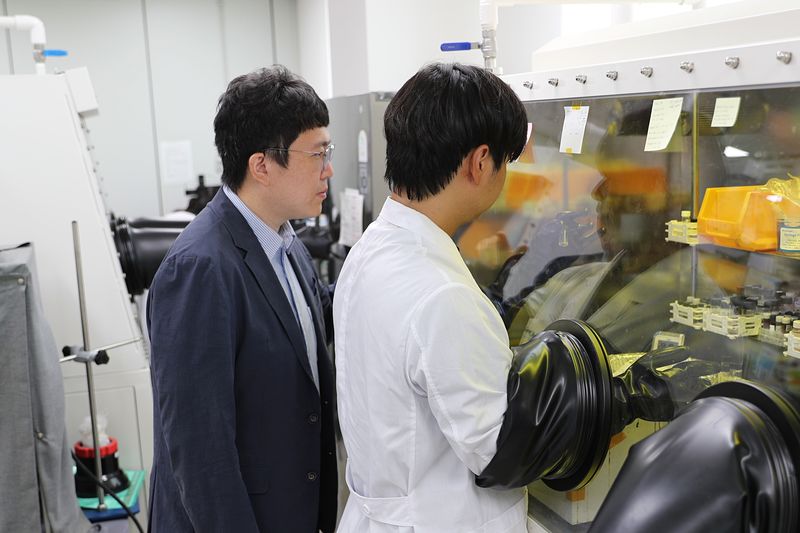
[Financial News] Using taurine, a naturally derived antioxidant familiar as an ingredient in fatigue-recovery supplements, researchers have succeeded in greatly improving the performance and lifespan of next-generation perovskite solar cells.
On the 12th, a research team led by Professor Choi Jong-min of the Department of Energy Engineering at Daegu Gyeongbuk Institute of Science and Technology (DGIST) said it had worked with a team led by Dr. Moon Byeong-jun at the Jeonbuk Branch of the Korea Institute of Science and Technology (KIST) to identify how solar cells break down on their own using taurine and propose a new design method to prevent it.
Perovskite solar cells are considered high-efficiency, next-generation solar cells that could replace conventional silicon solar cells. However, their structures readily break down (degrade) when exposed to light or heat, shortening their operating lifespans. This “instability” has been the biggest bottleneck to commercialization.
The research team developed a technique to apply taurine, which has multifunctional groups, at the interface where the metal oxide (tin oxide, an n-type semiconductor) meets the perovskite layer, coating it with a thin antioxidant layer. When a solar cell operates, the metal oxide layer generates superoxide (O2·−), a type of reactive oxygen species that damages the structure. The antioxidant taurine continuously removes it, fundamentally suppressing the pathway through which the perovskite breaks down.
Taurine also acts as a chemical bridge between the two layers, filling microscopic defects at the interface (passivation) and helping electrons move much more smoothly, thereby boosting the solar cell’s overall efficiency as well.
Solar cells treated with taurine showed excellent photostability, maintaining at least 95% of their initial efficiency even after at least 500 hours of continuous exposure to light. In particular, operating stability tests showed that the time taken for efficiency to fall to 80% of its initial level (T80) increased from 23.6 hours to 130 hours—at least fivefold—marking a major achievement in extending the cells’ practical service life.
Professor Choi Jong-min of DGIST’s Department of Energy Engineering said, “This study is significant because it clearly established that superoxide generated in the metal oxide during solar-cell operation decomposes the perovskite, and addressed the problem by designing the interface with an antioxidant.” He added, “This will become a key foundational technology for improving the operational stability of perovskite solar cells and accelerating their commercialization.”
The findings were published as a cover article in Advanced Energy Materials, an internationally renowned journal in the energy field (impact factor 25.5; within the top 2.4% in JCR).
[email protected] Yeon Ji-an Reporter