Incheon Port cruise visitors top 200,000, a record high, as it transforms from a “port for brief stopovers” into a departure and arrival point
- Input
- 2026-11-12 10:27:45
- Updated
- 2026-11-12 10:27:45
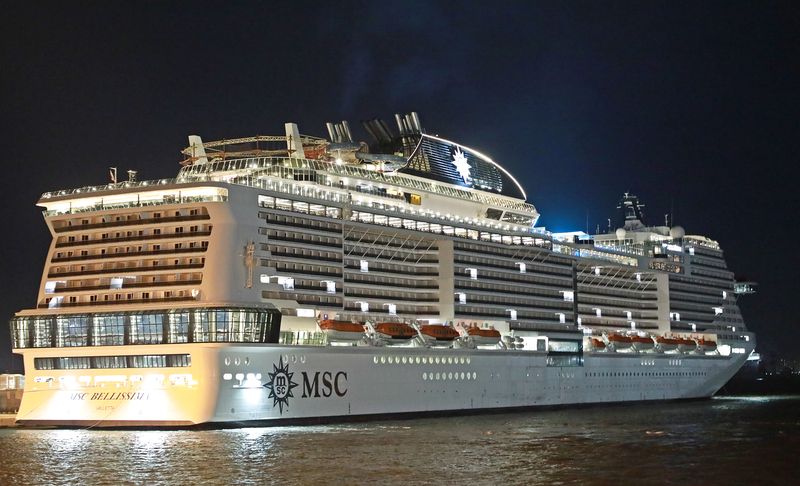
【Financial News, Incheon = Han Gab-soo, reporter】 Incheon Port is emerging as a new hub for cruise tourism. Its role is expanding beyond that of a port of call where foreign cruise ships briefly stop before departing, becoming a departure and arrival point where passengers embark and disembark in Incheon. The number of cruise visitors to Incheon Port has already exceeded 200,000 this year, and homeport operations linked to the airport are also expected to increase substantially next year.
According to Incheon Port Authority on the 12th, as of the end of October this year, Incheon Port had received 99 cruise ship calls, carrying 197,687 passengers. The number of calls surpassed the previous record of 95, set in 2013, 13 years later, while the passenger total exceeded the previous record of 183,909, set in 2014. With 113 calls scheduled through the end of the year, the authority forecast that total passenger numbers this year would reach around 210,000.
The 200,000 mark for cruise visitors was passed on the 8th. The cumulative passenger total reached 200,303 when the 100,000-ton-class vessel Visio, operated by China's Tianjin Dongfang International Cruise Company, arrived at Incheon Port. The 200,000 target set for this year was reached earlier than expected.
The Visio carried 1,161 passengers and 574 crew members. After departing Tianjin, China, and passing through Jeju, the ship arrived in Incheon at 10 a.m. It gave passengers the opportunity to tour Incheon and Seoul, then headed back to China at 10 p.m.
The key question is how much of a tangible impact the increase in visitors will have on Incheon's local economy. Unlike a port of call, where a cruise ship docks briefly, a homeport is where travelers arrive by air to board a cruise ship or depart the country after completing their trip. The number of passengers embarking and disembarking can be at least twice that at a regular port of call, and they are also more likely to spend locally on accommodation, meals, shopping and transportation.
Incheon Port Authority is working to attract homeport operations by leveraging the geographical advantage of the port's proximity to Incheon International Airport. It expects the number of Fly&Cruise homeport sailings linked to the airport to rise to 18 next year, about 64% more than this year's 11. Total cruise ship calls next year are also forecast to reach 132, potentially setting a record for the second consecutive year. This estimate is based on berth reservations as of November 2026.
Improving port operations to accommodate the growing number of passengers has also emerged as a challenge. Since late last year, Incheon Port Authority has bolstered terminal operations and security staffing and upgraded amenities in preparation for an increase in cruise ship calls. It also consulted with customs and immigration and quarantine agencies (CIQ) to improve passenger routes and focus on reducing the time needed for immigration procedures. It has also worked with Incheon City and other relevant agencies to develop support plans for transportation and tourist information.
However, for the increase in cruise visitors to translate into a tangible rise in sales for local businesses, transport links between the port and tourist attractions, longer-stay tourism products, and the local consumer infrastructure, including shops and restaurants, all need to be strengthened. With large numbers of passengers arriving at once, it is also important to process immigration procedures and baggage quickly. The challenge, observers say, is to develop a strategy that goes beyond simply increasing the number of ship calls and passengers and encourages visitors to stay in Incheon, spend money and return.
Incheon Port Authority President Park In-seo said, “This year's record performance was the result of on-the-ground cooperation among cruise lines, CIQ agencies (customs, immigration control and quarantine agencies), and local governments,” adding, “In line with the expansion of homeport operations next year, we will step up service improvements, including passenger processing and baggage handling.”
[email protected] Han Gab-soo Reporter