“Lost weight, but suddenly look older”... The unexpected concern among people taking weight-loss shots—and why [Health Talk]
- Input
- 2026-11-12 11:05:14
- Updated
- 2026-11-12 11:24:31
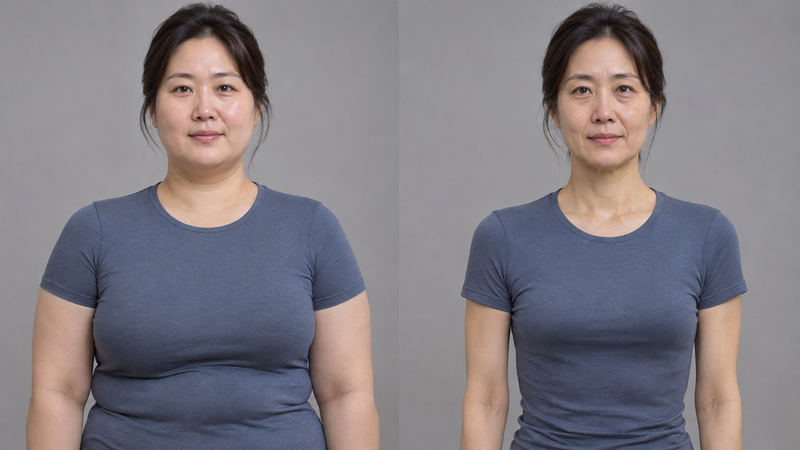
[Financial News] A growing number of people are troubled by a side effect: although they have successfully lost weight, their faces look older. Interest is growing among people who have lost weight using obesity treatments such as Wegovy and Ozempic in what is known as “Ozempic face”—sunken cheeks and sagging skin. An analysis suggests these facial changes are due not so much to a side effect of the drugs themselves as to the loss of facial fat that accompanies weight loss.
Chung-Ang University Gwangmyeong Hospital Professor Kwang-ho Yoo analyzes the “Ozempic face” phenomenon
Professor Kwang-ho Yoo, a dermatologist at Chung-Ang University Gwangmyeong Hospital, recently said he had published a review paper analyzing the causes and risk factors of facial changes following the use of obesity treatments, as well as ways to prevent and manage them, in the online edition of Aesthetic Surgery Journal (ASJ), the official journal of the American Society for Aesthetic Plastic Surgery.
Professor Yoo searched 958 relevant publications published from January 2014 through August this year and selected and reviewed 46 that met the criteria. He conducted a medical analysis of the so-called “Ozempic face” phenomenon, which has gained attention as the use of GLP-1 (glucagon-like peptide-1) receptor agonist treatments has increased.
The study’s key finding is that facial changes are closely associated with fat loss during weight reduction, rather than being a side effect unique to a particular drug. Facial fat acts like a cushion beneath the skin, maintaining volume and supporting tissue.
As weight drops, if this layer of fat also diminishes, the cheeks and temples can become hollow, and sagging skin and wrinkles may appear more pronounced than before. In fact, similar changes have also been observed in patients who lost weight through bariatric surgery, not just through obesity treatments.
Facial changes after weight loss involve more than simply losing fat. Facial fat varies in distribution and function from one area to another, so even with the same amount of weight loss, the areas where volume loss is most noticeable and the degree of skin sagging can differ from person to person.
Bariatric surgery patients also look older... Facial changes may not be caused by using a particular drug
An overseas study cited in the paper analyzed photos of patients who had undergone bariatric surgery and found that their apparent facial age had increased by an average of about three years one year after surgery. This suggests that faces can look older after rapid weight loss even without the use of a specific drug.
An analysis of computed tomography (CT) and magnetic resonance imaging (MRI) scans conducted by US researchers also confirmed this trend. In an analysis of 20 patients receiving GLP-1 treatment who lost an average of about 11 kg, the volume of the midface—the central area of the face—decreased by about 9% at the median.
In particular, the superficial fat layer close to the skin’s surface decreased by 11%, while the deep fat layer decreased by 7%, meaning the reduction was greater in the superficial layer. The analysis also estimated that midface volume decreased by about 7% for every 10 kg of weight loss.
However, Professor Yoo stressed that these figures should not be applied directly to every patient. Most related studies involved small numbers of patients and had no control groups, making it difficult to predict the extent of facial changes for individuals.
The widely cited claim that “20–50% of users of obesity treatments experience facial changes” is not a confirmed incidence rate either. It is only an estimate based on surveys of medical professionals and small-scale reports; the actual frequency has not yet been accurately established.
The risk factor identified relatively consistently so far is the amount of weight lost. Changes may be more pronounced in older people or those who had little facial fat to begin with. By contrast, it has not yet been established whether the speed of weight loss independently affects facial changes.
No method has yet been established to prevent or reverse facial changes. Nutrition and strength training can help maintain muscle mass, but there is insufficient evidence that they prevent the loss of facial fat. More research is also needed to establish the effectiveness and long-term safety of cosmetic procedures such as fillers.
Professor Yoo stressed, “Given the substantial medical benefits of obesity treatments, facial changes that may occur during weight loss should also be taken into account,” and added, “People should not adjust their medication dosage or stop treatment without consulting medical professionals based solely on changes in their appearance.”
[email protected] An Ga-eul Reporter