[CSAT D-7] “Failure to hand in electronic devices will be considered cheating ... Avoid checking answers during breaks”
- Input
- 2026-11-12 09:38:04
- Updated
- 2026-11-12 09:38:04
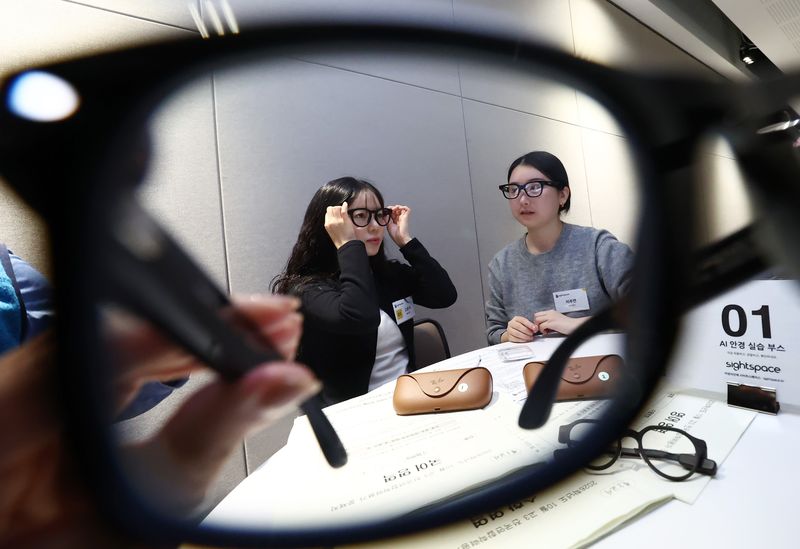
According to MegaStudy Education, electronic devices such as mobile phones, smart devices and Bluetooth earphones are prohibited in the test site. If examinees keep them instead of handing them in as instructed by the proctor before the first period, it will be considered cheating, so it is best not to bring them at all.
Nam Yungon, head of MegaStudy Education’s Admissions Strategy Research Institute Nam Yungon, head of MegaStudy Education’s Admissions Strategy Research Institute, explained, “This year, the Ministry of Education is expected to step up its response to cheating involving smart glasses, and examinees could be barred from taking the CSAT through the following year.” He added, “You must not bring your own mechanical pencil or ballpoint pen, other than the mechanical pencil provided at the test site.”
Etoos Education cautioned examinees against mixing up the order of their inquiry-subject exams. Those who choose two inquiry subjects must take them in the order of their first and second choices as listed on their applications. Each subject’s exam lasts 30 minutes, with a two-minute interval between the two for collecting question papers. Examinees may not work on questions for their second-choice subject during the first-choice subject’s exam, or write or change answers for the first-choice subject after its exam has ended. Kim Byung-jin, head of Etoos Education’s Educational Evaluation Research Institute, said, “Because confusing the order of the exams or looking at a question paper for another subject could constitute cheating, check the order before the test.”
Mistakes marking answers on the answer sheet also require attention.
Kim Byung-jin explained, “A common mistake is for the question numbers and answer-sheet numbers to get out of sync, causing students to mark each answer one space off. The risk increases if they mark several answers all at once just before the exam ends.” He advised examinees to check that the numbers match after every set of questions and, when skipping a question, to mark its number so their answer markings do not get out of sequence.
Nam Yungon said, “When the announcement comes 10 minutes before the end of each period, you should stop working on the questions and start marking your answers immediately,” adding that this was “to prevent cheating by writing answers after the end-of-exam signal.” He also said that if any marks from writing implements other than a black computer-scoring pen remain on the answer sheet, examinees could face penalties, such as having their answers graded as duplicates, and should erase them cleanly with white correction tape.
Tips for tackling the questions were also offered.
Etoos Education said examinees should mark questions they get stuck on and move on, securing as many answers as possible to questions they can solve. MegaStudy Education advised students taking the math test to move on and start with easier questions if they had not found an answer after five minutes. For difficult questions, it advised eliminating the choices that are not correct first and then selecting an answer to improve the odds of getting it right. Both companies also addressed how to read questions. Etoos Education said to mark key words such as “not,” “all” and “must,” while MegaStudy Education advised rereading the question rather than fixating on confusing answer choices.
Similar advice was offered about what to do during breaks.
Etoos Education said that checking answers with friends or looking them up online could have an unnecessary impact on subsequent exams. MegaStudy Education advised examinees not to think back over the answers they had already submitted immediately after the first period, and to check their results only after all the exams were over. It also recommended heightening their alertness again before the fourth period as if they were about to take the first period.
Etoos Education said that suddenly changing the order in which they solve questions on exam day could cause greater confusion, so examinees should stick to their usual, familiar routine. It added that they should ask a proctor for guidance in situations they cannot resolve on their own, such as noise or problems with their belongings.
Preparations for the day before and the day of the exam also need attention.
According to MegaStudy Education, examinees must enter their test rooms by 8:10 a.m. on the day of the CSAT. It advised them to confirm their test site at the preliminary briefing the day before and check their transportation options, including a backup route. It recommended packing their admission ticket, ID, eraser, black pencil, white correction tape and mechanical-pencil leads in advance, and bringing spare black computer-scoring pens as well.
The advice was to go to bed by 11 p.m. at the latest the night before, and to have a light breakfast of foods they normally eat while keeping their intake of soup or water in check. Examinees should arrive at the test site early and check whether the desk and chair are comfortable; if there is a problem, they should tell the test administration office and ask for a replacement. They were also advised to bring a lap blanket and thin layers of clothing to prepare for the cold.
[email protected] Kim Man-gi Reporter