Middle and high school students from immigrant backgrounds create multilingual picture books themselves
- Input
- 2026-11-12 09:13:09
- Updated
- 2026-11-12 09:13:09
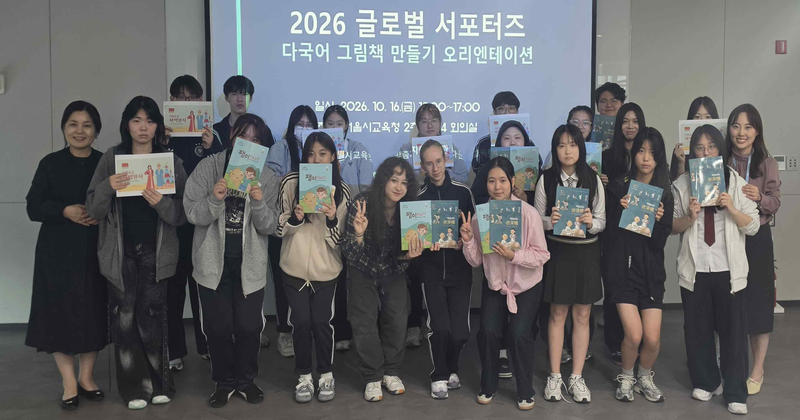
[Financial News] The Seoul Metropolitan Office of Education announced on the 12th that it is running the “2026 Global Supporters Multilingual Picture Book Project,” in which 20 middle and high school students from immigrant backgrounds translate picture books into their native languages and record their own voices to share them with elementary school students. The completed picture books will be distributed in December to Korean-language classes (special multicultural classes) at elementary schools in Seoul and used for Korean-language learning and reading activities.
The participating students will be credited as translators in the completed picture books. They will record their translations themselves, and readers can listen to the stories in each language using QR codes included in the books. The Seoul Metropolitan Office of Education said that even young students who are not familiar with Korean will be able to understand the content in their native languages while learning Korean expressions.
Working with the publisher Asian Hub, the students will translate three tales into Chinese, Russian, Vietnamese and Mongolian: the Korean folktale “Deokjin Bridge,” the Honduran tale “The Spinning Top Story” and the Moroccan tale “The Wise Prince Shabik.” Each set will contain five picture books, one in each of five languages, including Korean.
The Seoul Metropolitan Office of Education held an orientation for the participating students on October 16 and explained how to translate the picture books and the process involved. The students formed teams by language and divided up the work. They will translate the stories in a way that preserves the meaning and cultural context of the originals while using language suited to elementary school students. The translations will be completed after the students review one another’s work and experts in each language check it.
The Seoul Metropolitan Office of Education plans to complete production by December and distribute the picture books to Korean-language classes at elementary schools in Seoul. Schools can use them not only for Korean-language education but also as educational materials to help students understand diverse languages and cultures. The office said, “This project was developed to help students from immigrant backgrounds recognize their own languages and cultural backgrounds as strengths, put them to use in practical activities, explore career paths and practice sharing with others.”
Seoul Metropolitan Superintendent of Education Geun-sik Chung said, “It is meaningful that picture books students have made in their native languages can help younger students who are learning Korean,” adding, “I hope students from immigrant backgrounds will regard their own languages and cultural backgrounds as valuable strengths and build confidence and pride through the experience of sharing them.”
[email protected] Kim Man-gi Reporter