“Daejeon MICE attendees head for red-clay trails and bakery tours after meetings”
- Input
- 2026-11-12 09:44:21
- Updated
- 2026-11-12 09:44:21
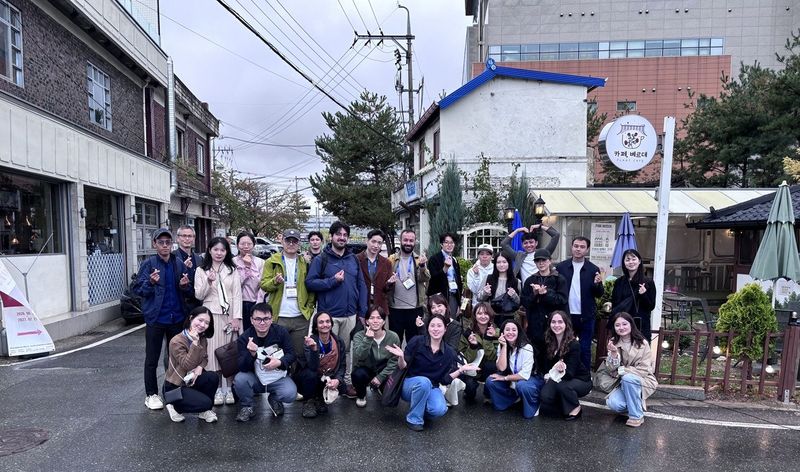
Daejeon Metropolitan City and the Daejeon Tourism Organization said on the 12th that they are rolling out three tailored tourism courses combining local gastronomy, nature, history and culture to meet demand for “bleisure” (business + leisure), which allows people to enjoy business and leisure at the same time.
The aim is to overcome the problem of international conference and exhibition participants staying only near the event venue before leaving, and to extend their stays so that they spend money in local commercial districts. The need for tailored programs has been repeatedly raised: according to Daejeon Metropolitan City’s “MICE Participant Survey” last year, 71.8% of respondents said they had not been able to fully enjoy local tourism, citing reasons including a lack of time and information.
The main themed courses introduced by Daejeon Metropolitan City are “Taste Daejeon,” where visitors can experience local bakeries and traditional liquor; “Refresh Daejeon,” offering relaxation on Gyejoksan Mountain’s red-clay trail and at Daecheong Lake; and “Deep Daejeon,” which explores a century of history through places such as the Soje-dong railway workers’ housing village and the former Chungnam Provincial Government building.
Measures to make getting around easier for participants and encourage spending also stand out. Dedicated vehicles connecting the DCC with major tourist attractions and professional Korean- and English-speaking guides are provided, while circular shuttle buses link major transport hubs with event venues during the busy event season in October and November. In particular, the full 10,000-won participation reservation deposit is refunded in the local currency “Ontong Daejeon” when participants attend in person, encouraging them to spend directly at local small-business stores.
Launched in October this year, the program was run in conjunction with major events such as the Korean Society for Molecular and Cellular Biology, the Asia Architecture Exchange International Symposium and Daejeon International Wine EXPO. It is set to expand further for participants in upcoming major international conferences, including the 9th World Conference on Photovoltaic Energy Conversion (WCPEC-9), scheduled for the end of the year.
Kwon Gyeong-min, director of Daejeon Metropolitan City’s Culture, Sports and Tourism Bureau, said, “The key is to create a virtuous cycle in which MICE participants do more than attend events: they experience Daejeon’s many attractions and become visitors who stay in the city.” Kwon added, “We will continue to strengthen support for linking infrastructure so that Daejeon can emerge as both Korea’s leading MICE hub and an attractive tourist city.”
Meanwhile, the MICE industry is considered a “high-value-added industry” because visitors stay longer and spend more per person than ordinary tourists. International conference participants in particular are analyzed to have a relatively large economic impact on local economies, as they spend more on accommodation, food and drink, and shopping. As a result, major cities in Korea and abroad are competing to attract MICE events and develop related tourism products.
[email protected] Kim Won-jun Reporter