Amid uncertainty over mandarin prices, Rep. Moon Dae-rim says field-grown mandarins must be included in next year’s price stabilization scheme
- Input
- 2026-11-12 09:08:49
- Updated
- 2026-11-12 09:08:49
【Financial News, Jeju = Jeong Yong-bok, reporter】 Calls were made in the National Assembly to include mandarins in the national agricultural products price stabilization scheme starting next year, in preparation for the risk of falling prices for Jeju’s field-grown mandarins. The government, which selected garlic and onions as priority products for coverage this year, was also urged to expand agricultural revenue insurance and establish a system for responding to supply-and-demand crises.
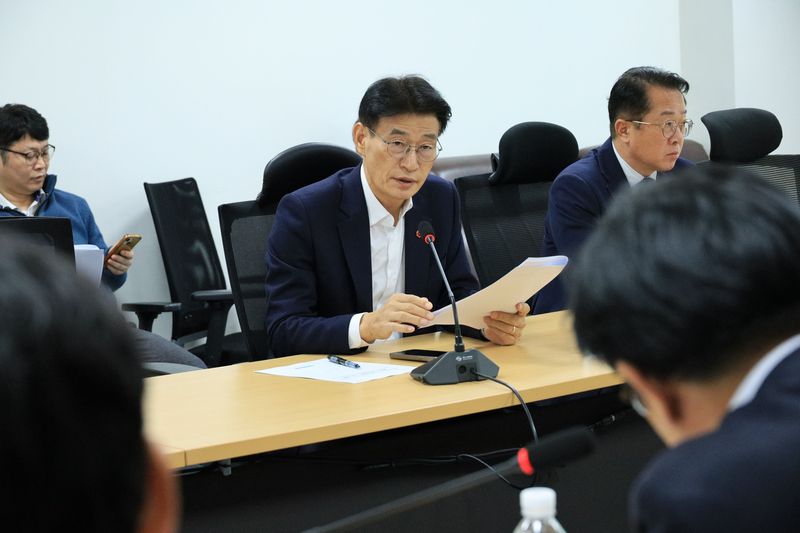
On the 12th, according to Rep. Moon Dae-rim of the Democratic Party of Korea, who represents the Jeju City A constituency, he reviewed mandarin price trends and the government’s supply-and-demand management measures at a meeting of the National Assembly’s Agriculture, Food, Rural Affairs, Oceans and Fisheries Committee Policy Coordination Committee on the 11th and called for improvements to the system.
This year, field-grown mandarins are facing downward pressure on prices due to increased production. The Agricultural Outlook Center of the Korea Rural Economic Institute forecast that November shipments of field-grown mandarins would be up 8.1% from the same month last year. It also forecast that the wholesale price for Grade A mandarins at Garak Market, based on 5 kilograms, would be around 15,000 won, below the 16,500 won recorded in November last year.
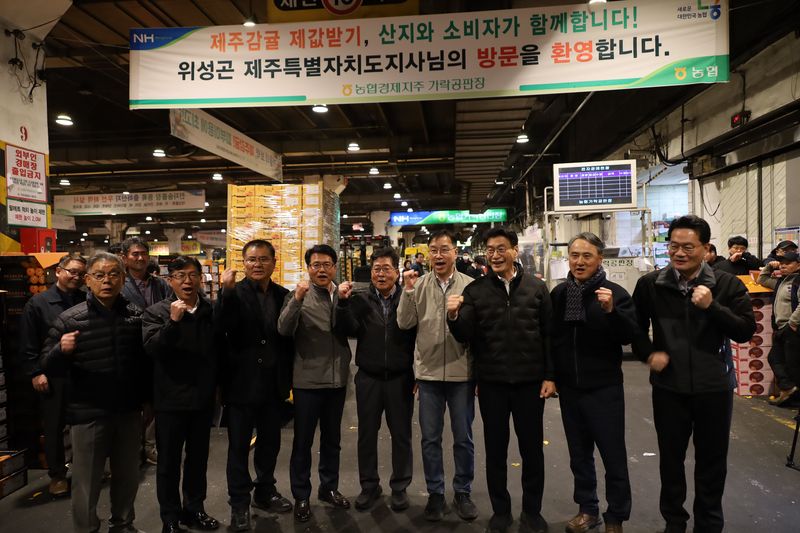
Rep. Moon Dae-rim previously visited Garak Market in Seoul to inspect mandarin auctions and shipments. At the time, distribution industry officials said, “High temperatures and rain during the harvest season are causing rot in some very early-ripening mandarins,” and conveyed their view that “quality control needs to be strengthened from sorting at the production site through the distribution process.”
The government’s agricultural products price stabilization scheme was introduced following amendments to the Act on Distribution and Price Stabilization of Agricultural and Fishery Products, which took effect last August. Under the scheme, if the average price of agricultural products in a given year falls below the benchmark price despite the government’s supply-and-demand management, the government covers all or part of the difference.
The Ministry of Agriculture, Food and Rural Affairs selected garlic and onions as the first products to be covered last September. Support will be based on a benchmark set at 80% of average wholesale prices in a normal year, and the government plans to expand the list of eligible products in stages, taking production costs and supply-and-demand management systems into account.
Rep. Moon called for field-grown mandarins to be included as the range of eligible products is expanded in 2027. The aim is to ensure that mandarin growers, too, can receive compensation through a national scheme for business risks caused by sharp price drops.
He also proposed expanding agricultural revenue insurance. Among mandarins, late-maturing citrus fruits are currently covered by the insurance, but open-field satsuma mandarins are not. The insurance covers not only reduced harvests caused by natural disasters but also the risk of farm income falling when market prices decline.
There was also a call to secure the legal basis and funding in advance so the government can purchase mandarins and regulate the amount supplied to the market if a supply-and-demand crisis reaches the “serious” stage. Market withdrawal is a measure that removes a certain volume from the regular distribution market to stabilize supply and demand.
Rep. Moon emphasized, “Agricultural price stabilization policies must not stop at addressing the damage after prices have plunged,” adding, “It is important to put systems and budgets in place in advance so farmers can prepare for the risk of falling prices.”
The Ministry of Agriculture, Food and Rural Affairs said it would review Rep. Moon’s proposals to expand the price stabilization scheme, extend revenue insurance coverage and make government purchases, and then prepare a response.
Emphasizing that mandarins are a key industry in Jeju agriculture, Rep. Moon urged the government “not to view falling prices merely as temporary market fluctuations, but to put measures in place to stabilize farm businesses.”
[email protected] Jeong Yong-bok Reporter