Hyundai L&C enters solar building materials market, targets demand for zero-energy buildings
- Input
- 2026-11-12 09:31:50
- Updated
- 2026-11-12 09:31:50
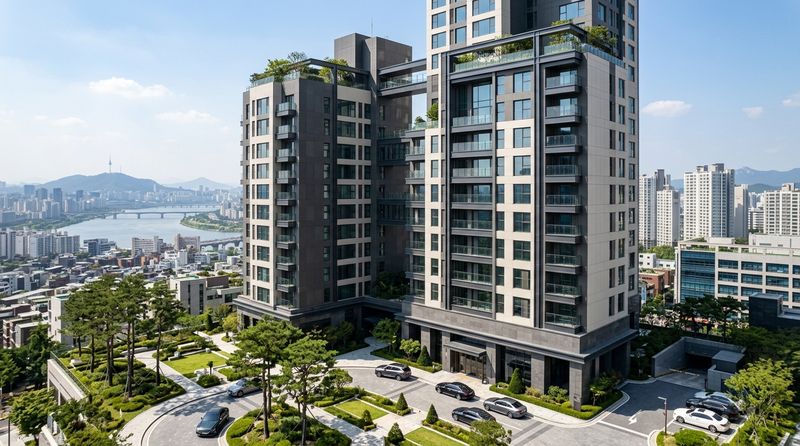
According to the building materials industry on the 12th, Hyundai L&C has launched its solar building materials brand, “Soluen (SOLU),” and begun full-scale sales.
The first product is building-integrated photovoltaics (BIPV), installed on building facades to serve as both exterior cladding and a solar power generation system. The company is introducing 25 varieties in total: 20 solid-color options, including gray, beige and green, and five designs that reproduce the textures of natural materials such as marble, granite and wood. Colors and patterns can be custom-made to suit a building’s appearance and structure, and product dimensions can also be tailored from 10 cm each up to a maximum of 3 m wide and 2 m high.
Power generation efficiency is also cited as a differentiating factor. The color products use ceramic nano-deposition (sputtering) technology. A thin ceramic coating creates color while reducing losses in light transmission. According to Hyundai L&C, the Soluen color products have an efficiency of about 20%, compared with about 16% for conventional glass-type BIPV.
The company says it has also enhanced durability, given that the products are installed on buildings for long periods. Polyvinyl butyral (PVB), used in automotive laminated glass and safety glass for high-rise buildings, is used as the encapsulant to protect solar cells from moisture and external impact.
Hyundai L&C plans to go beyond product sales and offer a comprehensive solution covering the entire solar building materials business. It will take into account a building’s size, structure and energy consumption to recommend products needed for zero-energy building certification, and provide end-to-end support from the design stage through installation and after-sales service.
Hyundai L&C will first target the housing market by leveraging networks with construction companies and redevelopment and reconstruction associations built through its existing building materials business. It plans to expand its customer base to offices, commercial facilities and public institutions. It also plans to broaden its product lineup, starting with BIPV and adding rooftop solar panels, solar noise barriers and rooftop solar waterproofing sheets.
With this launch, Hyundai L&C aims to gain an early lead in capturing the rapidly growing demand for eco-friendly building materials as the government moves to tighten its zero-energy building certification requirements. The certification system requires a certain proportion of the energy used in a building to be generated from renewable sources such as solar power. As it becomes more difficult to meet energy generation standards with conventional rooftop solar panels alone, the potential for BIPV—which integrates power generation into building materials such as exterior walls—is also growing.
Yang Jin-young, head of Hyundai L&C’s BIPV task force, said, “Standards related to zero-energy buildings are being tightened for private apartment buildings as well, but there are limits to meeting the requirements with existing rooftop panels alone.” He added, “Based on the market trust and installation expertise we have built up through our premium building materials business, we will proactively target the solar building materials market.”
Lee Dong-seop, head of Hyundai L&C’s window business division and a managing director, said, “We are expanding our product portfolio in line with government policy and construction trends.” He added, “By adding solar cladding to our existing windows and artificial marble, we will take the leap to become a global, integrated building materials company covering the full range of construction materials.”
[email protected] Lee Ju-mi Reporter