Vance steps in as a relief pitcher in talks to end the war: “Face-to-face negotiations with Iran’s hard-line security chief”
- Input
- 2026-11-12 07:15:41
- Updated
- 2026-11-12 07:15:41
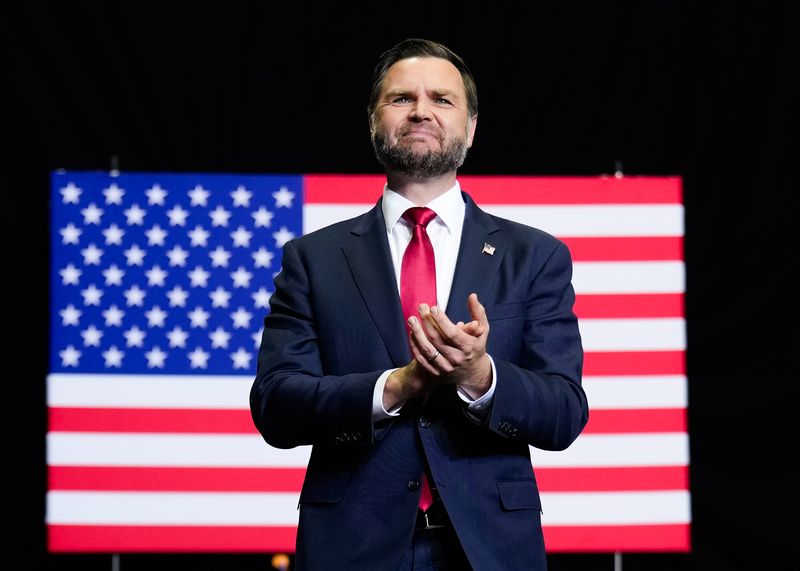
[Financial News] U.S. Vice President JD Vance is considering meeting face-to-face with a hard-line Iranian security chief in a bid to end the war with Iran, The Wall Street Journal (WSJ) reported on the 11th, local time.
Citing U.S. and Middle Eastern officials and sources familiar with the negotiations, the WSJ reported that Vice President Vance has emerged as a key figure leading negotiations with Iran and is considering a face-to-face meeting with a senior Iranian security official.
According to the report, U.S. President Donald Trump recently told senior aides and officials from the other side that Vice President Vance was open to resuming dialogue with Iran, and also authorized him to negotiate.
U.S. officials stressed, however, that discussions about sending Vice President Vance to meet directly with Iranian officials are still at an early stage.
Last October, Vice President Vance sent a letter requesting a meeting with Mohsen Rezaee, secretary-general of Iran’s Supreme National Security Council (SNSC).
Secretary-General Rezaee is a close confidant of Iran’s Supreme Leader Mojtaba Khamenei and a hard-liner who formerly commanded Iran’s Islamic Revolutionary Guard Corps (IRGC).
No specific date has been set, but the two sides are reportedly holding follow-up discussions through mediating countries and other channels.
If the two sides agree to meet, Doha, the capital of Qatar, is being considered as the meeting venue.
The WSJ said a direct meeting between Vice President Vance and a senior Iranian security official would be unusual, adding that it showed how actively Vance was working to end the U.S.-Iran war.
Vance takes a different tack, citing the Iran war as a cause of the election rout
Vice President Vance has recently played a more active role in Iran diplomacy than established negotiators such as special envoy Steve Witkoff and Jared Kushner.
U.S. officials note that this also carries political costs.
If Iran rejects meaningful concessions and peace talks collapse, Vance could end up shouldering the blame for their failure. With his standing as a potential presidential contender shaken by the Republicans’ crushing midterm defeat, this diplomatic initiative carries political risks for him.
President Trump has reportedly criticized in private in recent weeks the memorandum of understanding (MOU) with Iran reached last June, which Vice President Vance helped negotiate, and questioned whether the agreement had been a mistake. The argument was that the deal gave Iran time to regroup and an opportunity to secure oil revenues.
Vice President Vance has publicly identified the Iran war as one of the causes of the Republicans’ crushing midterm defeat, setting himself apart from other figures in the White House.
[email protected] Lee Seok-woo, International Affairs Correspondent Reporter