Iran's IRGC unveils advanced-weapons-packed “underground missile city” in bid to maximize leverage in talks to end the war
- Input
- 2026-11-11 23:42:23
- Updated
- 2026-11-11 23:42:23
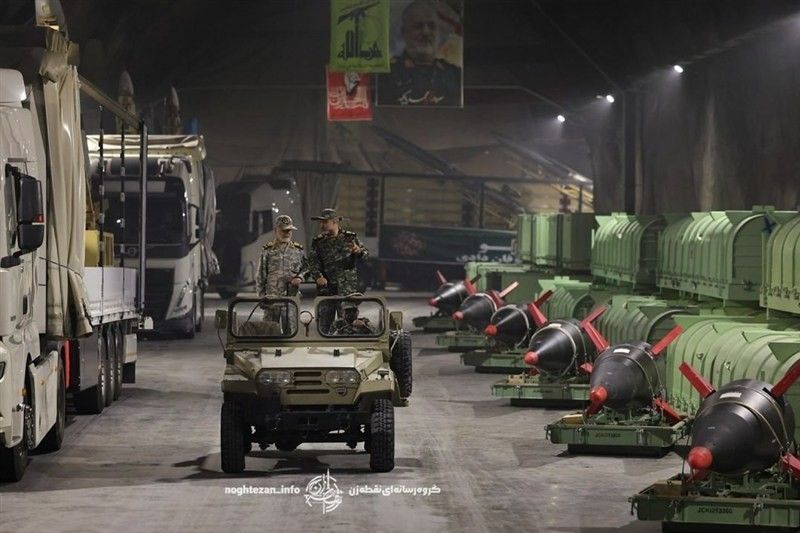
[Financial News] Iran’s Islamic Revolutionary Guard Corps (IRGC) has made a surprise public unveiling of a vast underground bunker, dubbed a “missile city,” stocked with large numbers of missiles and launch systems. With talks with the United States on ending the war and nuclear issues underway, the move is seen as a multifaceted show of military resilience, demonstrating the ability to withstand enemy airstrikes.
Footage released on the 11th (local time) by local media, including Iran’s state-run Islamic Republic of Iran Broadcasting (IRIB), showed Iranian military chief of staff Ali Abdollahi and IRGC Aerospace Force commander Majid Mousavi inspecting an underground missile base.
■ An array of advanced weapons, including hypersonic missiles... production facilities fortified underground
A large number of Iran’s key strategic weapons were visible inside the base unveiled this time. The most prominent was the Fattah-1 hypersonic ballistic missile, with a maximum range of 1,400 km and a terminal speed of Mach 13–15. Iran has claimed the missile can neutralize US MIM-104 Patriot systems and Israel’s air defenses. Also spotted were the 1,450-km-range Kheibar Shekan, equipped with a maneuverable reentry vehicle (MaRV), and the 1,700-km-range Emad, as well as missile transport and launch vehicles disguised as civilian commercial trucks.
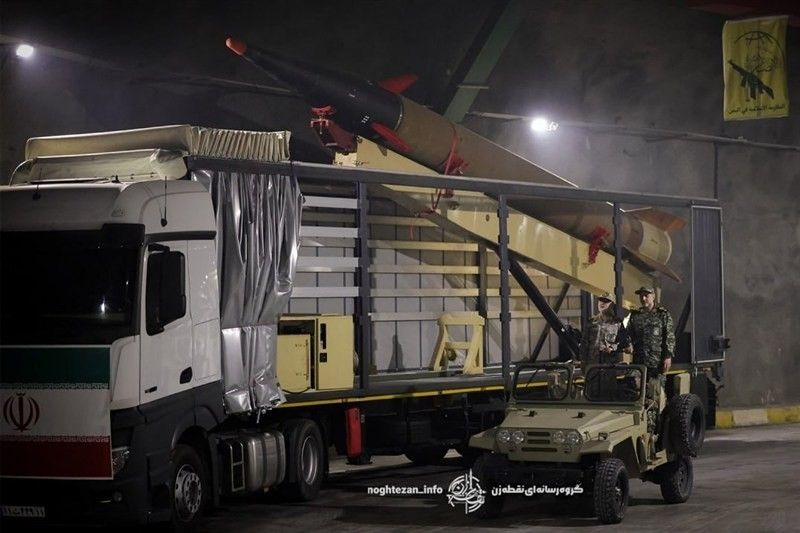
Iran has gone beyond simply storing weapons, formally announcing that it has moved its “production facilities” underground. IRGC spokesman Hossein Mohebbi said, “We rapidly moved missile and drone production facilities from above ground to underground,” emphasizing that weapons production could continue even amid intense bombing. This directly rebuts claims by the United States and Israel that concentrated airstrikes early in the war had significantly weakened Iran’s missile production capacity.
Chief of staff Abdollahi warned, “The United States and Israel failed to achieve their goals even after committing all their available military resources,” adding, “If we are attacked again, retaliation will extend beyond the Middle East.” Parliament Speaker Mohammad Bagher Ghalibaf also weighed in, saying, “This time, the Iranian military will decide where the war is fought.”
■ Taking a hard-line stance to gain the upper hand in war-ending and nuclear talks
Western media and experts say Iran’s display of force is intended to strengthen its leverage in indirect talks conducted through mediators. With US President Donald Trump having stepped back, saying “the likelihood of further airstrikes is low,” the move sends a forceful message that Iran will not rush into a compromise and is prepared for a protracted war.
At the negotiating table, the possibility is being discussed that Iran could dilute its 60%-enriched uranium domestically and accept the 3.67% enrichment limit set under the 2015 Joint Comprehensive Plan of Action (JCPOA). However, Iran is firmly refusing to allow International Atomic Energy Agency (IAEA) inspections of key nuclear facilities, including Isfahan and Fordow, which the United States bombed in the past, citing concerns about leaks of confidential information and renewed airstrikes. Tensions remain high, with some Iranian hardliners arguing that if the US threat of airstrikes continues, former Supreme Leader Ali Khamenei’s edict banning the development of nuclear weapons should be revoked.
[email protected] Park Ji-hyun Reporter