“Leading the Way in Housing Models Tailored to Changing Senior Lifestyles”
- Input
- 2026-11-11 20:47:55
- Updated
- 2026-11-11 20:47:55
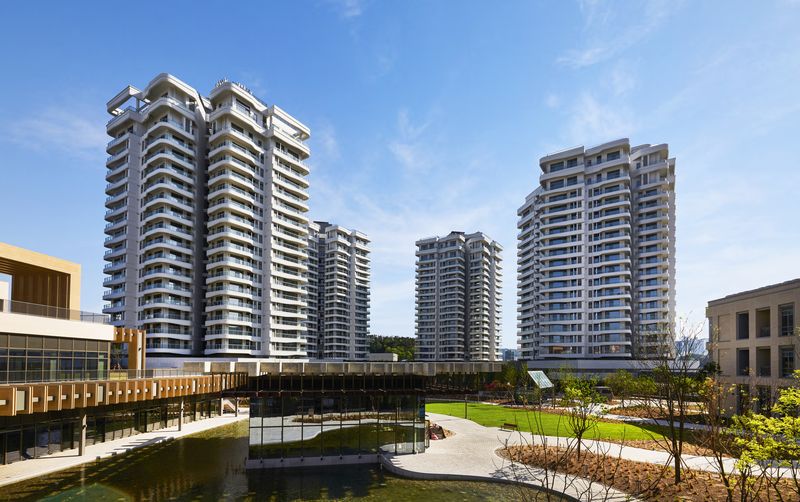
[Financial News] As South Korea rapidly ages, perceptions of senior housing and the criteria for choosing it are also changing.
Whereas stable housing and basic living support were once priorities, interest has recently grown in residential environments where people can maintain independent, self-directed lives while also enjoying health care and cultural and leisure activities.
Amid these changes, Rauer Senior Town, located in the Osiria Tourist Complex in Gijang County, Busan, is being recognized for revising its operating system to reflect changing lifestyles and present a new senior housing model.
Rauer Senior Town reportedly recently changed the classification of its existing Latib facility from a residential care facility to senior welfare housing and also strengthened the integrated operating system for the entire complex.
The change is seen as an operational strategy that goes beyond simply reclassifying the facility: it reflects residents’ lifestyles and housing needs and aims to strengthen the links between housing and medical care, health management, culture and leisure services.
Both residential care facilities and senior welfare housing are residential welfare facilities for older adults under the Welfare of Senior Citizens Act, but they differ in their purpose and operating systems. While residential care facilities focus on providing housing and the conveniences needed for daily life, senior welfare housing is a form of housing that provides everyday conveniences and a range of additional services based on independent residential living.
Rauer Senior Town has taken into account both these institutional characteristics and residents’ actual lifestyles, establishing an operating system centered on senior welfare housing. This is said to have laid the groundwork for providing necessary services in a more integrated way while respecting residents’ independent lifestyles.
Similar changes have also taken place at major senior housing facilities in South Korea.
Samsung Noble County, Yudang Village and Seoul Seniors Seoul Tower are among the facilities that have changed their classification from fee-based residential care facilities to senior welfare housing. Their examples show that the shift to senior welfare housing can be more than an administrative change; it can be one way of responding to changing housing needs and lifestyles among older adults.
Rauer Senior Town is also focusing on improving both residents’ satisfaction with daily life and its competitiveness in services amid this broader shift. It is working to create a mixed-use community that combines housing, medical care, wellness, culture and leisure, supported by senior housing infrastructure for approximately 944 households.
By partnering with the 249-bed Muijae Korean Medicine Hospital within the complex, it is also developing an environment where residents can access medical services within their local area.
Through various wellness spaces, including a swimming pool and fitness facilities, cultural performances and academy programs, and community activities involving residents, it is developing into a place where people can enjoy healthy, active daily lives rather than simply a place to live.
This operating approach reflects the view that the competitiveness of senior housing lies not simply in the size of its facilities or the luxury of its appearance, but in the quality of services residents experience in their daily lives and their satisfaction with them.
The establishment of this integrated operating system centered on senior welfare housing is also drawing attention because it connects operational capabilities that had been dispersed across individual facilities and enables the efficient management of staff, facilities and residential services.
The expectation is that this will enable the provision of more consistent and convenient housing services for residents while also helping improve service quality and operational efficiency.
Rauer Senior Town plans to continue refining its services by reflecting residents’ diverse lifestyles and needs, and to expand cooperation with medical institutions and the local community.
It also plans to build a foundation for sustainable growth by increasing satisfaction among current residents while encouraging more new residents to move in.
A representative of Sun City Co., Ltd., the developer of Rauer Senior Town, said, “Senior housing should not simply be a place to spend one’s later years; it should be a place where residents can maintain their own lifestyles and preferences while leading healthy, active lives.” The representative added, “This revision to our operating system is part of our response to these changes. We will continue to chart a new course for senior housing through resident-centered service innovation.”
Rauer Senior Town aspires to be a mixed-use community for seniors where housing, health, culture and leisure are naturally connected in everyday life, guided by the value of “a life like a journey in one’s later years.”
It plans to establish itself as a new growth model for South Korea’s senior housing market through operational innovation that reflects the changing lifestyles of older generations.
[email protected] Byun Ok-hwan Reporter