‘Company secrets leaking’: University of Seoul researchers solve AI data-leak and hacking vulnerabilities
- Input
- 2026-11-11 20:02:53
- Updated
- 2026-11-11 20:02:53
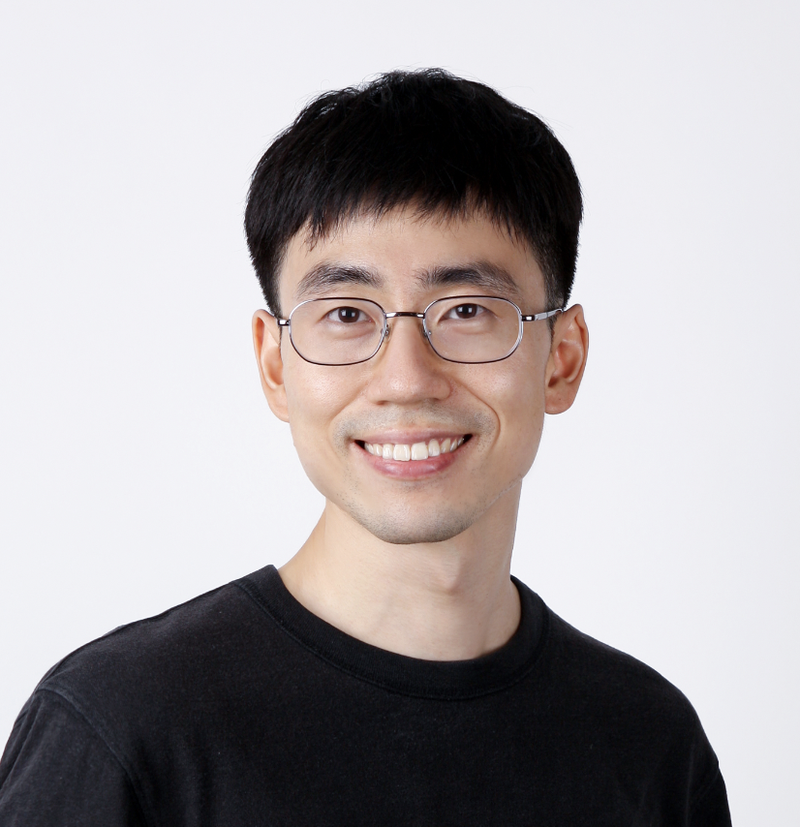
[Financial News] Technology developed by South Korean researchers can simultaneously address the problems of “sensitive information leaks” and “security network circumvention (hacking),” long considered major obstacles to companies’ adoption of generative artificial intelligence (AI).
The University of Seoul announced on the 11th that two research papers on large language model (LLM) safety, developed by a team led by Professor Hwang Won-seok of its Department of Artificial Intelligence, had been accepted simultaneously at the 2026 Conference on Empirical Methods in Natural Language Processing, one of the world’s most prestigious natural language processing conferences.
The first study introduced the “Q-CAT” system, a technology that blocks sensitive information—such as internal company contract terms, salary information and litigation-related documents—from leaking outside through AI in real time. Previously, every time security rules changed, companies had to retrain the entire, large-scale AI system from scratch, requiring enormous amounts of time and money. Instead of retraining the AI, the research team introduced a method that automatically generates examples of prohibited and permitted questions based on security rules entered by an administrator, then compares them with users’ questions in real time. As a result, without any additional training costs, the system achieved greater accuracy than existing large AI models while processing queries up to several hundred times faster.
The second study examined hacking techniques that bypass AI safety measures and a defense against them (“THETIS”). The team focused on the fact that when AI refuses a dangerous request, it usually begins its response with the English word “I.” The study found that 88% of refusal responses began with this word, and revealed that hackers could exploit this refusal pattern to disable AI security measures with a probability of at least 90%. As a defense, the team created a new training dataset that teaches AI to steer its responses naturally toward harmless, general information instead of issuing an explicit refusal. Applying this technology brought the success rate of hacking attacks close to 0%.
The research was recognized for both its technical excellence and practical value at a leading international conference to which more than 17,000 papers were submitted. Professor Hwang Won-seok of the University of Seoul, who led the research, said, “We sought to address from multiple angles the practical security issues and structural vulnerabilities companies face when using generative AI in real-world settings,” and added, “We will continue to propose safe and reliable alternative AI technologies.”
[email protected] Kim Man-gi Reporter