U.S. activist Teton takes aim at Dong-A Pharmaceutical, presses for Kang Jung-seok's board seat and 50 billion won in shareholder returns [fn Market Watch]
- Input
- 2026-11-11 19:16:46
- Updated
- 2026-11-11 19:16:46
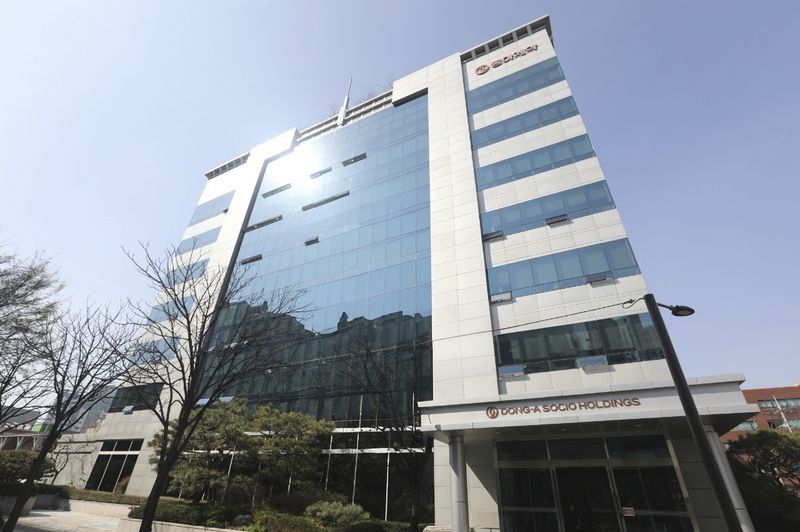
[Financial News] U.S.-based activist investment firm Teton Capital is pressing Dong-A Pharmaceutical (formerly Dong-A Socio Holdings) to overhaul its governance. It is calling for Chairman Kang Jung-seok to be appointed a registered director and for annual shareholder returns of 50 billion won. The move has drawn attention because Teton is challenging not only the level of dividends but also funding for affiliates and the board's oversight role.
According to investment banking (IB) industry sources on the 11th, Teton Capital presented Dong-A Pharmaceutical's board with five proposed improvements to governance and capital allocation and requested a written response by December 4. It wants the company to implement the proposals by its regular shareholders' meeting in March next year.
The central issue is Chairman Kang's management accountability. Kang personally holds a 29.3% stake, rising to 42.3% when shares held by related parties and those covered by agreements to exercise voting rights jointly are included. However, as an unregistered executive, he is not subject to the shareholder election process or the compensation limits for registered directors. Last year, Kang received 2.3 billion won in compensation, exceeding the 1.304 billion won combined pay of the six registered directors. Teton called for Kang to be nominated as a registered director and put to a shareholder vote, or, if he remains an unregistered executive, for his compensation to be subject to shareholder approval.
Funding for affiliates is also at issue. As of August this year, Dong-A Pharmaceutical had provided 434.5 billion won in payment guarantees for affiliates, of which 243 billion won was related to BTGen. BTGen recorded cumulative net losses of 133 billion won from 2015 through last year. Kang is reportedly a personal holder of a 19.6% stake in BTGen.
Teton called for additional funding and payment guarantees for BTGen to be suspended until an independent review is completed. It also questioned the board's independence, noting that all 27 capital allocation proposals considered by the board from 2023 through August this year passed without opposition.
The efficiency of capital allocation has also come under scrutiny. From 2017 through last year, the consumer health business paid 339 billion won in dividends to the holding company. Over the same period, the holding company paid out just 78.2 billion won in dividends to shareholders. By contrast, substantial funds were invested in BTGen and biosimilar development, among other areas.
Teton called for new investments and payment guarantees to be assessed against the cost of capital, and for at least 50 billion won to be returned to shareholders annually if there are no suitable investment opportunities. It also proposed appointing an outside director with experience in overseas consumer goods businesses and linking executive compensation to shareholder returns.
Teton currently estimates Dong-A Pharmaceutical's fair value at 261,200 won per share, about three times the closing price of 86,200 won on the 6th. It argues that high-margin businesses centered on Bacchus and quality assets, including a 29.2% stake in ST Pharm, are not properly reflected in the share price.
In a response on the 6th, Dong-A Pharmaceutical said it was focused on strengthening business competitiveness and stabilizing its management system after the merger, and would develop the relevant systems in stages. Teton, however, said the response contained no specific commitments to act and began publicly engaging with shareholders.
Teton Capital CEO Ryan Albert said, “There is no need to wait any longer because of the merger,” adding, “Now that profits from the consumer health business can be returned to shareholders without going through dividends from subsidiaries, shareholder returns have actually become easier.”
Meanwhile, IB industry observers say the central issue in this shareholder engagement is the decision-making structure for capital allocation, rather than the size of dividends.
An IB industry source added, “The issue is what criteria the company uses to allocate the cash it earns to its affiliates, and how independently the board made its decisions in that process,” adding, “There is a possibility that disputes among shareholders over director appointments and shareholder return policies will intensify at next year's AGM.”
[email protected] Kim Kyung-a Reporter