“Conflict over major national projects is intensifying... A conflict management law must be enacted as soon as possible” [News Analysis from the Editorial Desk]
- Input
- 2026-11-11 18:28:25
- Updated
- 2026-11-11 18:28:25
These are large-scale projects intended to bolster the national economy and restructure the industrial landscape, but it remains to be seen whether they will proceed smoothly. Conflicts among stakeholders over development are intensifying.
The longer conflicts persist, the more they cause not only enormous economic losses but also divisions within local communities. Against this backdrop, legislation to manage public conflicts—which had failed to clear the legislative hurdle for more than 20 years—is now gaining momentum.
Introduced in August, the “Bill on the Prevention and Resolution of Public Conflicts” (the Public Conflict Bill) proposes establishing an institutional framework to prevent and resolve public conflicts in advance through measures such as conflict impact assessments, public deliberation and conflict mediation councils.
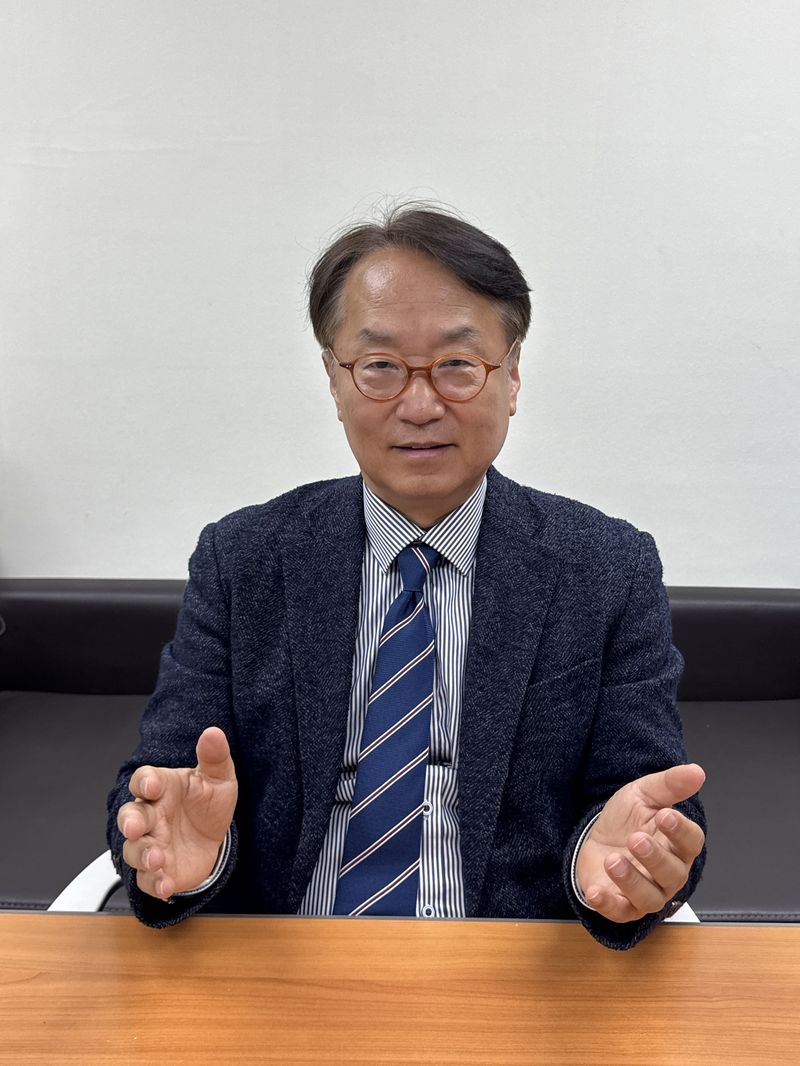
On the 6th, we spoke with him about the need for and expected effects of enacting the Public Conflict Bill at his office in the College of Politics and Economics at KHU, in Seoul’s Dongdaemun District.

A: The current administration is pursuing ambitious projects to promote balanced national development and restructure the industrial economy. These include projects on the scale of reshaping the nation: building nuclear power plants, dams, transmission lines, offshore wind farms and AI data centers; relocating public institutions; launching megaprojects; merging or abolishing public institutions; and promoting balanced regional development. But these projects are likely to trigger conflicts like those that arose over infrastructure projects pursued during the era of rapid development. That is because they will significantly alter existing structures of interests. Semiconductor plants, for example, need transmission lines that pass through other regions and an essential water supply brought in from outside. Conflicts could arise over how the benefits and burdens are distributed. If the Public Conflict Bill is enacted by the end of this year, before the current administration’s national projects get fully underway, those conflicts can be managed.
Q: Our society is often called a “conflict republic.” What is the fundamental reason conflicts remain unresolved and keep recurring?
A: Rapid economic development is a source of pride for our country, but a major reason for conflict is that our attitudes and institutions have not matured at the same pace. Some experts attribute the conflicts in our society to 19th-century political and administrative systems and the way they are run. The problem is that we have failed to create laws, institutions and practices suited to the development of democracy. As citizens’ sense of ownership has grown, they want to take part in government decision-making processes that affect them. But I believe the development-era institutions we have operated have not allowed sufficient participation by stakeholders, causing conflicts to spill into the open.
Q: Public conflicts damage social trust and communities as well as causing economic losses. Could you give some representative examples?
A: The loss of social capital is even more serious than the social costs caused by conflict. When conflicts arise over large-scale national projects or local government projects, the community is, in a word, devastated. Representative cases include the project to build a radioactive waste repository on Wido Island in Buan and the construction of a low- and intermediate-level radioactive waste repository in Gyeongju. The local community was also divided during Boeun County’s effort to attract a thermal power plant. When a public project splits a community into supporters and opponents, neighbors who once lived peacefully and in harmony come to hate and distrust one another. The most heartbreaking case is the naval base construction project in Gangjeong Village on Jeju Island. In the village made up of members of the same clan, households supporting the project and those opposing it raised different flags. In Gyeongju, too, the allocation of support funds tied to hosting a low- and intermediate-level radioactive waste repository deepened divisions among residents for a long time.
Q: Legislation on public conflict management has been pursued several times over about 20 years, but has repeatedly failed. Why did past efforts to pass a law fall short?
A: For more than 20 years, legislative efforts have been made across party lines under the name “Framework Act on Conflict Management.” But the National Assembly, the government and civic groups did not share an understanding of the need for and benefits of conflict management. I suspect the government, as a source of conflict, may have been seen as acting inconsistently by managing it. The problem is that, without a legal basis for government conflict management, the government has stepped in only after resentment and distrust had deepened, leaving society to bear enormous costs. We now fully recognize the need for conflict management. At present, the government responds under a presidential decree, which mainly applies to central government ministries. But many conflicts arise from projects pursued by local governments or public enterprises. Without a legal basis, they cannot actively respond to conflicts arising from their own projects. Nor can they provide appropriate administrative services to residents caught up in those conflicts. We now need to enact a law that makes clear conflict management is a government responsibility and provides the support needed to manage conflicts proactively under that law.
Q: What are the bill’s key provisions, and how would things change if it took effect?
A: The biggest change is that the law explicitly makes conflict management a duty of public institutions. Until now, public institutions had no obligation to manage conflicts. The most significant aspect of this bill is that conflicts arising from public projects will also be subject to management. Another major change is that projects expected to generate conflict will be required to undergo conflict impact assessments, enabling institutions to prepare proactively. The bill also recommends that public institutions make active use of various alternative conflict-management methods. It is also noteworthy that, when conflicts arise, public institutions and stakeholders are to form conflict mediation councils and resolve them through dialogue.
Q: You have said that top-down, government-led decision-making has fueled public conflicts. If the bill passes, how will policy decisions and implementation change?
A: For a long time, our government has unilaterally made and implemented policies and projects in pursuit of rapid growth. This is no longer an era in which the government can push through policies and projects unilaterally. We must ensure both a higher level of soundness in our policies and projects and a high level of social acceptance. The phrase “in the process of formulating and implementing public policies” appears throughout the Public Conflict Bill. This means that, rather than simply notifying the public and stakeholders after policies and projects have been decided, the government must build relationships of trust with relevant stakeholders and make and implement decisions with them from the earlier “planning and formulation stage.” This will be a turning point in transforming the way a development-era government works into a model befitting an advanced country in the 21st century.
Q: For the public, the tangible effects of a new law are important. What would change from the way things are now when conflicts arise over transmission lines or dam construction, for example?
A: Dam projects are one area in which our society has experienced conflict for a long time. In July 2024, the government announced 14 candidate sites for climate-response dams. The areas under consideration strongly opposed the plans as soon as they were announced. The government had once again announced a dam project unilaterally. If the Public Conflict Bill had been in place, this would not have happened. There would have been an opportunity to consult fully with stakeholders before announcing the dam projects. South Korea urgently needs to build transmission lines. That is why it plans to enact the “Special Act on the Expansion of the National Backbone Power Grid” in 2025 to speed things up. I hope the “Bill on the Prevention and Resolution of Public Conflicts” will become law before conflicts over transmission-line construction escalate, so that they can be prevented and resolved.
Q: There are also concerns that adding conflict-management procedures could instead delay policy decisions and increase administrative costs.
A: First, we need to consider the costs our society incurs because it fails to manage conflicts. According to a study commissioned by the Office for Government Policy Coordination in 2023, our society pays 232 trillion won a year because of conflict. That is an enormous loss. Yet a 20-year conflict over relocating a national mental hospital was resolved through one year of mediation, producing an agreement that satisfied everyone. A conflict over relocating a village near a nuclear power plant, which had lasted two years, was also successfully resolved through mediation. And a 14-month conflict over designating an urban wetland in Gwangsan District, Gwangju, where resentment had run deep, was resolved with help from a conflict mediation expert. Operating conflict-management procedures is not a cost but a sound, cost-effective investment and a wise way to overcome project delays.
Q: Even if the law is enacted, it could become a dead letter if it does not work properly on the ground. What is most important to make conflict management effective?
A: Even with a legal basis for conflict management, it is useless if there is no will to use it in practice. The reality is that it is not easy for public institutions to seek outside help when conflicts arise over their projects. We therefore need a system that allows public officials and employees of public enterprises to request conflict-management support without hesitation. We should also establish a conflict-management support center to closely monitor conflicts nationwide and provide necessary support in a timely manner before they become serious. Above all, heads of public institutions must take the lead and actively demonstrate leadership in conflict management. Performance evaluations of conflict-management activities should also be conducted rigorously so that public officials and public institution employees who have worked diligently receive fair rewards.
Q: What is the most important change this legislation would bring to our society?
A: If the Public Conflict Bill is enacted by the end of this year, it will lay the foundation for our country’s administrative culture to evolve into one befitting an advanced nation. An administrative culture that moves away from the development-era way of working and makes decisions collaboratively with stakeholders could take root. In other words, whereas conflicts have until now remained outside the institutional system, the new law would allow them to be resolved within it. This would make it possible to achieve greater social acceptance through sufficient dialogue, discussion and deliberation with stakeholders in advance. The government would be able to implement its policies and projects effectively while faithfully upholding democratic values. I hope this law will help our society shed the stigma of being a conflict republic and move toward a culture of dialogue and consensus.