“Give a newborn 50 million won in stocks, and it will grow to 200 million won” ... ‘ETF Father’ Bae Jae-kyu’s bold plan to bolster the stock market
- Input
- 2026-11-12 05:20:00
- Updated
- 2026-11-12 09:55:00
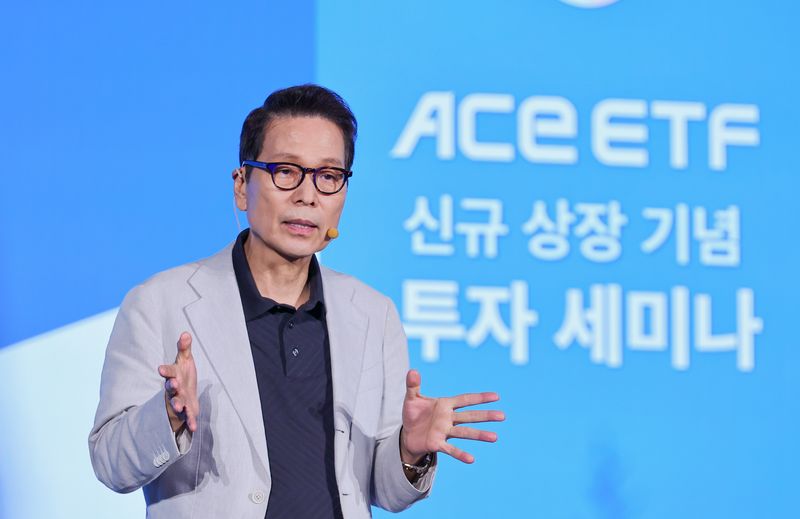
[Financial News] Amid a prolonged wave of heavy foreign selling that has increased volatility in South Korea’s stock market, Bae Jae-kyu, head of Korea Investment Management and known as the “father of ETFs,” has proposed a public fund that would use excess tax revenues from factors such as the semiconductor boom to invest for the long term in domestic and overseas stocks, with the returns going to future generations.
On the 11th, Bae said on social media (SNS), “As volatility in the stock market has become so high, people are asking whether at least a stock market stabilization fund should be set up,” and proposed combining the government’s planned Future Growth Fund with a market-stabilization function.
South Korea’s stock market has recently been swinging sharply with shifts in supply and demand, as there are too few long-term buyers to absorb foreign investors’ selling. Foreign investors had net sold domestic stocks for seven consecutive months through last month, and also sold more than 10 trillion won worth of stocks on the KOSPI market from the 2nd to the 6th of this month. On the 5th in particular, their net sales for the day reached about 3.4 trillion won, and the KOSPI plunged at least 5%. With the buying capacity of institutions, including pension funds, also limited, calls are growing to expand the role of public funds.
Instead of using tax revenues collected beyond initial projections, partly due to the semiconductor industry boom, on one-off fiscal spending, Bae proposed a model for long-term, diversified investment across domestic listed stocks. The idea is to steadily buy stocks listed on the KOSPI and KOSDAQ markets in proportion to their market capitalization, while also investing in overseas assets such as MSCI indices.
The aim is for the state to participate as a long-term investor, providing steady buying demand in the stock market while transferring accumulated financial assets to future generations, including children and young adults. As a specific model, he suggested allocating newborns beneficial interests in stocks worth 50 million won at acquisition cost, which they could withdraw after turning 30.
Bae estimated that if an average annual total return of 5% were sustained for 30 years, an investment worth 50 million won could grow to about 216 million won. He explained that this would “create a virtuous cycle in which the state’s temporary excess tax revenues strengthen the stock market’s long-term investment base and the gains from corporate growth return to future generations as assets,” adding that it could also help future generations build assets and promote financial education.
However, many in and outside the market are also concerned about potential side effects if large public funds begin buying stocks. Key issues to address include market price distortions caused by artificial intervention in supply and demand, the concentration of voting rights, responsibility for investment losses if the stock market falls, and questions of intergenerational equity stemming from the use of specific birth years as a criterion.
Bae also qualified his proposal, saying, “This is not an implementation plan drawn up by policy experts after thorough review.” He said that, as the proposal moves toward actual implementation, stable funding, legal and tax reforms, and guarantees of the fund’s operational independence would all need to be carefully considered.
Meanwhile, last July, Bae drew attention in the industry by publicly arguing that single-stock leveraged and inverse exchange-traded funds (ETFs) “should be allowed to die a natural death,” after pointing to the risks of investing in these products amid increased volatility in South Korea’s stock market.
[email protected] Moon Young-jin Reporter