Song Young-gil: “Preserve the ROK-U.S. Alliance, but safeguard the benefits of ties with Russia, too”
- Input
- 2026-11-11 17:10:43
- Updated
- 2026-11-11 17:10:43
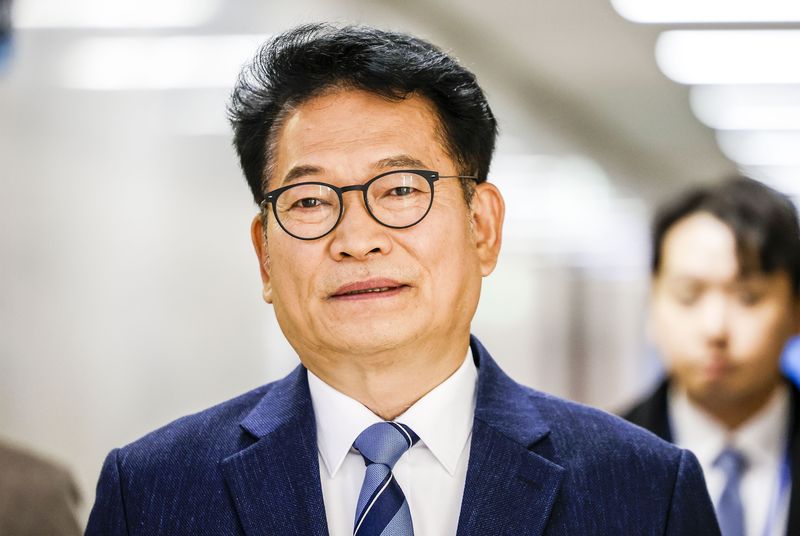
At a policy proposal forum titled “Seeking Peace on the Korean Peninsula by Restoring ROK-Russia Relations,” held at the National Assembly on the 11th, Rep. Song said, “Relations with the United States remain our most important strategic alliance,” adding, “Rather than being dragged along by the United States, we need to keep persuading it and ensure our position is reflected.”
He specifically raised the losses domestic companies have suffered as a result of sanctions against Russia. “Hanwha Ocean is supposed to build and deliver six icebreaking LNG carriers, but because of economic sanctions, the completed vessels are rusting as they sit afloat at sea,” Rep. Song said, calling it “a serious problem.” He added, “We’re struggling to find a way to resolve this, and that’s a diplomatic challenge.” His point was that the disruption to a domestic shipbuilder’s fulfillment of a contract related to a Russian Arctic LNG development project should be resolved through diplomacy.
He also stressed the importance of cooperation on the Arctic shipping route. Rep. Song cited the route as one of the main reasons South Korea should maintain ties with Russia. The underlying concern is that restoring relations with Russia is not merely a diplomatic choice but is directly tied to economic interests in the energy and shipping sectors.
He also expressed a critical view of Europe’s hard-line stance toward Russia. Rep. Song cited concerns that Russia would invade not only Ukraine but also the three Baltic states and Europe as a whole, saying, “It seems that such assumptions and fears are being reproduced and spread within Europe itself.” He questioned Europe’s move to define Russia as a security threat and sever ties with it despite having long depended on Russian energy.
He also pointed to rising energy prices and living costs as Europe reduced its dependence on Russian natural gas. Referring to former U.S. Secretary of State Henry Kissinger’s views on diplomacy, Rep. Song asked rhetorically, “Why should Russia be excluded to that extent?” At the same time, he assessed that friction with Europe would be an unavoidable challenge as South Korea worked to restore ties with Russia. “Trump is trying to improve U.S.-Russia relations, while Europe is putting even stronger pressure on Russia than the United States is,” Rep. Song said, expressing concern that “we could come under considerable attack from Europe as we work to resolve ROK-Russia relations.”
He also suggested that U.S. President Donald Trump’s efforts to improve relations with Russia could present a diplomatic opportunity for South Korea. He analyzed that Trump intends to restore ties with Russia to counter China, and argued that the war in Ukraine must ultimately be resolved through compromise. South Korea, too, should explore ways to advance its national interests by participating in postwar peace and reconstruction projects.
The Russian side also left open the possibility of restoring relations. In a congratulatory address read on his behalf that day, Georgy Zinoviev, Russia’s ambassador to South Korea, said the difficulties in bilateral relations stemmed more from external factors than from fundamental conflicts of interest. “Russia will remain ready to engage in dialogue with all of South Korea’s constructive cooperation partners,” he said.
[email protected] Jiwon Song Reporter