Ruling party curbs prosecutors’ investigative powers, gives NHIS direct investigative authority
- Input
- 2026-11-11 16:52:08
- Updated
- 2026-11-11 16:52:08
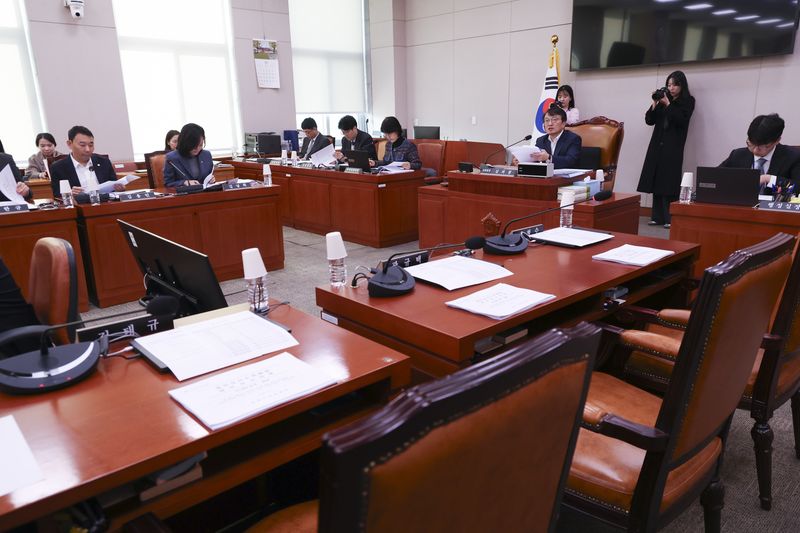
According to the National Assembly, on the 11th the Legislation and Judiciary Committee’s Subcommittee on Bill Review No. 1 considered eight bills to amend the Special Judicial Police Act together and approved a revised version granting the NHIS special judicial police powers. The bill was passed by the Democratic Party alone, with all People Power Party lawmakers absent.
The key provision of the amendments is to allow the NHIS to directly investigate so-called “sham hospitals”—medical institutions run by people who are not qualified to establish them, using the names of doctors or others—and pharmacies operating under borrowed licenses. The NHIS can currently recover health insurance benefits paid improperly, but it has no criminal investigative authority.
The government and the NHIS say delays in investigating illegal medical institutions are increasing losses to the health insurance fund. From 2009 to 2023, the amount ordered to be recovered from illegally established institutions totaled 3.3763 trillion won, but only 233.6 billion won was actually collected, for a collection rate of just 6.9%.
The Korean Medical Association, however, opposes the move, arguing that if the NHIS, which has authority to conduct administrative investigations and recover insurance benefits, also takes on criminal investigations, it could lead to excessive scrutiny of medical institutions. It also raises the possibility of overlapping investigations with the existing police and special judicial police officers at the Ministry of Health and Welfare. The KMA plans to hold a rally opposing the measure in front of the National Assembly Building on the 12th.
Reports say concerns about potential abuse of investigative powers were also raised among Democratic Party lawmakers that day. The subcommittee asked the NHIS to submit, before the plenary meeting on the 13th, measures to prevent abuse of investigative powers and protect suspects’ right to a defense. In the legislative process ahead, the balance between effective enforcement against illegal medical institutions and oversight of investigative powers is expected to become a key issue.
[email protected] Jiwon Song Reporter