JCS Chairman Jin Young-seung Checks Air Defense Readiness, Reviews the KF-21’s Initial Operational Deployment and Key Assets of the Three-Axis System
- Input
- 2026-11-11 16:21:00
- Updated
- 2026-11-11 16:21:00
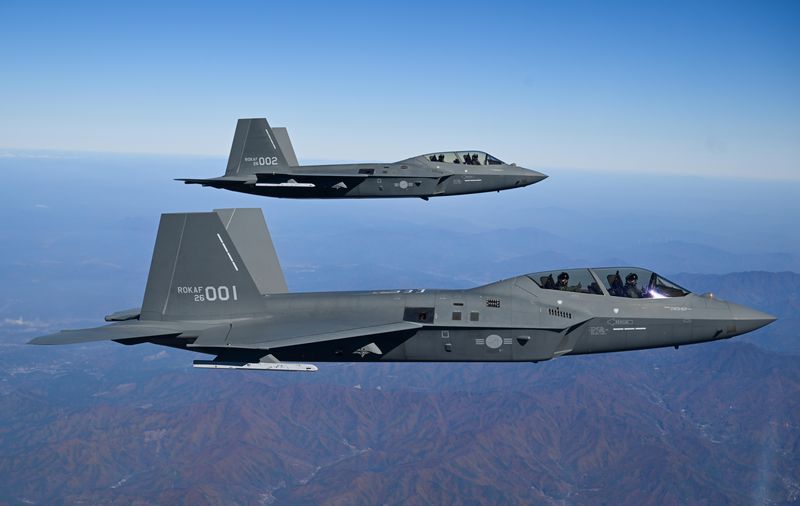
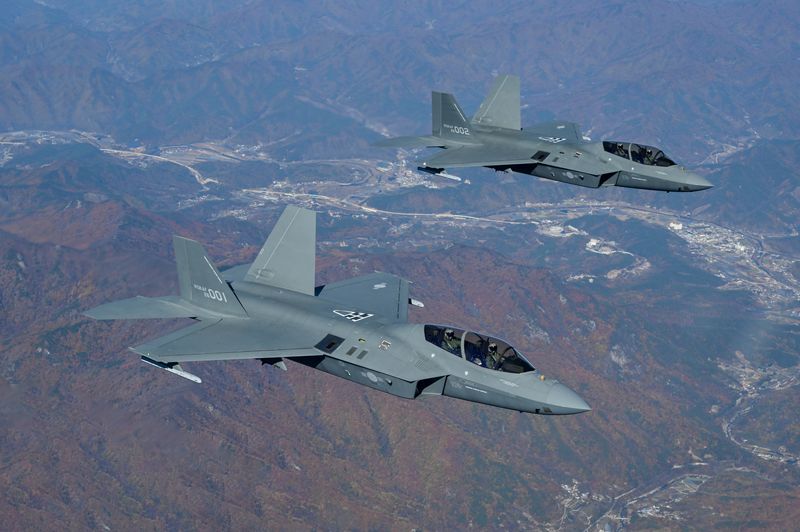
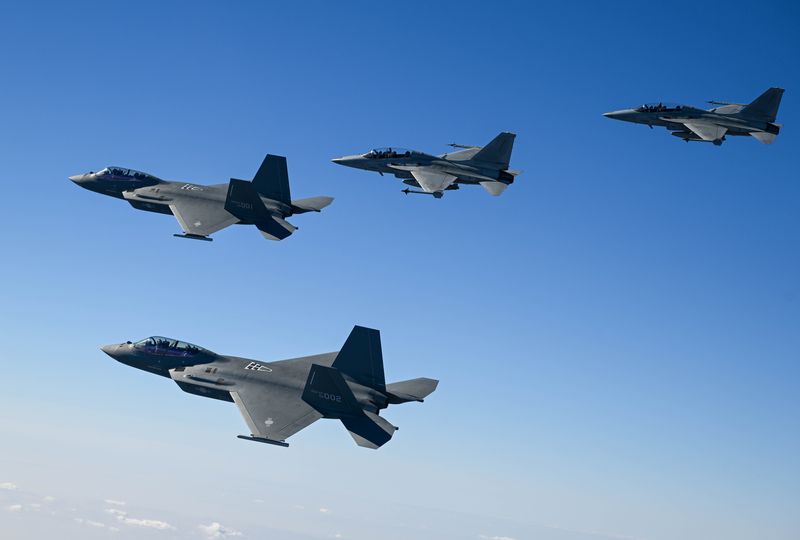
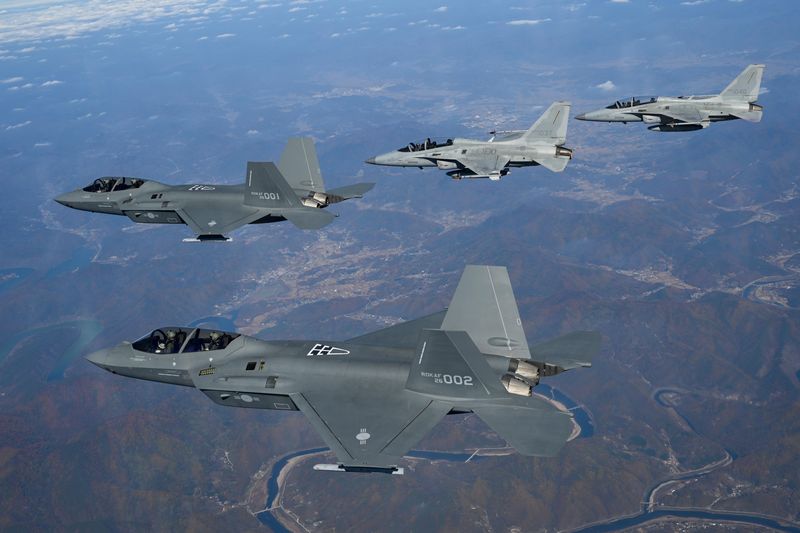
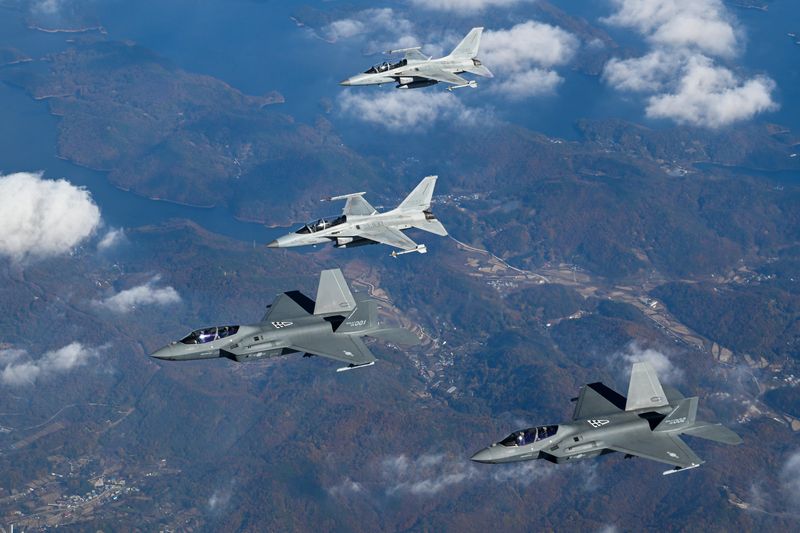
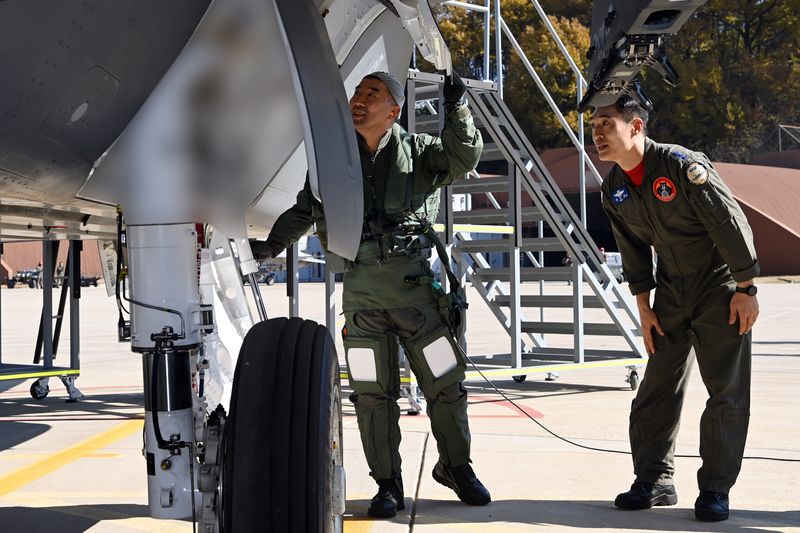
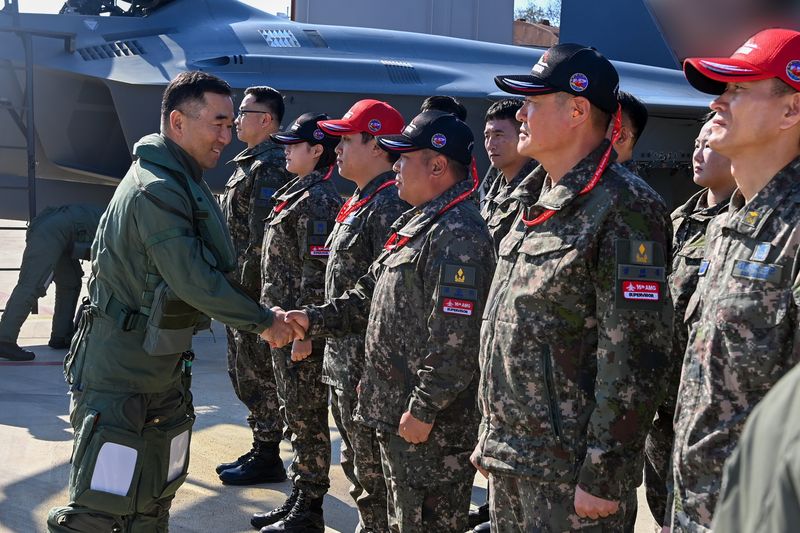
According to the Republic of Korea Joint Chiefs of Staff, Chairman Jin Young-seung first inspected the firm state of military readiness at a fighter wing in the central region that day, then boarded the next-generation fighter KF-21, built using South Korean technology, and personally conducted a command flight. After experiencing the Air Force’s enhanced capabilities through coordinated formation flight with the domestically developed light attack aircraft FA-50, Chairman Jin confirmed the aircraft’s overall excellence and debriefed with the pilots. At the meeting, he firmly instructed them: “Deter the enemy with overwhelming air power, and maintain a perfect state of readiness and capability to scramble immediately and respond if a situation arises.” He also urged service members preparing for the aircraft’s initial operational deployment to take pride and feel a sense of responsibility in operating a symbol of independent national defense.
Chairman Jin then visited a missile-and-space surveillance unit in the central region carrying out ballistic missile surveillance missions and closely inspected the operational status of the Korean Air and Missile Defense (KAMD) system. Emphasizing that “this is where missile defense operations begin, as the first place to detect the enemy’s missile provocations,” Chairman Jin ordered: “Maintain a thorough early-warning posture around the clock so that any kind of surprise provocation can be detected and relayed promptly.” He also underscored the military’s fundamental mission of protecting the lives and safety of the people and reiterated the need to ensure the effective operation of key assets in the Republic of Korea’s three-axis system.
The KF-21’s operational potential, verified during this on-site inspection, is also drawing high praise in the global military market. A leading U.S. military publication recently conducted an in-depth analysis of aircraft vying for air superiority worldwide and included the KF-21 on its list. The publication classified the KF-21 as a platform on par with high-end assets set to lead future aerial warfare, including the United States’ F-22 and F-35, China’s J-20 and Russia’s Su-57, all existing fifth-generation stealth fighters, as well as the U.S. Air Force’s Next Generation Air Dominance (NGAD) program and the sixth-generation fighter “Tempest,” being jointly developed by the United Kingdom, Italy and others.
In particular, the foreign media described the KF-21 as a state-of-the-art “4.5-generation-plus platform” that offers excellent value for money and can be operated in large numbers. It praised the aircraft’s unique potential for expansion, saying it could evolve into an upgraded variant (KF-21EX) with greatly enhanced stealth capabilities or a “manned-unmanned teaming (MUM-T)” system combining it with unmanned assets (drone weapons). The report also cited recent joint U.S.-South Korean flights involving the U.S. Air Force’s F-16s and U-2Ss and the Republic of Korea Air Force’s F-35As. It assessed that the KF-21, equipped with a high-performance AESA radar, long-range Meteor air-to-air missiles and, in the future, supersonic air-to-ship missiles whose development is being delayed by policy-related verification logic, would serve as a powerful “force multiplier” to enhance the deterrence of the U.S.-ROK alliance in the Indo-Pacific region.
[email protected] Lee Jong-yoon Reporter