SoftBank rebuts Musk’s “default” claim as Masayoshi Son’s AI bet faces a test
- Input
- 2026-11-11 15:19:20
- Updated
- 2026-11-11 15:19:20
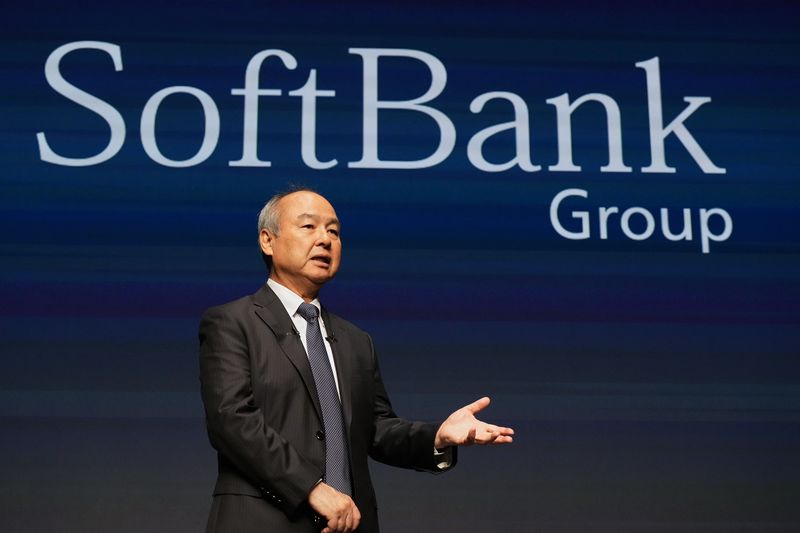
【Financial News, Tokyo—Correspondent Seo Hye-jin】SoftBank Group Corp. (SBG) rebutted Tesla CEO Elon Reeve Musk’s claim that it had defaulted, calling it “completely unfounded.” However, it emerged that SBG had booked a loss of about 5 trillion won after reviewing its procurement plans for power-generation equipment for data centers, fueling concerns about Chairman Masayoshi Son’s massive investment in artificial intelligence (AI).
The Yomiuri Shimbun reported on the 11th that SBG Chief Financial Officer (CFO) Yoshimitsu Goto denied Musk’s default claim at an earnings briefing the previous day.
Musk claimed on the 6th on X (formerly Twitter) that “SoftBank has defaulted on its turbine orders.” Turbines are used in power-generation equipment that supplies electricity to data centers.
Goto said he had “no idea at all why [Musk] posted that,” and stressed that SoftBank was not in default and was continuing to pursue AI-related businesses.
Default denied, but the costs of upfront investment are coming into focus
The controversy coincided with the costs of SBG’s data center investments being reflected in its financial results.
In its consolidated results for April through September this year, announced the previous day, SBG booked a loss of 597.2 billion yen (about 5.0225 trillion won) on power-generation-related equipment for U.S. data centers. The loss resulted from revising procurement plans after contracting in advance for equipment that takes a long time to order and deliver.
SBG posted a consolidated net loss of 1.1153 trillion yen (about 9.3797 trillion won) for July through September this year, swinging from a profit in the same period a year earlier. It was the company’s first quarterly loss since October–December 2024. Costs from data center investments weighed on results as gains in the valuations of investee companies such as OpenAI began to stall.
The LTV ratio—the ratio of net interest-bearing debt to the value of its holdings—also rose 2.9 percentage points in three months, reaching 15.9% at the end of September. SBG remained below its self-imposed ceiling of 25%, but the decline in the value of its shareholdings reduced its financial leeway.
Goto also mentioned the possibility of delays across the data center business, saying that views calling for AI safety and other factors to be verified were gaining ground.
AI push focused on the U.S. faces regulatory and financing hurdles
Son has expanded investment in the United States in step with the Trump administration’s policy of promoting AI. A prominent example was the announcement at the White House, shortly after President Trump took office in January last year, of the Stargate Project, a plan to invest a total of $500 billion in AI infrastructure.
SBG’s core investment areas include AI models and infrastructure, semiconductors, robotics and other forms of physical AI. Its investment in OpenAI alone totals 10 trillion yen (about 84.1 trillion won).
However, regulations on data center construction have emerged as a potential hurdle since the U.S. midterm elections. According to the Nihon Keizai Shimbun (The Nikkei), SBG subsidiary SB Energy plans a total of five data center projects in Texas and Ohio, but construction has yet to begin on 90% of the buildings. In both states, candidates opposed to data center construction won gubernatorial elections. They said they would ban construction until the relevant laws were put in place, heightening concerns about project delays.
The listing schedules of SBG’s investee companies are also uncertain. OpenAI filed for an initial public offering (IPO) in June but postponed its listing until 2027 or later. SB Energy also released a listing prospectus in September, but no listing date has been set. A downturn in U.S. AI investment could affect the growth and financing of both companies.
Son is not backing down from his commitment to invest. At an event in Kyoto last month, he said, “I think the very question of whether AI is a bubble is wrong,” adding, “because it is only just beginning.”
The Nikkei wrote in its analysis, “The more investment is concentrated in the U.S. AI market, the greater the shock if it fails,” adding, “If market conditions and financial indicators deteriorate, SBG could shift from aggressive investment to defensive management.”
[email protected] Seo Hye-jin Reporter