“A 10% rise in K-Content popularity lifts consumer goods exports by 1.7%” ... KITA: “Promotions should focus on the early stages of a hit”
- Input
- 2026-11-12 06:00:00
- Updated
- 2026-11-12 06:00:00
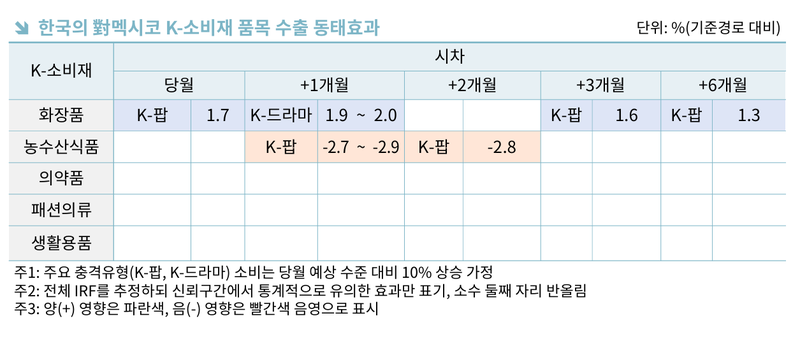
On the 12th, the Korea International Trade Association’s Institute for International Trade (IIT) released a report titled “An Analysis of the Dynamic Effects of K-Content on K-Consumer Goods Exports and Its Implications.” According to the association, exports of K-consumer goods totaled $45.6 billion last year, accounting for 6.4% of all exports. K-consumer goods refers here to the five consumer goods the government identified as having strong growth potential in 2019: agricultural and fisheries products, household goods, cosmetics, fashion apparel and pharmaceuticals.
The analysis covered four countries—Germany, Mexico, Japan and Vietnam—selected with consideration for their cultural spheres and income levels from among countries with annual K-consumer goods exports of at least $100 million. It used monthly data from July 2021 through June this year. K-pop was measured by views for YouTube Music’s Global Top 20, and K-dramas by viewing hours for Netflix’s Global Top 10.
The report assumed that consumption of this content would rise 10% above expectations in a given month, then calculated how exports of each product category responded over time. First, in Western markets, K-pop’s effect on cosmetics exports was particularly notable. In Mexico, cosmetics exports rose 1.7% in the same month, 1.6% three months later and 1.3% six months later. In Germany, cosmetics exports rose 1.6–1.7% in the month K-pop became a hit, while K-dramas boosted cosmetics exports by 1.6% with a two-month lag.
In Asia, K-dramas had an effect on everyday consumer goods. In Vietnam, a 10% rise in K-drama popularity was followed by immediate increases in exports of cosmetics (0.7%) and household goods (0.5%) in the same month, while exports of agricultural and fisheries products rose 0.5% two months later. In Japan, exports of agricultural and fisheries products rose 0.4% three months after a K-drama hit. The report suggested that interest in products repeatedly seen in dramas and in Korean consumer culture translated into purchases.
KITA recommended marketing timed to each product category’s response. For products such as agricultural and fisheries products, whose effects emerge later, the recommendation was to keep advertising going from the early stages of a hit and step up sales promotions when exports begin to respond. It also said that links between content and consumer goods should vary by region, focusing on K-pop and cosmetics in Western markets and K-dramas and agricultural and fisheries products in Asia.
“Strategies need to take into account the characteristics of each country’s market and when the ripple effects of content emerge,” said Kwanjae Lee, a senior researcher at KITA.
Lee added, “Local sales promotions and online publicity should be stepped up as content popularity rises, and follow-up marketing should turn initial interest into sustained purchases.”
[email protected] Kim Dong-chan Reporter