Two Types of Intestinal Metaplasia, a Precancerous Condition for Gastric Cancer, Differ; Jeju National University Hospital Professor Jang Bo-geun Wins Medical Award
- Input
- 2026-11-11 14:43:47
- Updated
- 2026-11-11 14:43:47
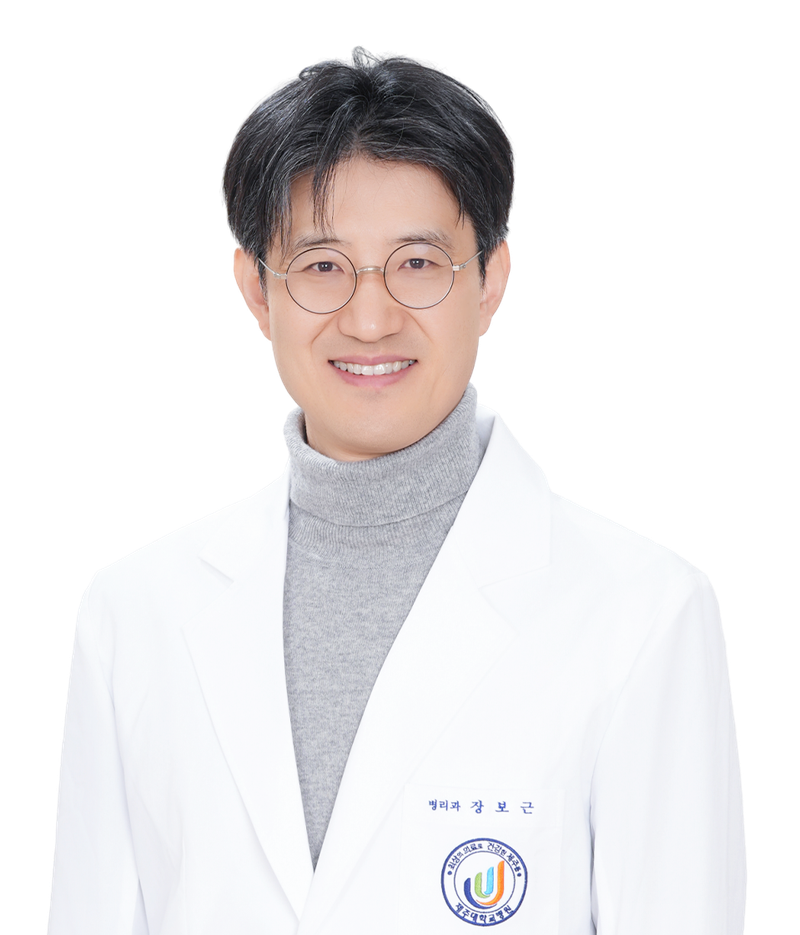
【Financial News, Jeju — By Jeong Yong-bok】 A study showing that the two types of intestinal metaplasia—a change in the stomach lining that can progress to gastric cancer—have different biological characteristics has received a national medical science award. Professor Jang Bo-geun of the Department of Pathology at Jeju National University Hospital received the Basic Medical Science Award at the 24th Pfizer Medical Award for his work offering clues to understanding how gastric cancer develops and distinguishing high-risk lesions.
According to Jeju National University Hospital on the 11th, Professor Jang received the Basic Medical Science Award at the 24th Pfizer Medical Award ceremony, held on the 4th at Yonsei University Alumni Hall in Seoul.
The Pfizer Medical Award is a medical research award organized by the Korean Academy of Medical Sciences and sponsored by Pfizer Korea. Established in 1999, it selects recipients based on research achievements in three fields: basic medical science, clinical medicine and translational medicine. This year, along with Professor Jang, Professor Kim Jung-seon and Professor Kim Dong-wook of Yonsei University College of Medicine received the Clinical Medicine Award and the Translational Medicine Award, respectively.
Professor Jang's research focused on intestinal metaplasia, which is associated with the risk of developing gastric cancer. Intestinal metaplasia is a condition in which the cells that make up the stomach lining change to resemble those in the intestinal lining. It is known as a precancerous lesion that increases the risk of gastric cancer, but having intestinal metaplasia does not necessarily mean that it will progress to cancer.
Intestinal metaplasia is classified as complete or incomplete based on the tissue's appearance. Previous studies have reported that the incomplete type is more closely associated with the risk of gastric cancer than the complete type, but the fundamental biological differences between the two have not been fully understood.
Professor Jang's research team found that the incomplete type is not an immature stage before cells fully change into intestinal cells, but a distinct state with characteristics of both stomach and intestinal cells. The complete and incomplete types also differed in their epigenetic features, which regulate gene activity.
Epigenetic changes alter how genes function even when the DNA sequence itself remains unchanged. The research team established that differences between the two types are apparent not only in the cells' outward appearance but also in their internal gene-regulation processes.
The study used organoids cultured from patients' stomach tissue, along with spatial transcriptomics and epigenomic analysis. Organoids are small, lab-grown models of organs designed to reproduce the cellular characteristics of actual organs. Spatial transcriptomics is a technique for analyzing which genes are active based on the locations of cells within tissue.
The research team compared the cellular characteristics of the two types in patient tissue and organoids, and also identified molecular features resembling incomplete intestinal metaplasia in gastric cancer tissue. The findings were published in Gut, an international journal in the field of gastroenterology issued by the UK-based medical publisher BMJ Group.
The study is relevant to assessing the risk of gastric cancer, which is also common in South Korea. According to the Ministry of Health and Welfare and the Korea Central Cancer Registry's 2023 National Cancer Registration Statistics, there were 28,943 new cases of gastric cancer in South Korea, the fifth-highest number among all cancer types.
Professor Jang said, "After years of effort, we were able to expand research that began with patient tissue into studies using organoids, spatial transcriptomics and epigenomics." He added, "I will connect important questions identified in local healthcare settings to research and contribute to predicting and preventing gastric cancer."
[email protected] Jeong Yong-bok Reporter