Incheon to link downtown green spaces, culture and commercial districts...‘Green Linkway’ project gets underway
- Input
- 2026-11-11 14:28:06
- Updated
- 2026-11-11 14:28:06
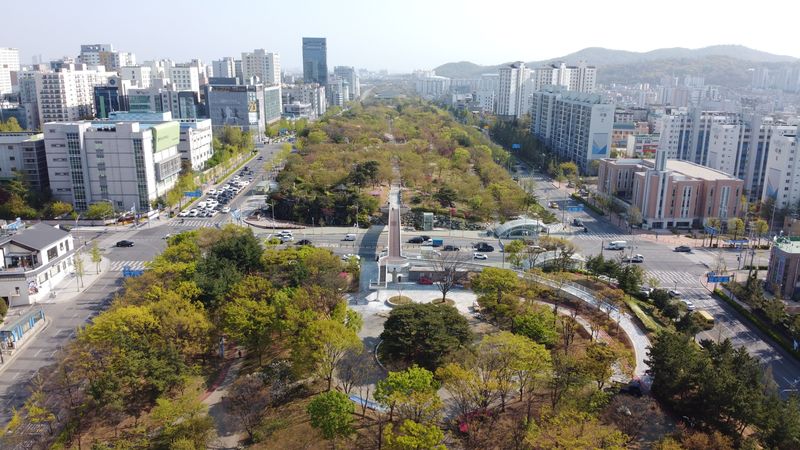
【Financial News, Incheon = Han Gab-soo, reporter】 A project to reorganize urban space in downtown Incheon is being pursued, bringing parks, cultural facilities, commercial districts and residential areas—which have been separated by roads and buildings—together as a single living area. The plan goes beyond expanding green space, aiming to connect cultural, tourism and commercial functions around pedestrian routes and create an urban environment where residents can walk, linger and spend. Incheon Metropolitan City said on the 11th that it is moving ahead with the creation of what it calls the “Green Linkway,” connecting Central Park with the Culture and Arts Center, Guwol-dong Rodeo Street, Munhak K-Culture Park and Guwol 2 District.
The project aims to connect resources scattered throughout the city into one continuous space. Central Park and nearby cultural and commercial facilities have been criticized for their poor accessibility and connectivity due to roads and other physical barriers.
The city plans to improve pedestrian routes within the park and establish paths that allow people to walk to nearby facilities, making better use of downtown space.
The first hub is Central Park. Building on the barrier-free pedestrian greenway already created under Phase 1, the city plans to carry out Phases 2, 3 and 4 to eliminate breaks between sections of the park. It will expand green pedestrian routes that people with limited mobility can use without difficulty and strengthen the park’s role as an urban neighborhood park where residents can enjoy walks and relaxation in their daily lives.
The park’s role will extend to nearby cultural and commercial facilities. By linking performances and exhibitions at the Culture and Arts Center to use of the park, the city aims to create a place where people can experience culture and the arts in daily life. It will also connect pedestrian routes to Guwol-dong Rodeo Street, encouraging visitors to the park to continue on to local businesses. The aim is to move beyond a model in which the park, cultural facilities and commercial areas operate independently and create an urban environment where they share visitors and foot traffic.
The Munhak K-Culture Park, planned for the area around Incheon Munhak Stadium, is also seen as a key project in this connecting corridor. The plan is to develop it into a multifunctional cultural and tourism hub where diverse K-content—from top-tier performances to esports, dramas, webtoons and characters—can be produced, experienced and consumed. The aim is to develop it beyond a simple performance and viewing venue into a space combining the content industry with tourism and commercial functions.
The public housing project in Guwol 2 District will also be integrated, bringing in a residential function. The city aims to create a living area where cultural, tourism and commercial facilities are close at hand, and establish an employment base linked to the K-content industry, bringing housing and jobs together in a self-sufficient city. A defining feature of the project is its aim to allow a tourism hub that attracts visitors from outside the area and everyday living spaces for local residents to coexist.
This project is a follow-up plan to the “Incheon Urban Spatial Innovation Vision,” which Incheon Metropolitan City announced last month. Rather than building or renovating individual facilities, it focuses on increasing the value of urban spaces by strengthening connections among existing city assets.
However, for urban space innovation to bring real changes to residents’ lives, it will need support not only from connected pedestrian routes but also from better transport access, revitalized commercial districts and coordination among the facilities. In particular, ensuring that existing businesses can thrive alongside the new development and that residents can access the area will be important challenges as large-scale cultural and tourism facilities and residential areas are built.
The city plans to flesh out detailed projects connecting Central Park with nearby hubs, gather input from local residents and experts, and proceed in stages.
A city official said, “We will develop Central Park not merely as a green space but as a core urban corridor linking culture, commerce and housing, creating a place where residents can enjoy nature and culture together in their daily lives and where we can also invigorate the local economy.”
[email protected] Han Gab-soo Reporter