A free-for-all over the ruling party’s real estate fixes; supply-side proposals join the property tax debate
- Input
- 2026-11-11 16:04:53
- Updated
- 2026-11-11 16:04:53
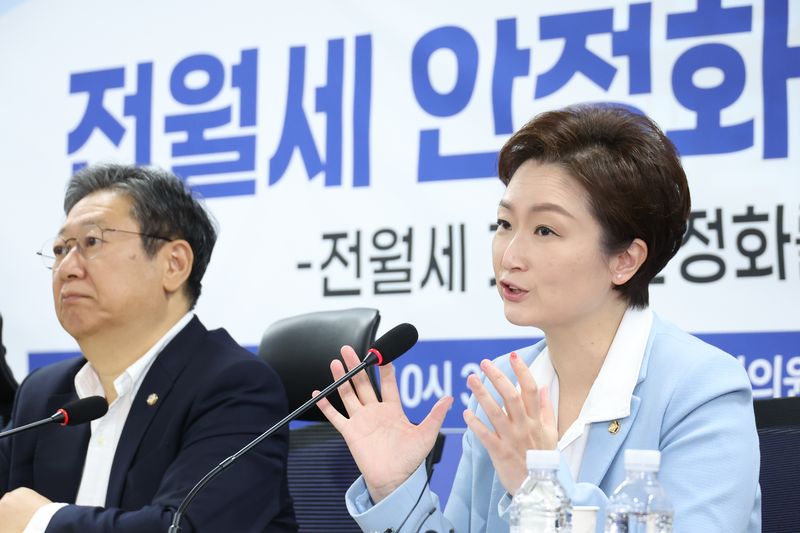
According to political circles on the 11th, the DPK’s Real Estate Pragmatism Study Group for Jeonse and Monthly Rent Stability (Jeonsilmo) held a forum at the National Assembly to discuss allowing older homeowners in the Seoul metropolitan area to receive the Korean Home Pension while renting out their homes, even if they move to the provinces after retirement. Under current rules, recipients are generally required to live in the home used as collateral; nonresidence is allowed only in exceptional cases, such as receiving medical treatment or caring for a child. The proposal is to add moving to the provinces as an exception, securing income in old age while maintaining the supply of rental housing in the Seoul metropolitan area.
Lee Un-ju, the DPK lawmaker who led Jeonsilmo, cautioned after the forum that regulations could shrink the supply of jeonse and monthly rentals, saying, “People who own multiple homes are targets of regulation in terms of ownership, but they are suppliers in the rental market.” Regarding an exception to the nonresidence rule for older people, she said, “If we reach a consensus, we’ll consider options such as introducing a joint bill.” On calls from some within the Seoul chapter of the party to adjust the Comprehensive Real Estate Holding Tax deduction, she called it “a peripheral issue” and stressed the importance of maintaining rental supply.
Meanwhile, some DPK lawmakers from Seoul have called for the basic deduction under the Comprehensive Real Estate Holding Tax for owners of a single home who do not live in it to be raised to 1.4 billion won, the same as for owner-occupiers. The Seoul chapter of the party is also discussing ways to speed up urban housing supply by shortening redevelopment and reconstruction procedures.
Despite these differences over real estate taxes and housing supply, raised by Jeonsilmo and some in the Seoul chapter of the party and at odds with the government’s approach, opposition from the party’s mainstream is substantial. DPK lawmaker Park Joo-min said on SBS Radio the previous day that easing the tax burden should be approached cautiously, given that the Comprehensive Real Estate Holding Tax is intended to curb property speculation and improve tax equity. Senior Supreme Council member Choi Min-hee also criticized raising the deduction for owners of a single home who do not live in it as “tax cuts for the rich” on social media. The government, too, is maintaining its principle of concentrating tax benefits on owner-occupied homes.
Reflecting this stance among the party’s mainstream, the government and Cheong Wa Dae, only four of Jeonsilmo’s 16 members (lawmakers) attended the forum it led that day, marking a low turnout.
As proposals emerge to ease the Comprehensive Real Estate Holding Tax burden, favor owner-occupiers and maintain rental housing supply, attention is also turning to whether the party and the presidential office can coordinate policy. President Lee Jae Myung is having a closed-door dinner at Cheong Wa Dae that day with DPK leader Kim Min-seok and floor leader Han Byung-do. Attention is focused on whether the ruling camp can find common ground on real estate policy.
The opposition bloc has branded the government’s real estate policy a failure and offered easing lending restrictions as an alternative. The Seoul Metropolitan Area Housing Innovation Forum, a lawmakers’ research group affiliated with the People Power Party and the Reform Party, held a seminar at the National Assembly Members’ Office Building that day under the title “I should’ve borrowed money to buy a house back then.”
The speaker was Choi Kyoung-hwan, former deputy prime minister for economic affairs and the economic chief during the Park Geun-hye administration. Choi gave a special lecture titled “Why Is the Lee Jae Myung Government’s Real Estate Policy Failing?” He criticized the administration for tightening lending restrictions, calling them “insane lending restrictions that no one who understands economics could impose.” His argument was that blocking transactions in existing homes diminishes the significance of new housing supply, which takes 10 to 15 years or longer.
Choi argued that the absolute cap on mortgage loans should be abolished and the LTV for bona fide homebuyers raised to 70–80%. He also called for scrapping the real estate tax reform package, including the phased abolition of the long-term holding special deduction, and urged a sweeping lifting of land transaction permit zones designated under the October 15 Real Estate Measures and other policies.
[email protected] Jiwon Song, Lee Hae-ram Reporter