Ethiopian Korean War veterans, undefeated in 253 battles and famed for crushing the enemy from the outset, honored with a memorial wall at home 70 years later
- Input
- 2026-11-11 14:20:59
- Updated
- 2026-11-11 14:20:59
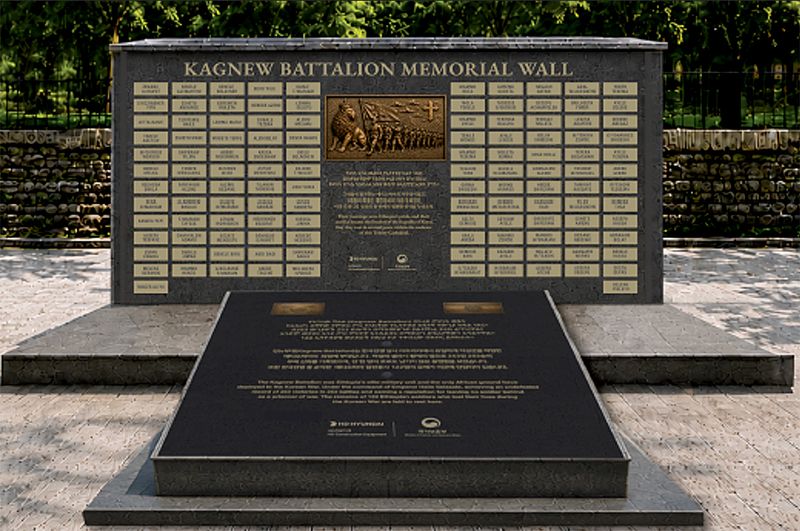
[Financial News] A memorial honoring the fallen members of Ethiopia’s Kagnew Battalion, who fought for Korea’s freedom during the Korean War after receiving the emperor’s special order, “Fight until you win; if not, fight until you die,” has been built to permanently inscribe their names on Ethiopian soil. The Ministry of Patriots and Veterans Affairs said it held a ceremony with HD Construction Equipment on the morning of the 11th (local time) at Holy Trinity Cathedral in Addis Ababa, Ethiopia, to unveil the Wall of Remembrance for 122 Ethiopian soldiers killed in the Korean War. The ceremony was held in conjunction with the annual International Memorial Day for UN Veterans (Turn Toward Busan) event in Ethiopia, adding to its significance.
The memorial wall is the first result of a memorandum of understanding on building commemorative facilities for UN veterans, signed by the Ministry of Patriots and Veterans Affairs and HD Construction Equipment on May 29. HD Construction Equipment covered the entire cost of construction. Ethiopia was the only country on the African continent to send ground troops as a security ally when the Korean War broke out. With the conviction that freedom must be defended against aggression, Emperor Haile Selassie formed the imperial guard’s most elite unit and personally bestowed on it the name “Kagnew,” meaning in Amharic either “to establish order out of chaos” or “to crush the enemy from the outset,” before sending the troops off to war.
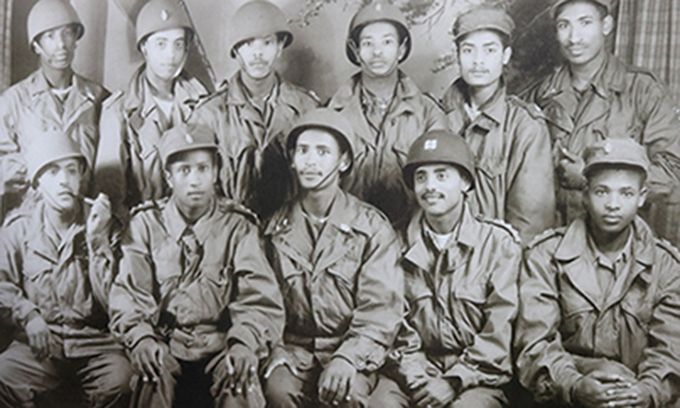
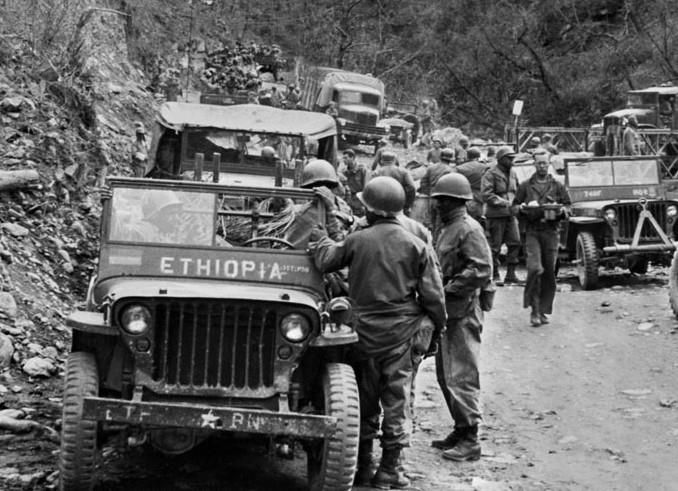
Over the course of the war, the Kagnew Battalion was deployed in four rotations, with a cumulative force of 3,500 to as many as 6,037 troops sent in battalion-sized units. The soldiers took part in 253 battles in brutal frontline engagements, including the Battle of Heartbreak Ridge, the Battle of Sniper Ridge and the Battle of Pork Chop Hill, recording an unprecedented unbeaten streak of “253 wins in 253 battles.” Despite the heavy losses—122 soldiers killed and 536 wounded during the deployment—not a single member of the battalion was taken prisoner. They also demonstrated rigorous military discipline and solidarity, recovering the bodies of their fallen comrades and bringing them home.
Their devotion went beyond military achievements. Even amid the fighting, Kagnew Battalion soldiers pooled their pay to establish the Bohwa Orphanage in Uijeongbu, Gyeonggi Province, and cared for Korean war orphans, demonstrating a profound humanity that transcended borders. But hardship awaited the heroes when they returned home. After a communist military dictatorship led by Mengistu came to power in Ethiopia in 1975, they were branded “the emperor’s puppets” for having fought the communist forces, and suffered the confiscation of their property and severe persecution—a tragic chapter in their postwar history.
Amid these historical upheavals, the fallen soldiers’ remains had been laid to rest beneath Holy Trinity Cathedral. But recent discussion of the possibility of moving them elsewhere heightened concerns among military authorities and the families. After actively consulting with the cathedral, the Ministry of Patriots and Veterans Affairs succeeded in safely reinterring the remains near the emperor’s tomb inside the cathedral this past April, in accordance with the families’ wishes.
The bronze plaque on the newly built memorial wall depicts the Kagnew Battalion’s soldiers advancing with a lion, a symbol of Ethiopia, and plaques bearing the names of the 122 fallen soldiers have been solemnly affixed on either side. Below them, an inscription expressing deep gratitude and remembrance—“Your footsteps were Ethiopia’s pride, and your sacrifice became the freedom of the Republic of Korea. May you find eternal rest in the embrace of this Trinity Cathedral”—has been engraved in Korean, English and Amharic side by side.
Among the many attendees at the ceremony, hosted by the Republic of Korea, were Lee Seung-jin, the Ministry of Patriots and Veterans Affairs’ director for international veterans affairs cooperation; HD Construction Equipment President Jae-young Moon; South Korean Ambassador to Ethiopia Koo Hong-seok; Estifanos, head of the veterans association; representatives of Ethiopia’s Ministry of Defense; veterans; and their families. In a congratulatory address read on his behalf, Minister Kwon Oheul said, “It is deeply meaningful to inscribe forever on Ethiopian soil the names of Ethiopian heroes who fought with all their might for the freedom and peace of the Republic of Korea and fell heroically.” He added, “The government will do its utmost both to repay the UN veterans who showed such profound humanity across borders and to ensure that their descendants remember and carry on this history of solidarity.”
[email protected] Lee Jong-yoon Reporter