Seoul Drug Management Center marks one year: 149 inpatient treatment cases and 39,000 drug tests
- Input
- 2026-11-11 11:34:17
- Updated
- 2026-11-11 11:34:17
[Financial News] The Seoul Drug Management Center, which the Seoul Metropolitan Government operates to treat and rehabilitate people with drug addictions, has provided 149 cases of specialized inpatient treatment over the past year or so. The number of drug-related tests has also surpassed 39,000, expanding the center’s role as a public addiction treatment institution.
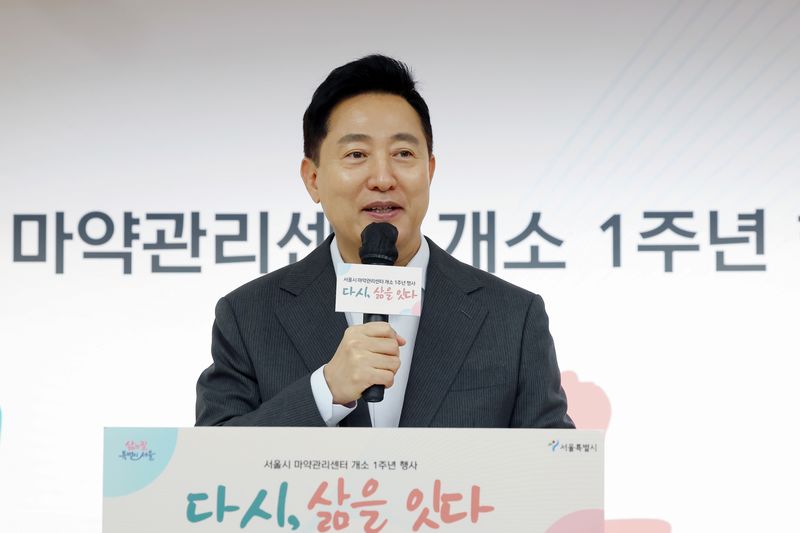
The Seoul Metropolitan Government held ‘Again, Connecting Lives,’ an event marking the first anniversary of the opening of the Drug Management Center, at Seoul Metropolitan Eunpyeong Hospital on the 11th, and announced its operational results to date and plans for future support.
The Seoul Drug Management Center is a public facility that provides integrated support to people with drug addictions, from counseling and inpatient treatment to rehabilitation and social reintegration. It began temporary operations in July last year and officially opened on October 31 of the same year.
The center recorded a total of 149 inpatient treatment cases: 47 from July to December last year and 102 from January to October this year. The total includes readmissions and therefore differs from the actual number of patients treated.
The Seoul Metropolitan Government established the center within Eunpyeong Hospital, covering approximately 1,900 square meters, and operates separate inpatient wards and outpatient treatment areas. After receiving intensive treatment during their hospital stay, patients can continue with outpatient care and rehabilitation programs at the same facility.
The center also ranked among the top nationwide in treatment results. Of the 1,649 people treated last year at 33 drug addiction treatment and protection institutions across the country, Eunpyeong Hospital treated 217, accounting for 13.2% of the total. This was the second-highest number nationwide. In April this year, the Ministry of Health and Welfare designated it a regional treatment and protection institution.
The center also expanded its drug-testing capabilities. From July last year through October this year, it conducted a total of 39,382 related tests. Starting in March this year, it broadened the scope of testing to include medical narcotics.
The center also runs programs tailored to the characteristics of those receiving treatment. For adolescents, it offers HOPE-DREAM, a counseling program it developed consisting of 10 sessions, and connects high-risk individuals with intensive inpatient treatment. For women with drug addictions, it provides psychological and emotional treatment that takes into account the link between traumatic experiences and drug dependence.
The center also provides support to prevent relapse after discharge. It runs an outpatient group rehabilitation program five days a week and has assigned four recovery support workers with personal experience in addiction recovery to provide counseling. Family counseling and education, along with self-help groups, help patients carry their treatment through to a return to daily life.
A man in his 30s who had repeatedly failed to stop using methamphetamine and ketamine is continuing his recovery after receiving inpatient treatment for about a month, alongside outpatient rehabilitation and family counseling. He still visits the hospital at least twice a week for treatment.
About 50 people attended the event, including Seoul Mayor Oh Se-hoon, people affected by addiction, their families and recovery support workers. After touring the center, Mayor Oh discussed with attendees the difficulties of the treatment process and ways to support social reintegration.
The Seoul Metropolitan Government plans to strengthen cooperation with judicial agencies and relevant community organizations to identify people in need of treatment from the investigation stage and ensure that treatment and rehabilitation continue after they are released from correctional facilities.
Mayor Oh said, “The drug problem is a serious crisis facing our society, and the Seoul Metropolitan Government has taken proactive steps ahead of the central government to support the treatment and rehabilitation of people with drug addictions.” He added, “The Seoul Metropolitan Government will continue to take the lead in tackling the drug problem and drive various changes. We will do our utmost to offer hope to those suffering because of drugs and to their families.”
[email protected] Seong Cho-rong Reporter