'Hangul Becomes Art' ... Hangul Artwork by U.S. High School Students to Be Exhibited at SFMOMA
- Input
- 2026-11-11 12:00:00
- Updated
- 2026-11-11 12:00:00
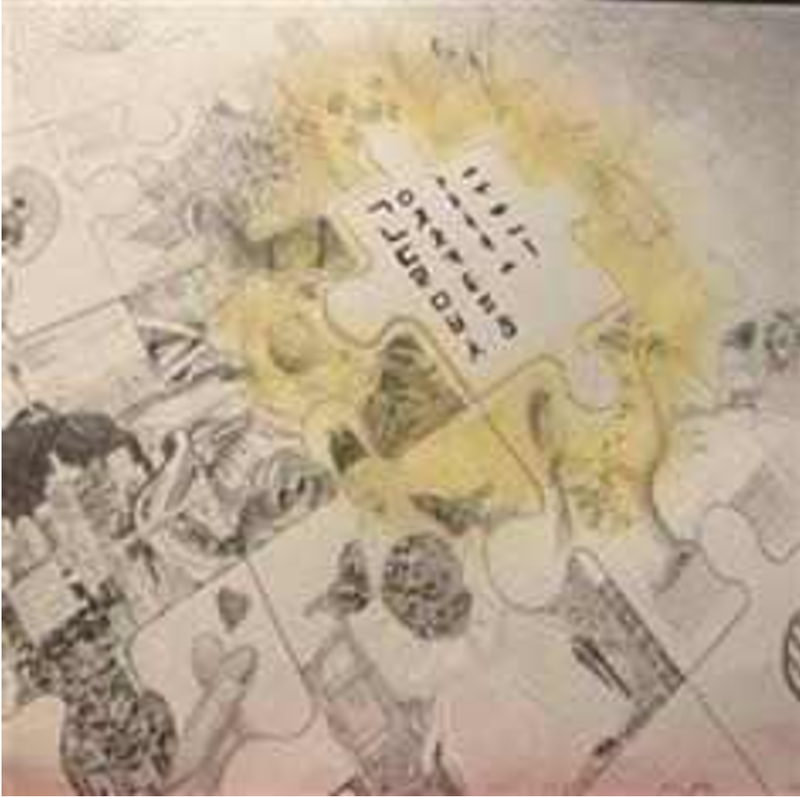
[Financial News] Twenty-four works of art by high school students enrolled in Korean-language classes at local U.S. schools and weekend Korean language schools will be exhibited at the San Francisco Museum of Modern Art (SFMOMA), the first and largest modern art museum in the western United States.
The Ministry of Education announced on the 11th that it will exhibit 24 works by local high school students in public areas of SFMOMA from the 12th through April 20 next year, under the theme “Hangul Beyond Boundaries.”
The exhibition was organized through a collaboration between the Ministry of Education’s Korean Education Center in San Francisco and SFMOMA. The participants are regular local high school students learning Korean, not art majors. They visually represented Hangul and Korean culture, exploring Hangul as a medium for creative expression. Videos documenting the process of making the works will be screened in the exhibition space alongside the students’ art, and the role of the Korean Education Center in San Francisco will also be introduced.
Among the works on display, “Core Pieces” by Anastasia Kolchina, a student at Foothill High School, depicts elements related to Hangul as puzzle pieces to represent the diversity of Hangul. “Building on the cultural elements of Korea I already knew, I did additional research and learned about Korea’s major landmarks, historical works of art, and even traditional sports,” Kolchina said. “This project helped me better understand the diversity and depth of Korean culture,” she added, reflecting on the experience.
Christina Kim, a student at Lowell High School, presented “Connected Through Korean Food,” a work inspired by her experience sharing Korean food with friends. Reflecting on the exhibition, she said, “I especially enjoyed drawing small details like grains of rice, sesame seeds, and green onions, and drawing chopsticks on a separate sheet of paper and gluing them on.” “Jeong,” a work by Han Da-yun, a student at Silicon Valley Korean School, will also be exhibited. One student reflected on the exhibition, saying, “As a Korean, I hadn’t felt the need to learn more deeply about the Korean language, but through this project, I think I was able to think about it deeply for the first time. It was a good experience.”
The exhibition is an effort to bring Korean-language education and arts education together. Lee Nan-young, the Ministry of Education’s director general for international education planning, said, “This exhibition is a meaningful example of an integrated educational approach that combines Korean-language learning with artistic creation.” She added, “We will continue to provide opportunities for students to learn in diverse ways by linking Korean-language education with various fields of education.”
Meanwhile, according to the Ministry of Education, as a result of support for Korean-language classes in U.S. public schools since 1999, the number of schools in the United States offering such classes rose by at least 70% over the 10 years from 155 schools with around 14,000 students in 2016 to 267 schools with around 26,000 students in 2026. This year, following promotion by the Korean Education Center in San Francisco, Colorado’s first Korean-language classes opened at William Smith High School and Forge Christian High School, each with one after-school class.
[email protected] Kim Man-gi Reporter