Audit flags inadequate response despite continued detection of PFAS in Busan tap water
- Input
- 2026-11-11 11:15:01
- Updated
- 2026-11-11 11:15:01
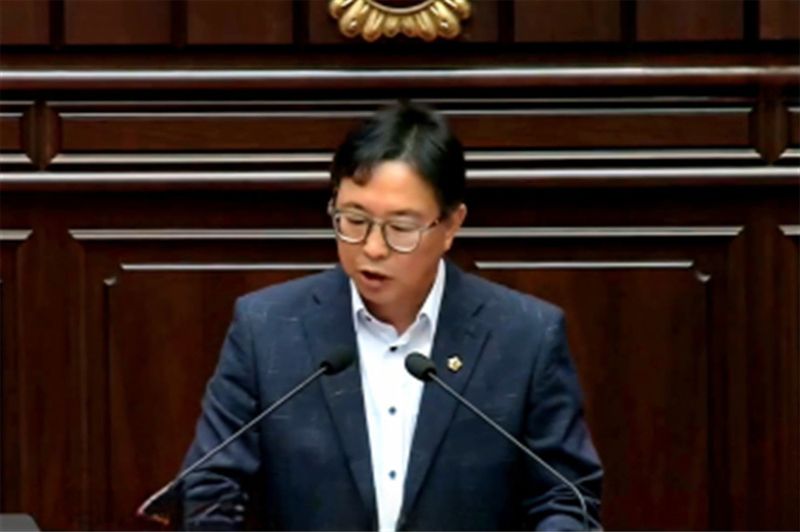
Cho Yong-woo, a Busan city councilor and proportional representative of the Democratic Party of Korea, focused on examining the Busan Water Authority’s water-safety management system and the effectiveness of its water-treatment measures at an administrative audit of the authority held on the 10th.
PFAS continue to be detected in raw water from the Nakdong River. PFAS are known to be substances that do not mix readily with water or oil, resist heat and chemical breakdown, and do not easily degrade in the natural environment.
Cho continued his questioning on the basis of materials submitted by the Busan city government. He said, “After PFAS were detected in the Nakdong River basin in 2018, the city strengthened monitoring and upgraded its water-treatment facilities, but perfluorooctanoic acid is still being detected in raw water from the Nakdong River at about 0.010 μg/L.” He pointed out that “confirming that the substances have been detected and actually ensuring the safety of the tap water citizens drink are two different things.”
He stressed that the city should transparently disclose how much PFAS detected in raw water is removed during treatment and, if some remains after treatment, how much is left. He also raised the possibility that sewage and industrial wastewater from the upper reaches of the Nakdong River could enter the river system without adequate treatment, adding that water-quality tests only around water-intake sources would not be enough to resolve the underlying problem.
He urged action, saying, “The safety of Busan’s water supply cannot be ensured by managing it only within the city’s jurisdiction,” and that “there needs to be an investigation into pollution sources at businesses suspected of discharging PFAS and at sewage-treatment facilities in the upper reaches of the Nakdong River, tracing of discharge routes, and a joint response system with the relevant agencies.”
He also said the effectiveness of the water-treatment measures needed to be specifically verified. The city completed installation of powdered activated-carbon injection facilities at the Hwamyeong and Deoksan water-treatment plants in June 2022 and has been operating them on a full scale since July that year.
Cho said, “The effectiveness of water-treatment measures cannot be proven simply by installing additional activated-carbon injection facilities and shortening the regeneration cycle.” He urged the city to “empirically verify the removal rates for each PFAS measured before and after powdered activated-carbon injection, residual concentrations after treatment, and the increased costs and operational effects associated with replacing and regenerating the activated carbon. If contamination of the raw water continues, policies to block the pollution sources themselves must also be pursued.”
[email protected] Byun Ok-hwan Reporter