“Even if you want to stay longer, it’s too expensive...” 220,000 people leave Seoul for Gyeonggi Province this year alone
- Input
- 2026-11-11 11:14:53
- Updated
- 2026-11-11 11:14:53
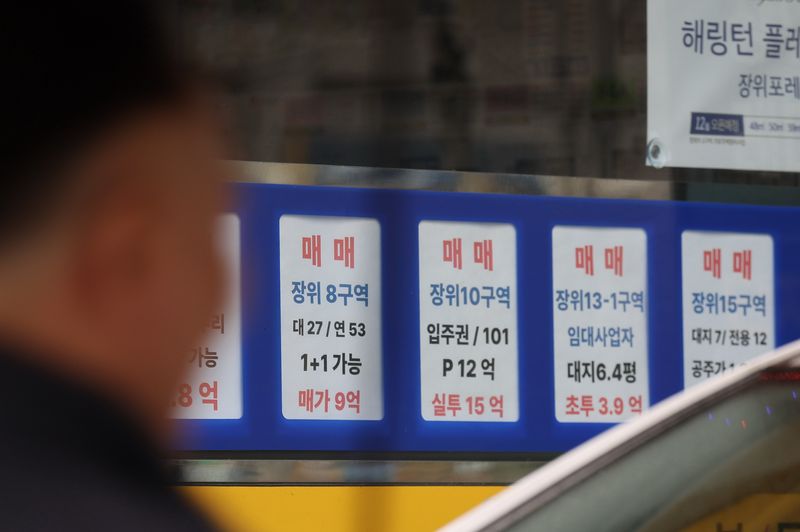
[Financial News] High home prices and a jeonse shortage are making housing in Seoul increasingly burdensome. Meanwhile, net migration from Seoul to Gyeonggi Province has risen 40% this year compared with last year, and recent home-price increases have also spread to Gyeonggi Province.
According to Newsis on the 11th, an analysis of the Ministry of Data and Statistics’ Internal Migration Statistics found that 223,416 people moved from Seoul to Gyeonggi Province from January to September this year, an increase of 10,701 (5.0%) from 212,715 in the same period last year.
By contrast, 185,022 people moved from Gyeonggi Province to Seoul, down 319 (0.2%) from 185,341 in the same period last year.
As a result, net migration from Seoul to Gyeonggi Province from January to September this year totaled 38,394, up 11,020 (40.3%) from 27,374 in the same period last year.
Net migration from Seoul to Gyeonggi Province rises every quarter... ‘Exodus from Seoul’ accelerates
Since the start of this year, net migration from Seoul to Gyeonggi Province has approached 10,000 people each quarter. Net migration in the first quarter was 9,813, up 67.2% from the same period last year. In the second and third quarters, it was 15,555 and 13,026, respectively, increases of 30.3% and 36.2%.
After the number of people moving from Seoul to Gyeonggi Province reached its highest level in about four years in the first quarter, the ‘exodus from Seoul’ continued in the second and third quarters as well.
Gyeonggi Province, meanwhile, recorded a net inflow of 33,399 people from January to September this year, up 45.0% from last year. It saw a net outflow of 4,995 people in migration involving other cities and provinces, excluding Seoul, but a net inflow of 38,394 from migration with Seoul alone—more than the province’s total net inflow.
Pyeongtaek had the largest net population inflow among Gyeonggi Province’s cities and counties, with 12,640 people moving in on net from January to September this year. Paju followed with 10,409, then Gwangmyeong-si with 8,952, Hwaseong with 6,965, and Uiwang with 6,272. Pyeongtaek, Hwaseong and Paju, which are non-regulated areas in Gyeonggi Province, and areas near Seoul such as Gwangmyeong-si and Uiwang all ranked among the areas with the highest net inflows.
Net inflow figures for each city and county, however, include people who moved not only from Seoul but also from other cities and counties within Gyeonggi Province and from elsewhere across the country.

As home-sale and jeonse prices rise, people leave Seoul for Gyeonggi Province
The heavy burden of housing costs in Seoul is a major factor behind this trend. As both home-sale prices and jeonse prices have risen, more people have left Seoul for Gyeonggi Province under the mounting financial strain. According to the Korea Real Estate Board (KREB), from January to September this year, apartment sale prices in Seoul rose 8.32% and jeonse prices rose 8.21%, increasing the burden not only of buying a home but also of renting in Seoul.
The fact that Seoul has been designated a regulated area in its entirety, raising the bar for obtaining loans, may also have narrowed the options available to end-user buyers. Analysts say that, with the burden of financing added to high home-sale and jeonse prices, more people are looking to areas of Gyeonggi Province where housing costs are relatively lower.
As the number of people moving from Seoul to Gyeonggi Province has grown, changes have also been observed in apartment price trends across the Seoul metropolitan area. According to KREB’s weekly apartment price report for the first week of November, apartment sale prices in Seoul rose 0.07% from the previous week. The increase was smaller than the 0.09% rise the week before, marking a third consecutive week of slowing growth.
Apartment prices in Gyeonggi Province, by contrast, rose 0.20%, an increase roughly three times Seoul’s. The rise in Gyeonggi Province has exceeded Seoul’s for seven consecutive weeks, with prices remaining strong mainly in southern Gyeonggi and nearby areas, including Giheung District in Yongin, Gunpo, Dongan District in Anyang, Dongtan District in Hwaseong, and Yeongtong District in Suwon.
Seo Jin-hyeong, a professor in the Department of Real Estate Law at Kwangwoon University, said, “Seoul home prices are so expensive that existing residents are pushed to the outskirts,” and assessed that demand could concentrate in areas of Gyeonggi Province with good transport links, school districts and proximity to workplaces.
[email protected] Kim Hee-sun Reporter