Next year’s AI/ICT R&D budget enters the 2-trillion-won era ... AX productivity in focus
- Input
- 2026-11-11 16:30:41
- Updated
- 2026-11-11 16:30:41
[Financial News] The government’s artificial intelligence (AI) and information and communications technology (ICT) research and development (R&D) budget for next year is set to exceed 2 trillion won for the first time, while actual productivity gains from AI transformation (AX) are expected to become a new focus. As AI expands into agents that carry out tasks autonomously and physical AI that operates in real-world environments, translating research outcomes into industrial competitiveness has emerged as a key challenge.
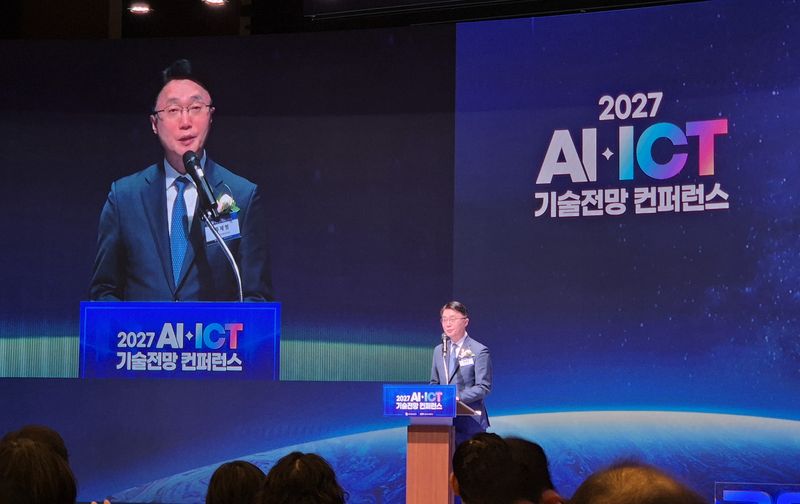
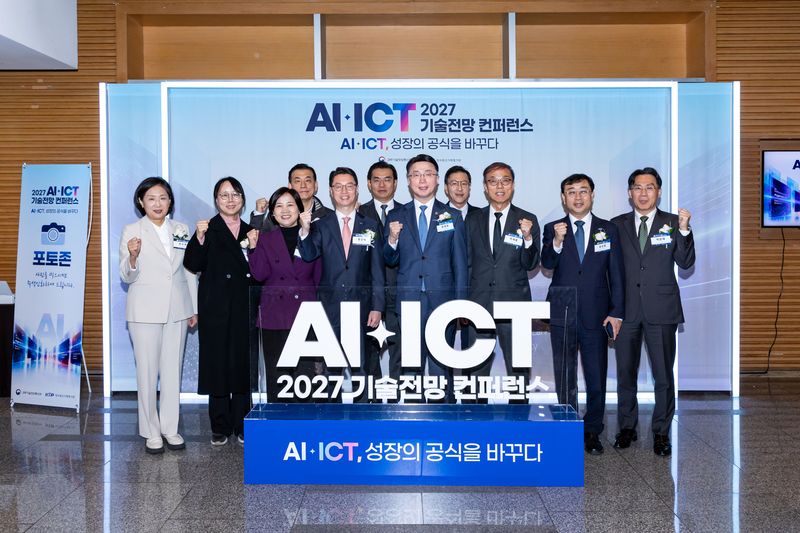
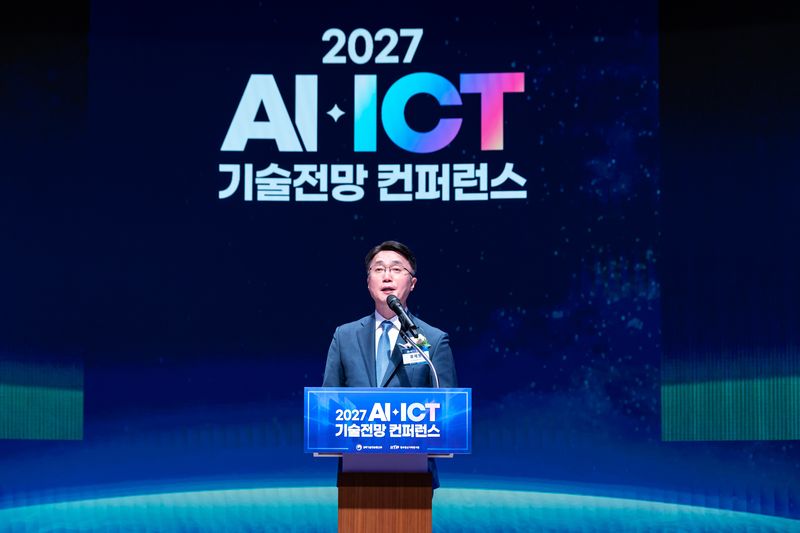
The Ministry of Science and ICT said it had drawn up and submitted a budget of 2.0755 trillion won for next year’s AI/ICT R&D at the 2027 AI/ICT Technology Outlook Conference held at KCCI in Jung District, Seoul, on the 11th. If the budget proposal is finalized, related R&D spending will reach the 2-trillion-won range for the first time.
The government plans to focus investment on five areas: physical AI; AI data centers; frontier AI development; building the foundations for AI highways across four major regions; and training research personnel. The plan is to strengthen the entire technology ecosystem, going beyond AI model development to include computing infrastructure, deployment at industrial sites, and securing specialized talent.
“Amid the rapidly shifting landscape of global AI competition, this is a golden opportunity to secure national competitiveness in AI, and 2027 will be a very important turning point for South Korea as an AI powerhouse,” emphasized Ryu Jemyoung, second vice minister of MSIT.
The Institute for Information and Communications Technology Planning and Evaluation (IITP), which organized the conference, presented 10 key topics for the AI/ICT industry in 2027: the agentic economy; the challenge of making physical AI more general-purpose; a turning point in the AGI race; AI semiconductor optimization; the dual race for speed and performance in AI data centers (AIDCs); maximizing token efficiency; the evolution of spatial computing; AI-native 6G; Cyber Shield Dome; and full-stack sovereign AI.
Hong Jin-bae, president of IITP, said, “AI is moving beyond simply providing assistance toward becoming AI agents that plan for themselves and solve complex problems.” He added, “Frontier-level AI models are being developed every three to four weeks, expanding the scope of their activity.”
The agentic economy refers to an economic environment in which AI moves beyond performing individual tasks in response to human instructions and instead makes plans on its own and carries complex tasks through to completion.
Physical AI was also selected as a key issue. The outlook is that robots and other systems will evolve beyond simply repeating predetermined movements and use experiential data accumulated in real-world environments to perform a variety of tasks. The race to develop artificial general intelligence (AGI) was also identified as a major technological shift.
Meanwhile, Dr. Dong-Sun Jang of the Curious Brain Research Institute delivered a keynote address on “The Future of the AI Era Through the Eyes of a Neuroscientist,” explaining AI’s impact on human thought and abilities. “AI is bringing about many changes in human thinking. The capabilities of the human brain vary depending on the tools people use,” Dr. Jang said, adding, “Tools augment human capabilities.”
[email protected] Yeon Ji-an Reporter