40-Hour Workweek, Yet Ruled a Work-Related Accident ... Supreme Court: “12 Years of Shift Work Raised Blood Pressure”
- Input
- 2026-11-11 10:20:03
- Updated
- 2026-11-11 10:20:03
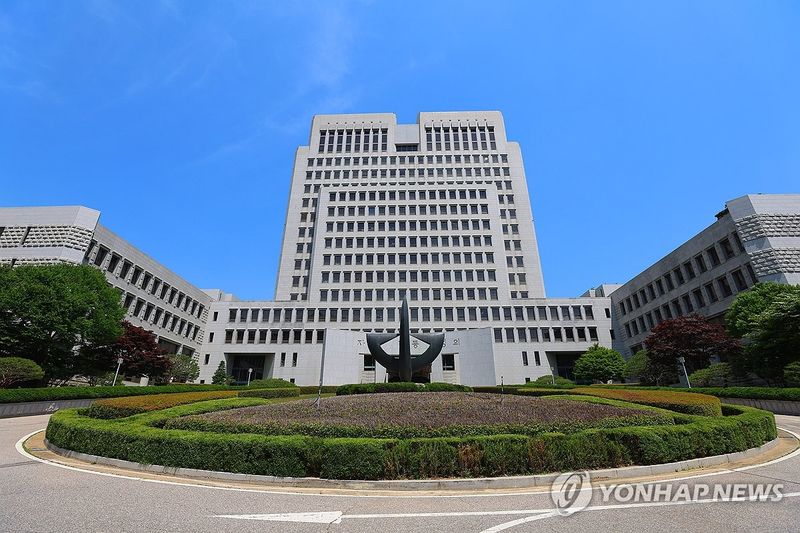
According to legal sources on the 11th, the Supreme Court of Korea’s First Division, with Justice Ma Yong-joo in charge of the case, overturned a lower court ruling that had upheld the Korea Workers’ Compensation and Welfare Service’s decision to deny survivor benefits and funeral expenses, and sent the case back to the Seoul High Court on the 27th of last month. The suit was brought against the agency by the spouse of the deceased, identified as A.
A, born in 1977, joined the mechanical section of the facilities team at a hotel in Seoul’s Seocho District in September 2012. A worked rotating day and night shifts, handling tasks such as cleaning air-conditioning units and operating and maintaining boilers. The workplace, a machine room on the hotel’s third basement level, had noise measuring 78.5 dB and exposure to hazardous substances such as mineral dust, welding fumes, chromium and manganese. As the hotel was more than 20 years old, it needed frequent repairs, and A had to respond to complaints from staff and customers each time. On April 15, 2019, A was working the night shift and was found collapsed in the machine-room office at around 5:30 a.m. the following day. A had died. An autopsy found the cause of death to be a nontraumatic intracerebral hemorrhage.
The question was whether a cerebrovascular disease suffered by a shift worker whose hours fell short of the notice’s threshold could be recognized as a work-related accident. In the 12 weeks before A’s condition developed, average weekly working hours were 40 hours and 2 minutes, below the 52 hours the notice uses as an indicator of chronic overwork.
The first- and second-instance courts ruled in favor of the agency. The first-instance court cited A’s weight gain, elevated blood pressure and smoking, noting that these had not been managed, as well as the court-appointed experts’ view that personal predispositions were the cause of the condition. The second-instance court acknowledged the likelihood that shift work had disrupted A’s circadian rhythm, but found that rest periods after night shifts had been guaranteed and that the noise in the machine room was not enough to affect health.
The Supreme Court reached a different conclusion. It said the notice “cannot be regarded as a rule with binding force on the public or the courts, but is an administrative rule that sets internal work-processing guidelines for the Korea Workers’ Compensation and Welfare Service or standards for interpreting and applying laws and regulations.” It also said the circumstances surrounding the removal of “health status” in the 2017 revision should be considered, as the phrase was deleted so that underlying conditions would not be treated as a factor in determining work-relatedness.
The panel found that A had worked shifts for about 12 years, beginning at a previous job at a senior living facility, and that A’s blood pressure at night was likely to have remained elevated for a long time. Health examination records showed that A’s blood pressure rose from 110/70 mmHg in 2014 to as high as 152/90 mmHg in November 2017. The panel also noted that numerous epidemiological studies link night work to vascular diseases, including intracerebral hemorrhage, and that the International Labour Organization (ILO), in its 1990 Night Work Convention, set out night workers’ rights to health examinations and transfer to other work.
The panel also said that A’s height of 180 cm and weight of 88 kg alone did not justify questioning A’s health; if anything, A appeared to have maintained their health through exercise. Given the combination of aggravating factors in A’s work—shift work, exposure to hazardous conditions and high physical demands—the panel ruled that “even if working hours fall short of an average of 52 hours a week, the connection between work and disease should be considered stronger.”
[email protected] Kim Dong-gyu Reporter