Incheon to focus on workforce training in 20 occupations, including robotics and biotech, over the next three years
- Input
- 2026-11-11 10:23:35
- Updated
- 2026-11-11 10:23:35
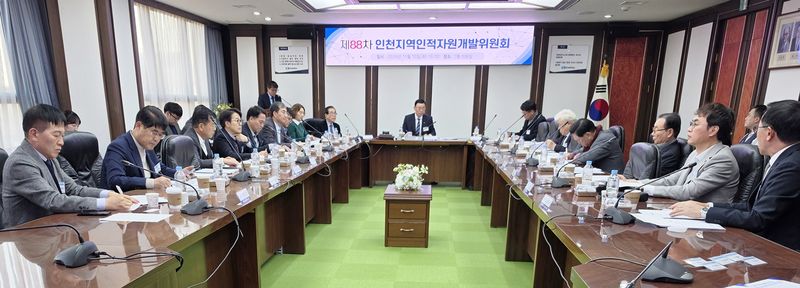
【Financial News, Incheon = Han Gab-soo, reporter】 The Incheon city government is setting out to build a virtuous cycle in which local talent is trained to meet the needs of local businesses and then goes on to work for local businesses. The plan is to reflect demand from industry in education and training and address both labor shortages at companies and job seekers’ difficulties finding work.
The Incheon Regional Human Resources Development Committee said on the 11th that it has drawn up the “2027–2029 Incheon Regional Workforce Development Master Plan” and will pursue industry-tailored talent development over the next three years.
The plan’s vision is “an Incheon-style workforce development system in which local supply meets local demand in response to industrial transition.” Its main goals are to strengthen the link between training and hiring, expand training for incumbent workers within the region, and build cooperation among related programs.
In particular, the committee will focus its training resources on 20 of the 140 occupations listed in the Korean Employment Classification of Occupations. Key areas include Incheon’s specialized industries—robotics and automation, smart electrical systems, biopharmaceuticals and cosmetics—as well as emerging artificial intelligence (AI) technologies.
The 2027 Regional and Industry-Tailored Workforce Development Project will be run by five joint training centers, including the Korea Chamber of Commerce and Industry’s Incheon Human Resources Development Institute, Incheon National University, Inha University, and the Incheon and Nam-Incheon campuses of Korea Polytechnics. They will offer a total of 134 courses: six for initial training and 128 for upskilling incumbent workers, with 3,061 participants in total over the year.
Alongside running training courses, the Incheon committee will survey workforce needs by industry, manage training outcomes, cooperate with related organizations, and support locally tailored employment initiatives. Its aim is to narrow the gap between the skills companies require and job seekers’ capabilities, and ensure that training leads to actual hiring.
Park Ju-bong, co-chair of the Incheon committee, said, “In workforce development, what matters is not simply increasing the number of people trained, but how effectively we connect training with hiring, and businesses with educational institutions.” He added, “We will work with relevant organizations to develop in Incheon the talent that local businesses need.”
[email protected] Han Gab-soo Reporter