A Force-Sensing Robot Helps Preserve the Voice of a Patient With Esophageal Cancer [Health Check]
- Input
- 2026-11-11 08:48:03
- Updated
- 2026-11-11 08:48:03
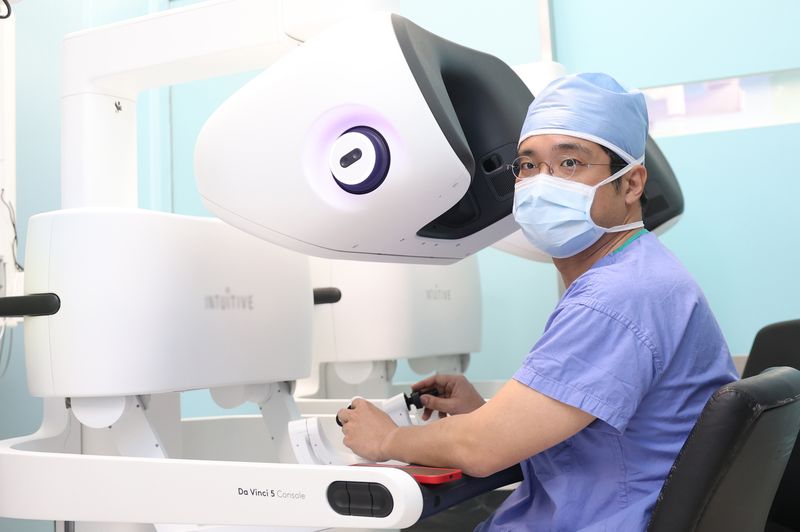
[Financial News] A new way has emerged to reduce complications after esophageal cancer surgery, such as hoarseness or difficulty swallowing. It is thanks to robotic technology that lets surgeons feel with their fingertips how much force they are using to pull tissue.
A research team involving Professor Park Sung-yong of the Department of Thoracic and Esophageal Surgery at Samsung Medical Center (SMC) and Professor Danbee Kang of the Center for Clinical Epidemiology analyzed 163 patients with esophageal squamous cell carcinoma who underwent robotic esophagectomy between December 2024 and July 2026. The findings were published in the latest issue of the international journal of robotic surgery, the Journal of Robotic Surgery.
Esophageal squamous cell carcinoma can spread to lymph nodes around the nerves that control the vocal cords in up to 50% of cases. This makes precise surgery necessary to remove enough lymph nodes while protecting the nerves. If surrounding tissue is pulled too hard while lymph nodes are being removed, the nerves can be damaged. This can impair vocal-cord function and increase the risk of aspiration pneumonia, which occurs when food enters the airway.
Esophageal cancer surgery has evolved from open-chest surgery to minimally invasive procedures using thoracoscopes and robots, reducing the physical burden on patients. But robotic surgery also had its limitations: surgeons could not directly feel the force they applied to tissue and had to estimate how much force they were using by looking at a screen.
Recent next-generation robotic devices have incorporated technology to address this limitation. The force applied to tissue is conveyed as resistance in the control handles, allowing the surgeon to feel it and adjust the force.
To assess the technology’s effectiveness, the research team compared 126 patients who underwent surgery with the existing device (da Vinci Xi) and 37 who underwent surgery with the next-generation device (da Vinci 5).
The proportion of patients with reduced vocal-cord movement or vocal-cord paralysis after surgery was 13.5% in the next-generation device group, more than 50% lower than in the existing-device group (33.3%). The median hospital stay was also two days shorter in the next-generation device group, at 11 days compared with 13 days. There were no statistically significant differences between the two groups in operating time, blood loss or the number of lymph nodes removed.
The research team said that, given the similar number of lymph nodes removed, handling the tissue around the nerves more gently may have led to a reduction in vocal-cord dysfunction.
Professor Park Sung-yong said, “Esophageal cancer surgery has moved beyond reducing the extent of incisions and has now reached the stage of reproducing even the sense of force, which was a limitation of robotic surgery.” He added, “I hope this will help not only with cancer treatment but also with preserving patients’ everyday lives, so they can continue speaking in their own voices after treatment.”
Meanwhile, SMC’s Department of Thoracic and Esophageal Surgery introduced a da Vinci robot dedicated to lung and esophageal surgery in 2023, and surpassed 1,000 cumulative robotic surgeries in 2025. That same year, it was also selected as an “Epicenter,” a robotic surgery training institution designated by Intuitive Surgical.
[email protected] Jung Myung-jin, Medical Specialist Reporter