“Raise cigarette prices to 8,500 won—they’re so cheap, I might smoke more” ... Frozen at 4,500 won for 11 years as prices soar
- Input
- 2026-11-11 08:42:02
- Updated
- 2026-11-11 08:42:02
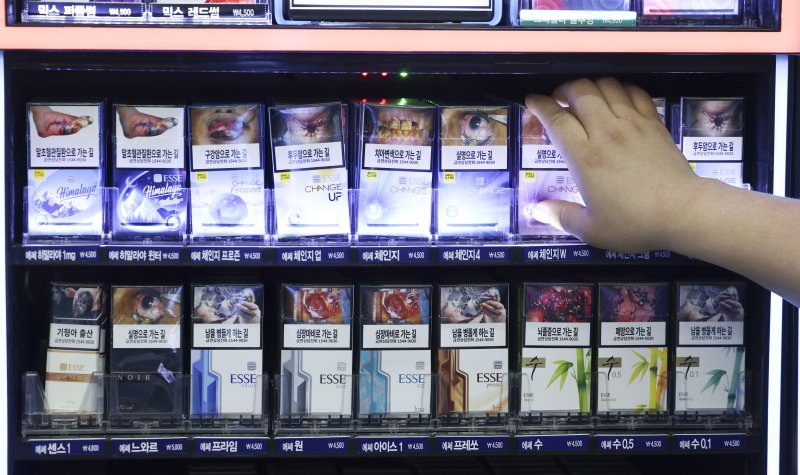
[Financial News] A call has been made to raise cigarette prices by 4,000 won, from the current 4,500 won to 8,500 won. The argument is that prices, frozen for the 11th year since 2015, should be brought into line with current conditions to reduce cigarettes’ affordability, and that an automatic adjustment system should be introduced to regularly revise prices in line with inflation and income.
According to News1 on the 10th, the Korea Medical and Bio Journalists Association and the National Academy of Medicine of Korea held the 6th Media Forum at the Korea Press Center in Jung District, Seoul, under the theme “New Tobacco Trends and the Direction of Smoking Cessation Policy.” They discussed ways to improve smoking cessation policies, including regulating new tobacco products and raising cigarette prices.
“Korea’s cigarette prices frozen at 4,500 won since 2015, among the lowest in OECD countries”
A key topic was discussion of raising cigarette prices. Park Eun-cheol, vice president for health policy at the National Academy of Medicine of Korea, pointed out that Korea received an average score of 3.563 out of 5 in the World Health Organization (WHO)’s assessment of tobacco control policies, while it scored just 2.5 for raising tobacco taxes and 2.125 for protection against secondhand smoke.
He explained that cigarette prices in Korea have been frozen at 4,500 won since 2015, and that the price, adjusted for purchasing power parity (PPP), is 5.51 international dollars—among the lowest in OECD countries. In other words, while prices and incomes are rising, cigarette prices alone have remained unchanged, weakening the deterrent effect on smoking.
Park said cigarette prices should be raised from 4,500 won to 8,500 won, and a system introduced to automatically adjust tobacco taxes and the National Health Promotion Levy in line with increases in prices and income. The aim is to reduce affordability in real terms by regularly bringing prices into line with current conditions, rather than making the increase a one-off measure.
A scenario analysis estimated that raising cigarette prices to 8,500 won would reduce cigarette sales by 35.6% and the adult smoking rate from 17% to 14%, while increasing annual tax revenue related to tobacco by 2.76 trillion won. The analysis said a price increase could both lower smoking rates and secure funding for health promotion.
There were also calls to revise how the National Health Promotion Fund is managed. Park recommended raising the National Health Promotion Levy while reducing the share of its projected revenue allocated to health insurance support from 65% to 50%, and increasing general budget support so the fund could focus on disease prevention and health promotion programs.
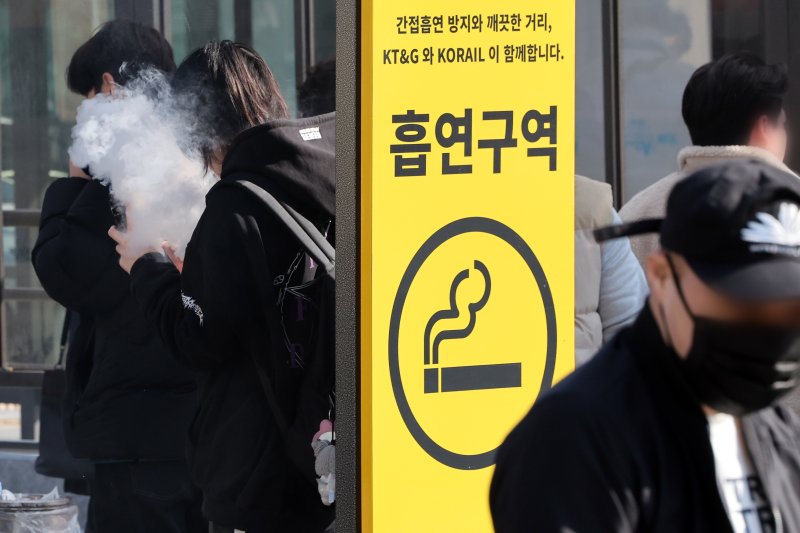
“Nicotine-free e-liquid market growing rapidly ... Regulations must cover product forms and ingredients”
There were also calls to tighten regulations on new tobacco products. With new products such as nicotine-free e-liquids and nicotine pouches emerging one after another following regulation of synthetic nicotine, critics said the tobacco regulatory framework should be comprehensively overhauled to cover all nicotine products.
Lee Seong-gyu, head of the Korea Tobacco Control Research and Education Center, said the market for nicotine-free e-liquids had expanded rapidly since synthetic nicotine was regulated. “If tobacco leaves, stems and synthetic-nicotine e-liquids disappear from the market, virtually the only e-cigarette liquids left will be nicotine-free,” he said. “We could reach a point where liquid e-cigarettes are not legally considered tobacco.” He also cited the growing use of nicotine pouches among U.S. adolescents and called for proactive regulations covering product forms and ingredients.
Fruit- and dessert-flavored e-liquids, along with concealed devices resembling pencil cases and earbud cases, are piquing adolescents’ curiosity. New products such as nicotine pouches, strips and toothpicks are also expected to enter the country. If products are marketed as nicotine-free, schools may find it difficult to determine whether students are using nicotine, raising concerns that prevention education and student guidance could be disrupted.
There were further calls to change the legal framework for tobacco regulation itself. The proposal is to revise the current Tobacco Business Act into the “Act on the Management of Tobacco and Electronic Inhalation Products,” bringing not only cigarettes but also liquid products and various products used to inhale or ingest nicotine within the scope of regulation.
Kim Ji-eun, a manager at the Korea Health Promotion Institute, said efforts to assess the situation and prevent youth use should be strengthened in response to the rise in dual use involving e-cigarettes. Cho Hong-jun, professor emeritus at Ulsan College of Medicine, proposed regulating flavoring agents, raising cigarette prices and introducing standardized cigarette packaging.
Lim Hyeon-jeong, head of the Legal Support Office at the National Health Insurance Service, stressed that responsibility for smoking-related harm does not change even when new tobacco products take different forms, and that tobacco litigation can constrain companies’ advertising, promotion and sales practices and make regulations more effective.
[email protected] Kim Hee-sun Reporter