“We’re short ₩2 million a month”: Retire at 60, National Pension benefits start at 65... 92% of public officials face an “income gap”
- Input
- 2026-11-11 07:03:10
- Updated
- 2026-11-11 07:03:10
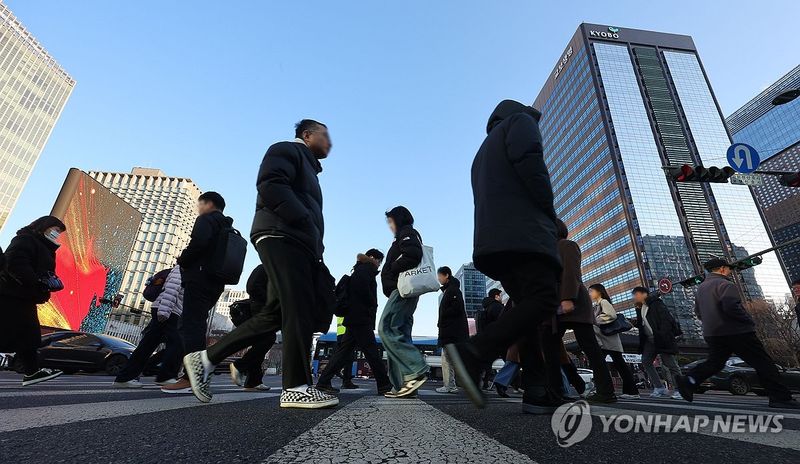
[Financial News] A survey has found that more than 9 in 10 serving public officials expect to face an income gap between retiring at the mandatory retirement age and beginning to receive their Public Officials Pension.
Half of retired public officials say they are short ₩2 million a month for essential living expenses
About half of retired public officials who have experienced or are currently experiencing this gap said they are short at least ₩2 million a month to cover essential living expenses.
Public officials have a mandatory retirement age of 60, while the age at which pension payments begin is being gradually raised to 65. Critics say this is increasing the financial burden people face between retirement and the start of pension payments.
According to policy research presented by Chae Jun-ho, a professor in the Department of Business Administration at Jeonbuk National University (JBNU), at the “Forum on the Public Officials Pension Income Gap and Raising the Retirement Age” held at the National Assembly on the 10th, 91.9% of 2,657 serving public officials expected to face an income gap in their pension payments after retiring at the mandatory retirement age.
The survey was conducted from August 13 to September 30 among 2,657 serving public officials and 158 retired public officials.
Among retired public officials, 24.1% said their pension income gap was ongoing, while 15.8% said they had previously experienced an income gap lasting at least one month.
The financial burden caused by the income gap was also substantial. Of 63 retired public officials, 50.8% said their household’s average monthly income had fallen at least ₩2 million short of essential living expenses.
Of these, 60.3% said their retirement allowance had been used up sooner than they had originally planned.
37% say they had no income-earning activity after retirement... Prefer raising the retirement age as an alternative
Asked about income-earning activity after retirement, 36.7% of retired public officials said they had no such experience. Another 16.5% said they had participated in a public-sector reemployment program.
Serving public officials most favored raising the retirement age as a policy alternative for closing the income gap.
The current mandatory retirement age for public officials in general-service positions is 60. However, following the 2015 Public Officials Pension reform, the age at which pension payments begin has been gradually pushed back.
Those retiring in 2024–2026 can receive pensions starting at 62, while those retiring in 2027–2029 can begin receiving them at 63. For those retiring from 2033 onward, the pension eligibility age will rise to 65.
As a result, the period between mandatory retirement and the start of pension payments is gradually growing longer.
However, concerns have also been raised that extending the retirement age could increase the fiscal burden and dampen new hiring among younger people.
It was estimated that gradually raising the retirement age to 65 for both general-service public officials and teachers would add between ₩3.76 trillion and ₩6.03 trillion in annual personnel costs, depending on how wages are adjusted. The analysis found that the fiscal burden would vary considerably depending on the size of wage cuts under a peak-wage system and whether reemployment was introduced.
At the forum, some also argued that extending the retirement age while keeping workloads unchanged and cutting only wages should be avoided.
Kim Yeong-geon, a member of the Wages and Pensions Division at the Policy Planning and Research Institute of the Korean Federation of Public Officials’ Unions, cited Japan’s experience with raising the retirement age and said, “If wages are cut significantly while the retirement age is extended, the income gap could simply be replaced by a period of low income.”
Some also say that early retirement pensions cannot be a fundamental solution. Park Jung-bae, senior vice chair of the Public Officials’ Union, argued, “Early retirement pensions can fill the immediate income gap, but cuts of up to 25% may apply for the rest of a person’s life. It is not appropriate to make them the only alternative for closing the income gap.”
He also stressed, “Legislation linking the retirement age to the age at which pension payments begin should be pursued,” and “transitional measures should be introduced for public officials who have already retired at the mandatory retirement age or who retire before legislation raising the retirement age takes effect.”
[email protected] An Ga-eul Reporter