Fed “dove” Waller signals possible 0.5-percentage-point rate hike in December
- Input
- 2026-11-11 03:35:12
- Updated
- 2026-11-11 03:35:12
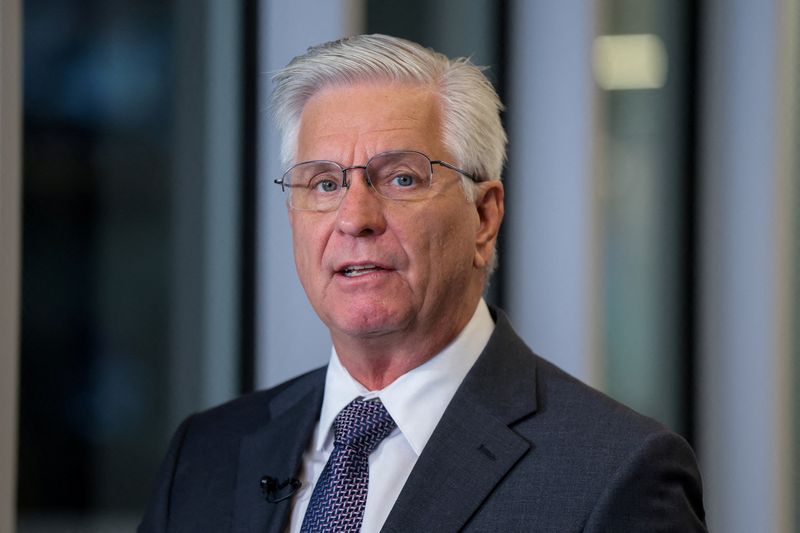
Christopher J. Waller, a governor of the U.S. Federal Reserve, said on the 10th (local time) that a 0.5-percentage-point rate hike may be necessary. This is what is known as a “big step.”
Waller was nominated to the Fed’s Board of Governors in 2020 by President Donald Trump during his first term and is considered a moderate.
According to CNBC, in a speech in London, England, that day, he said that the Fed’s credibility would be at risk without further rate hikes, and that it might have to implement a 0.5-percentage-point hike, above the usual level.
Waller stressed that he was “leaning toward” raising rates in December even if October inflation data slowed more than expected, and that he could support “more forceful action” if the data were stronger than expected.
“In that case, I believe we should consider raising the policy rate by 0.5 percentage point at the December meeting,” he said, adding, “because a 0.25-percentage-point increase alone could put our credibility at risk, which is something we absolutely do not want.”
The October Consumer Price Index (CPI), released that day by the U.S. Department of Labor’s Bureau of Labor Statistics (BLS), came in below market forecasts. The overall index rose 0.4% from the previous month, while the core index, excluding energy and food, rose 0.3%. Both figures were 0.1 percentage point higher than market expectations.
Waller said the Fed had communicated well with the market through the October Federal Open Market Committee (FOMC) meeting, and noted that consecutive rate hikes would be unnecessary in such circumstances, but that things would be different if an expected hike did not happen. “If there is no rate hike, the market will lower its rate-hike expectations, and interest rates will fall immediately,” he said. “This results in monetary policy easing in an undesirable direction.” He added that a rate hike would therefore be “necessary soon.”
He stressed, “The precise timing of a rate hike is not important, but we have to ensure that the rate hike we have promised takes place within a reasonable period.”
Lorie K. Logan, president of the Federal Reserve Bank of Dallas, forecast the possibility of two consecutive 0.25-percentage-point rate hikes that day.
Logan made this forecast, saying, “I expect inflation to ease as price pressures from energy and manufactured goods fade, but I believe broad inflationary trends are likely to persist.” Logan stressed, “Tighter monetary policy will likely be necessary to strike an appropriate balance between the outlook and risks surrounding inflation and employment.”
According to CME Group’s FedWatch tool, interest-rate futures markets consider it certain that the Fed will raise rates at the upcoming FOMC meeting on December 8–9. They put the probability of a 0.25-percentage-point hike, bringing the rate to 4.0–4.25%, at 88.2%, and the probability of a 0.5-percentage-point hike, bringing it to 4.25–4.50%, at 11.8%.
Amid expectations of a rate hike that day, all three major New York stock market indexes fell, led by technology stocks.
[email protected] Song Kyung-jae Reporter