Concerns Over Banks’ Profitability Next Year as Funding Competition and Bad-Loan Burdens Mount
- Input
- 2026-11-10 17:38:39
- Updated
- 2026-11-10 17:38:39
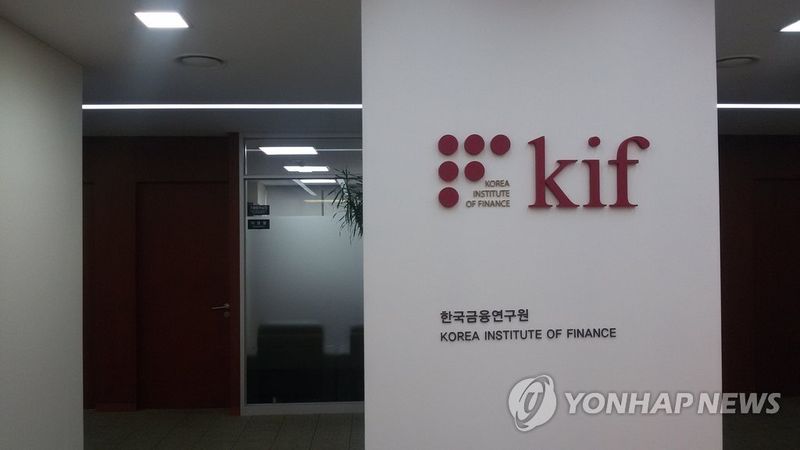
Kim Seok-gi, head of the Banking and Financial Holding Companies Research Division at the Korea Institute of Finance, said at the “2027 Economic and Financial Outlook Seminar” on the 10th that domestic banks’ net income for the first half of this year was 13.8 trillion won, down 6.4% from the same period a year earlier. Interest income rose 8.3% to 32.2 trillion won, but non-interest income fell 43.4% to 2.9 trillion won and loan-loss provisions increased 8.6% to 3.5 trillion won.
Kim said, “Interest income is expected to rise slightly next year, supported by asset growth focused on corporate lending despite a stagnant net interest margin (NIM).” He added, “Regulations that limit the incorporation of legal and policy costs into add-on rates will act as a potential downward pressure on yields.”
He said that even if increases in market interest rates are reflected in lending rates, margin improvement could be limited by pressures on both funding and asset deployment. Costs will rise as low-cost deposits decline and funding through high-interest term deposits and bank bonds increases. He also noted that with caps on household lending continuing, banks’ focus on lending to high-quality companies could intensify rate-discount competition and narrow corporate loan spreads.
Jung Heesoo, head of the Hana Financial Research Institute, said, “Corporate loan margins are at a historic low,” and noted, “In the past, banks competed with one another for funds, but competition with large securities firms is now intensifying.”
Improving asset quality is also expected to be difficult. Analysts say that while performance is improving in some sectors, including semiconductors and shipbuilding, delinquency rates are rising in vulnerable sectors. Vulnerable and watch-list sectors—including construction, petrochemicals, metal products, wholesale and retail, and real estate—account for 46.8% of corporate loans at deposit-taking banks. If rising interest rates weaken these borrowers’ ability to repay, banks’ burden from bad loans could also grow. In addition, the increase in risk-weighted assets resulting from expanded corporate lending is expected to put downward pressure on capital ratios.
He also warned that cyber incidents could develop into liquidity risks. System intrusions using artificial intelligence (AI) and customer data leaks could not only disrupt operations but also undermine trust in banks and trigger an outflow of funds.
Kim said, “Operational risks are likely to spill over into reputational risks in the form of declining customer trust,” adding, “There is a significant need to increase investment in cyber risk management and the upgrading of security systems.”
[email protected] Ye Byung-jung Reporter