Hanyang University Professor Jung Jae-kyung’s team increases electron speed sixfold by aligning semiconductor crystal orientation
- Input
- 2026-11-10 16:50:33
- Updated
- 2026-11-10 16:50:33
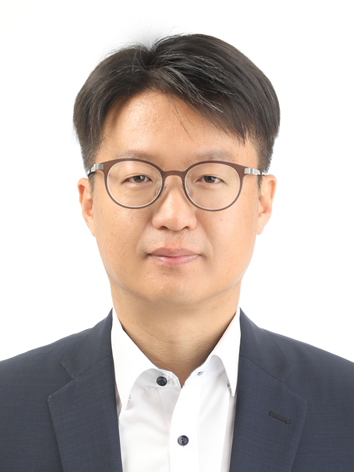
[Financial News] Hanyang University researchers have uncovered a key principle for increasing the speed at which electrons move by as much as sixfold by aligning the crystal orientation of a semiconductor in a single direction. This opens the way to dramatically improving the performance of 3D memory and next-generation displays, which have reached the limits of miniaturization.
Hanyang University announced on the 10th that a team led by Professor Jung Jae-kyung of the Department of Convergence Electronic Engineering had identified a technology that aligns the crystal orientation of oxide semiconductors in a single direction, improving electron mobility by about sixfold compared with existing devices and enabling stable operation even at high temperatures.
The semiconductor industry is currently focusing on research into “3D DRAM,” which stacks memory vertically, as the miniaturization of conventional DRAM has reached its physical limits. In the display sector, research is also underway to replace all the circuitry that drives pixels with oxide semiconductors. But realizing these next-generation products requires high-performance semiconductor materials that allow current to flow efficiently without power leakage.
The research team applied a technique called “electrode-induced lateral crystallization,” which uses an electrode as a starting point to make crystals grow in a single direction when producing indium gallium oxide (IGO) semiconductors. As a result, electrons moved about six times faster in semiconductor devices with aligned crystal orientations than in conventional devices with randomly oriented crystals.
This was achieved by drastically reducing the energy barriers and defects inside the semiconductor that impeded electron flow, allowing electrons to move smoothly, as if traveling on an unobstructed expressway. The team also demonstrated the devices’ reliability, showing that they operate stably without performance degradation even under harsh conditions involving sustained high voltage in a high-temperature environment.
The significance of this research lies in demonstrating that, beyond simply changing semiconductor materials, “aligning crystal orientation” is key to determining both semiconductor performance and lifespan.
Professor Jung Jae-kyung of Hanyang University said, “The significance of this research is that it shows that aligning crystal orientations, beyond crystallization alone, is a key factor in improving both the performance and reliability of oxide semiconductors.” He added, “I expect this work to be used not only to develop materials for displays but also high-performance, highly reliable channel materials for next-generation memory, including 3D DRAM.”
The research was conducted with support from the Ministry of Science and ICT, the National Research Foundation of Korea, Samsung Electronics Co., Ltd., and Samsung Display Co., Ltd., and was published in the international journal Small. Kim Bu-yeon, a doctoral student, participated as the first author, and Professor Jung as the corresponding author.
[email protected] Kim Man-gi Reporter