Kim Min-seok faces pressure from within and without... Can protecting retail investors help him find a leadership breakthrough?
- Input
- 2026-11-10 16:12:40
- Updated
- 2026-11-10 16:12:40
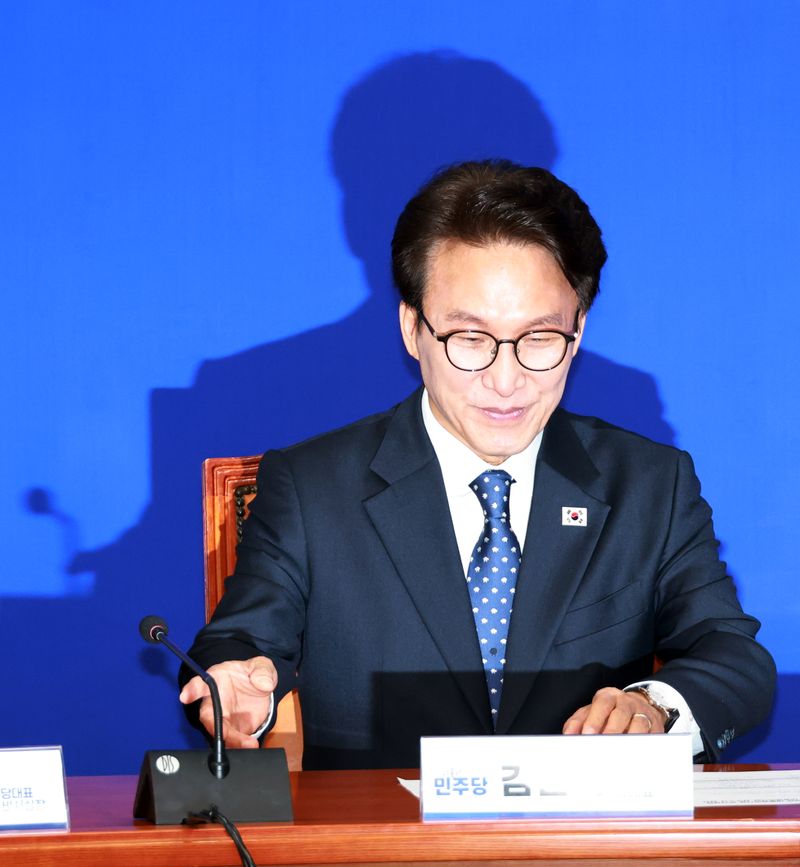
Political sources said on the 10th that the DPK’s plan to raise the comprehensive real estate holding tax threshold for owners of a single home who do not live in it is instead contributing to a weakening of Kim’s leadership. The DPK is said to have proposed to the government and the presidential office at a high-level consultative meeting on the 8th that the basic deduction for the tax for such homeowners be raised to 1.4 billion won.
The Rebuilding Korea Party and others have criticized the DPK’s plan, calling it a “tax cut for the rich.” Political circles view the party’s move as a strategy to appeal more strongly to hard-line progressive supporters. The party is using the issue to solidify its independent policy direction and differentiate itself from the DPK.
There have also been reports that the presidential office expressed displeasure with the DPK’s plan to raise the basic deduction for owners of a single home who do not reside in it. The plan directly conflicts with the “increased tax burden on non-residents,” a core principle of the real estate tax reform being pursued by the Lee Jae Myung administration. As differences between the party and the presidential office come to light, a blow to Kim’s leadership appears inevitable. After all, Kim was the one who, from the outset of his bid, placed the greatest emphasis on unity between the party and the presidential office.
Within the party, resistance from the pro-presidential-office faction over allegations of mass enrollment of Shincheonji members as party members has not died down. Tensions in particular have intensified between the pro-Lee Jae Myung and pro-presidential-office factions since they reviewed the findings of an investigation into the allegations. Differences also remain over whether to pursue a parliamentary inquiry into Supreme Court of Korea Chief Justice Cho Hee-dae. At a party caucus on the 3rd, the DPK agreed to gather more opinions from within the party, delaying the timetable for the inquiry, but some hardliners continue to stress that it is necessary. The challenges facing Kim are continuing to pile up: he must settle the party’s position on key issues and broaden internal consensus.
Meanwhile, at its party caucus that day, the DPK discussed capital markets legislation, including the “Stock Price Suppression Prevention Act,” and highlighted protections for retail investors. With debate over property taxes continuing, the move is seen as an effort to broaden support by advancing a policy agenda to expand the rights of minority shareholders.
After the caucus, DPK floor spokesperson Kim Seong-hoe told reporters that the party had decided to pass during the regular session amendments to the Inheritance and Gift Tax Act, known as the Stock Price Suppression Prevention Act. He said they had also agreed to pass amendments to the Financial Investment Services and Capital Markets Act, including the introduction of a mandatory tender offer system, as soon as possible.
Amendments to the Inheritance and Gift Tax Act aim to reduce incentives for controlling shareholders to keep share prices low in order to lower their inheritance and gift tax burden. Among the proposals under discussion is setting the floor for calculating inheritance and gift taxes for listed companies with a price-to-book ratio (PBR) below 0.8 at 80% of their net asset value.
Under the mandatory tender offer system, a buyer who acquires a stake of 25% or more and becomes the largest shareholder must secure at least “50% plus one share,” including the shares already acquired. The aim is to let ordinary shareholders sell their shares at the same price as the controlling shareholder and benefit from the control premium. However, the amendment allows the controlling shareholder to sell first and applies pro rata allocation only to the remaining shares in the tender offer, prompting debate over fairness.
The asset management industry pushed back, arguing that controlling and ordinary shareholders should be able to sell their shares at the same rate, and the bill’s tabling at a plenary session was also put on hold on the 1st of last month. Floor spokesperson Kim said the party would continue to consult with the opposition on revisions to improve the system in a way that reflects market participants’ concerns.
Capital markets legislation could give Kim an opportunity to strengthen his leadership through policy achievements. However, to turn the goal of protecting investors into concrete legislative results, he must first reconcile differences over tax standards and fairness among shareholders. Attention is focused on whether Kim can deliver results in capital markets reform and resolving internal party conflicts, and regain the initiative on policy.
[email protected] Kim Hyeong-gu, Jiwon Song Reporter