Torrential rain submerges Gaza displacement camps... 120,000 tents needed, but only 2,800 in stock
- Input
- 2026-11-10 16:09:57
- Updated
- 2026-11-10 16:09:57
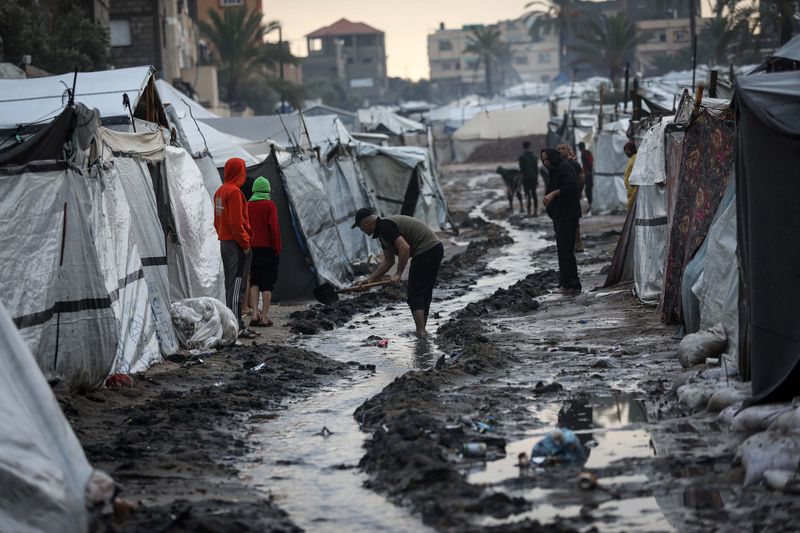
On the 8th, an embankment collapsed near Deir al-Balah in central Gaza, sweeping into tents sheltering displaced people. According to local civil defense figures, at least five people, including children, were killed.
The rain that fell from the evening of the 6th through the weekend also soaked displaced people’s mattresses, blankets and winter clothes. The United Nations Office for the Coordination of Humanitarian Affairs (OCHA) estimated that around 600 households were displaced again by the downpour.
Much of the water and sewage infrastructure and drainage system had been damaged by the war, and fuel and engine oil to run pumps, as well as parts needed to repair equipment, were also in short supply. With rainwater unable to drain in time, it pooled around tents and blocked some roads.
The Shelter Cluster, which coordinates housing support in the Gaza Strip, estimated that as of the 1st, in addition to tents, 561,000 tarpaulins, 57,000 emergency shelter kits and 1.7 million mattresses were needed. Local aid organizations do not have a single one of these kits, which contain items such as tent repair tools.
According to a situation report released by OCHA on the 9th, as of the 8th, at least 150,000 tents supplied by aid organizations and UN member states were waiting to be brought into the Gaza Strip from outside. Around 117,000 of them are supplies from the Egyptian Relief Committee.
OCHA said restrictions imposed by Israel on bringing in supplies, along with a shortage of humanitarian funding, had made it difficult to stock enough items locally. It also said that additional Israeli approval to bring in tents and mobile drainage pumps, among other supplies, was urgently needed.
The UN estimates that around 1.4 million Gaza residents live in tents or temporary shelters. Some displaced people are facing their fourth winter in tents or damaged buildings. Most of the tents supplied were designed to last around six months, but many families are still living in tents they received last winter or earlier.
The International Rescue Committee is restoring water supply infrastructure locally and continuing to provide drinking water and distribute hygiene supplies. Bob Kitchen, the IRC’s vice president for emergencies, stressed, “We need to provide shelter materials immediately—including tents that can withstand torrential rain, repair tools and anchoring components—so families do not have to endure another winter without even a dry place to sleep.”
[email protected] Jang In-seo Reporter