Lee's Cabinet Approves Cheonghae Unit Deployment Extension Plan; Mission Area Expanded South of Oman, Patrol Aircraft to Be Deployed
- Input
- 2026-11-10 16:20:14
- Updated
- 2026-11-10 16:20:14
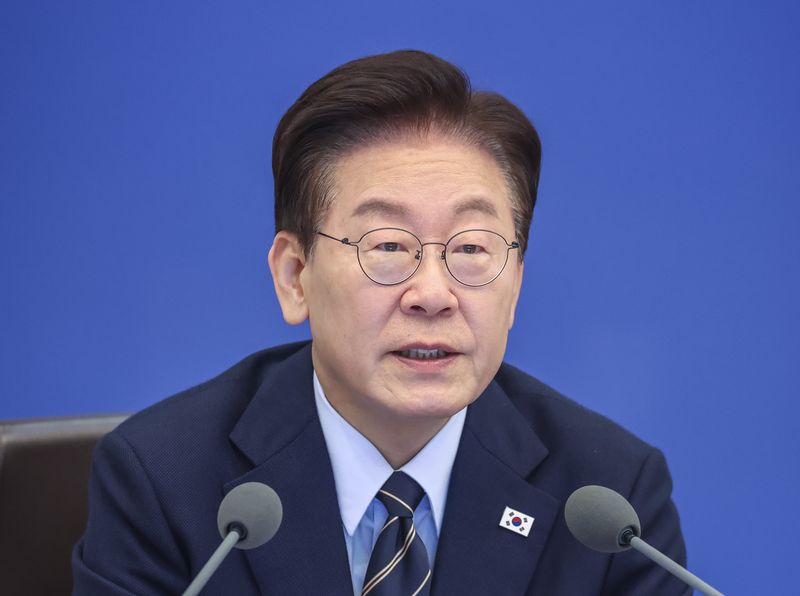
Regarding changes in the external environment following the U.S. midterm elections, President Lee also stressed, “While continuing close cooperation with the U.S. administration, we should also build a bipartisan foundation for cooperation in the U.S. Congress and broaden communication to include state governments and the business community.”
According to Cheong Wa Dae and the Ministry of National Defense, the revised consent motion to extend the Cheonghae Unit’s deployment, approved at the Cabinet meeting that day, is expected to be submitted to the National Assembly soon after the remaining procedures, including President Lee’s approval, are completed. If the motion passes the National Assembly plenary, the deployment period will be extended through December 31, 2027.
The motion calls for strengthening the Cheonghae Unit with maritime patrol aircraft and mine-countermeasure support capabilities to protect South Korean nationals and safeguard economic interests, and expanding its mission area from its current waters in the Gulf of Aden to the open sea south of Oman, closer to the Strait of Hormuz. If approved by the National Assembly, the unit’s mission area will grow to about twice its current size, extending to waters south of Oman about 650 km from the Strait of Hormuz.
The South Korean military will additionally deploy one of its newest Navy maritime patrol aircraft, the P-8A Poseidon, known as a “submarine killer,” and an explosive ordnance disposal (EOD) team to work with unmanned underwater vehicles (UUVs), unmanned surface vehicles (USVs), remotely operated underwater vehicles (ROVs), and other equipment. The deployment of the EOD team and unmanned mine-clearing equipment also appears intended to prepare for the possibility of participating in mine-clearing operations in the Strait of Hormuz. The deployed personnel will increase by 75, including command staff, 30 EOD personnel and 45 patrol aircraft operators, bringing the total to around 395. The move is also being viewed as the first case of contributing to military efforts to stabilize the Strait of Hormuz.
However, minor parties in the broader ruling bloc, including the Rebuilding Korea Party, and some civic groups are objecting to the measure, calling it effectively a “backdoor troop deployment.”
The Ministry of National Defense said, “Under the principle that the Cheonghae Unit will absolutely not participate in or become involved in a war, it will maintain an independent chain of command and do its utmost to carry out its mission of protecting South Korean nationals and ships.” The Ministry of Foreign Affairs also said, “We are maintaining ongoing communication with relevant countries, including Iran (which has opposed the expansion of the Cheonghae Unit’s mission).”
The Cabinet meeting also approved a motion to extend the deployment of the Akh Unit, which is tasked with supporting military education and training in the United Arab Emirates (UAE).
The promulgation bill for the Special Counsel Act on Fabricated Prosecution was not tabled at the Cabinet meeting that day. A Cheong Wa Dae official said, “The timing for tabling promulgation bills at a Cabinet meeting—which are sent to the government after passing the National Assembly plenary—is generally decided in consideration of when they are transferred and how urgent they are,” adding, “It is expected to be tabled at next week’s Cabinet meeting.”
Regarding the midterm election results, in which the U.S. Democratic Party took control of both the House and the Senate, President Lee said, “Various changes in the external environment are expected after the U.S. midterm elections,” and asked, “Relevant ministries and agencies should analyze the various anticipated factors from multiple angles and carefully prepare response plans for each scenario.” He added, “Most importantly, South Korea and the United States must focus our diplomatic efforts on strengthening and expanding the foundations of trust and cooperation between our two countries from a mutually beneficial perspective,” and said, “We should pool our wisdom to ensure that matters agreed upon by the two countries in the diplomatic and security fields are properly implemented, while robustly protecting our national interests and businesses’ investments.”
President Lee also said, “We must respond firmly to structural unfairness and corruption involving rule-breaking and privilege, including illegal real-estate activities and entrenched local corruption, so that the belief takes hold that anyone caught will be ruined,” and raised issues such as so-called “land holdouts.” He continued, “There seem to be cases across the country of people forcibly resisting the lawful order,” and instructed officials to conduct a comprehensive investigation into such cases and report back.
[email protected] Choi Jong-geun, Lee Jong-yoon, Kim Kyung-soo Reporter