SCIA chief Kim Ji-yong: “Investigation ping-pong” is a misunderstanding ... agency positions don’t matter when it comes to the public’s interests
- Input
- 2026-11-10 15:22:51
- Updated
- 2026-11-10 15:22:51
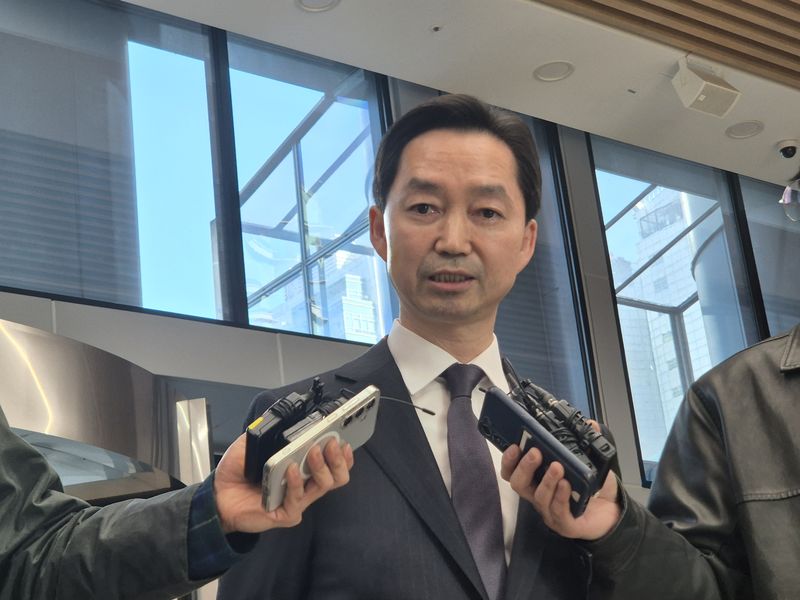
[Financial News] Kim Ji-yong, chief of the Serious Crimes Investigation Agency (SCIA), stressed the need for cooperation between the two agencies over the so-called “investigation ping-pong” controversy surrounding case transfers between the police and the SCIA, saying, “Since we are in the early stages, there may be some misunderstandings.”
Speaking to reporters on the 10th at the National Police Agency in Seodaemun-gu, Seoul, before meeting Kim Jongcheol, the nominee for National Police Commissioner, Kim said, “As the new criminal justice system takes effect, it will be very important for the police and the SCIA, the two major investigative agencies in our country, to cooperate with each other for the public to see results.”
He added, “I came to discuss various ways the two agencies can work together and also to pay my respects.”
Responding to criticism that the number of cases actually transferred was low compared with the cases the police had recently reported to the SCIA, he said, “There are far more than three.”
Kim explained, “There are cases we are discussing now, as well as cases still under discussion because we are in the early stages. We make decisions based on factors such as the seriousness of each case, taking into account which agency’s investigation would serve the public’s interests and be effective in advancing the investigation.” He added, “I think things may change as more time passes.”
He also rejected concerns that “investigation ping-pong”—in which case handling is delayed because the two agencies have differing positions—could occur.
Kim retorted, “We may have some misunderstandings because we are still in the early stages, but would an agency’s position really matter when it comes to the public’s rights and interests?”
The National Police Agency previously said it had notified the SCIA of a total of 3,288 cases in which serious crimes had been identified over 28 days, from the 2nd to the 29th of last month. Of these, only three cases had actually been transferred during the same period, about 0.09% of the total.
Under the current Serious Crimes Investigation Agency Act, the police must notify the SCIA if they identify a serious crime under its jurisdiction during an investigation. The SCIA may request that a reported case be transferred, but not every case reported is transferred immediately.
With the number of transfers proving low compared with the number of cases reported, controversy has arisen over whether investigative cooperation and case allocation between the two agencies are proceeding smoothly under the new criminal justice system.
Meanwhile, when asked whether the heads of investigative agencies need to attend meetings of the State Council of South Korea, Kim avoided giving a specific answer, saying, “There are some aspects where it is necessary. I’ll say more about it later.”
[email protected] Kim Ye-ji Reporter