Thought They Were Pencil Cases or Earbud Cases... ‘Concealed E-Cigarettes’ Target Teens
- Input
- 2026-11-10 14:06:15
- Updated
- 2026-11-10 14:06:15
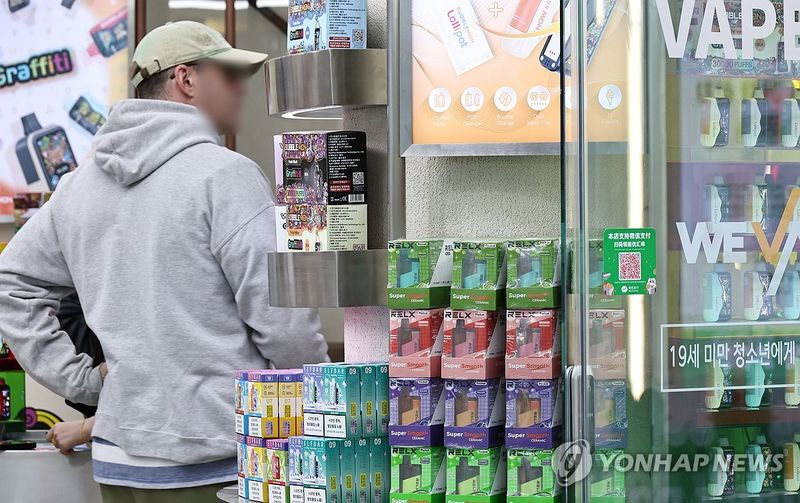
[Financial News] Nicotine pouches, nicotine strips, nicotine toothpicks. Experts say it may not be long before new forms of nicotine products enter South Korea, following nicotine-free e-liquids. There are calls for an integrated management system covering all tobacco and inhaled products, rather than one in which regulations lag behind every change in product form.
The Korea Medical and Bio Journalists Association and the National Academy of Medicine of Korea held the sixth Media Forum on the 10th at the Korea Press Center in Jung District, Seoul, under the theme “New Tobacco Trends and the Direction of Smoking Cessation Policy.”
“Nicotine Pouches Await Entry into South Korea” ... Nicotine-Free E-Liquids Already Surging
Lee Seong-gyu, head of the Korea Tobacco Control Research and Education Center, warned of new products entering the domestic market in a presentation titled “The Resurgent War on Tobacco and Nicotine.” He said, “The 2025 U.S. National Youth Tobacco Survey (NYTS) found that the share of youth users who used only e-cigarettes declined, while the number using nicotine pouches either alongside e-cigarettes or on their own increased.” He predicted, “Nicotine pouches held by companies such as KT&G and Philip Morris Korea Inc. are awaiting entry into the domestic market, and nicotine strips and nicotine toothpicks could also soon become commonplace.”
The market shift to evade regulation has already begun. After the amended Tobacco Business Act, which included synthetic nicotine in the definition of tobacco, took effect last April, imports of synthetic nicotine e-liquids plunged. In contrast, imports of nicotine-free e-liquids from January to August this year exceeded twice the full-year total for last year. Online, e-liquids marketed as nicotine-free and backed by test reports, as well as high-capacity devices, are being sold. A recent government investigation detected nicotine and nicotine analogues in some e-liquid products marketed as nicotine-free, prompting calls for their potential health risks to be verified.
The center’s head said, “If e-liquids made with tobacco leaves, stems or synthetic nicotine disappear from the market, virtually only ‘nicotine-free’ e-liquids will remain among e-cigarette liquids.” He added, “There could come a time when e-cigarettes are not legally classified as tobacco, so we may have to call them ‘electronic inhalation devices’ instead of ‘e-cigarettes.’”
Concerns were also raised about young people’s exposure. E-liquids containing nicotine analogues or no nicotine are sold in fruit and dessert flavors, and are distributed in concealed devices resembling everyday items such as pencil cases, earbud cases and cosmetics, making them easy for young people to access. The center’s head stressed, “There are no clear guidelines for responding to students at school who claim that their e-cigarettes contain ‘no nicotine,’ and urine tests for cotinine, a nicotine metabolite, make it difficult to confirm whether they have used these products.” He said, “We need to provide accurate information about new inhaled products and step up prevention education for young people.” He also called for a proactive management system that is not limited to specific ingredients or product types.
“Raise Cigarette Prices to 8,500 Won and Index Them to Inflation”
Park Eun-cheol, vice president for medical policy at the National Academy of Medicine of Korea, assessed the limitations of South Korea’s smoking cessation policies under the theme “Smoking Cessation and Accessibility Policies.”
According to Park, South Korea’s average score in the World Health Organization (WHO) MPOWER tobacco-control policy assessment is 3.563 out of 5. He said, “The scores were high for monitoring tobacco use (Monitor) and offering smoking cessation support services (Offer), at 5.0 each. But protection from secondhand smoke (Protect) scored just 2.125, enforcement of bans on advertising, promotion and sponsorship (Enforce) scored 2.375, and raising tobacco taxes (Raise) scored 2.5.” He said, “We need to strengthen oversight of secondhand smoke from e-cigarettes, improve public understanding of health risks, and tighten online and offline sales controls.”
He also called for cigarette prices to be raised. Park said, “Cigarette prices have been frozen at 4,500 won since 2015, and the price adjusted for purchasing power parity (PPP) is 5.51 international dollars, a low level among OECD countries.” He added, “South Korea also scored just 2.5 on the Cigarette Tax Scorecard.”
He recommended raising cigarette prices to 8,500 won and establishing a legal basis for an automatic adjustment mechanism tied to inflation and income growth. Park explained, “Scenario analysis estimated that raising cigarette prices would cut sales of manufactured cigarettes by 35.6%, lower the adult smoking rate by 3.0 percentage points, from 17.0% to 14.0%, and increase annual tobacco-related tax revenue by about 2.76 trillion won.”
He also called for improvements to the structure of the National Health Promotion Fund. “We should raise the National Health Promotion Levy to increase the fund’s resources and reduce the share allocated to health insurance support from 65% to 50% of projected revenue from tobacco levies,” he said. “We should increase health insurance support from the general budget and strengthen health promotion and disease prevention programs, the fund’s original purpose.” He added, “The current Tobacco Business Act should be overhauled into an ‘Act on the Management of Tobacco and Electronic Inhalation Products,’ bringing all tobacco and electronic inhalation products under regulation and shifting the management system from an industry-centered to a public-health-centered approach.”
Kim Ji-eun, head of the Smoking Cessation Policy Planning Division at the Korea Health Promotion Institute, said, “Smoking rates for conventional cigarettes are falling, but e-cigarette use is rising, and patterns of use are becoming more diverse, including dual use of conventional cigarettes and e-cigarettes.” She added, “Policy responses to prevent young people and adolescents from starting to use these products are becoming increasingly important.” Kim said the institutional foundation had been established through an expanded definition of tobacco under the Tobacco Business Act and the introduction of harmful-substance testing under the Tobacco Harmful Substances Management Act. However, she identified responding to new tobacco products and closing regulatory gaps around nicotine-analogue and nicotine-free products as outstanding challenges.
“Without Additive Regulations, ‘Less Harmful Tobacco’ Could Cause Confusion”
The second panel discussion featured Jo Hong-jun, emeritus professor at the University of Ulsan College of Medicine; Lim Hyeon-jeong, head of the Legal Support Office at the National Health Insurance Service; Kim Jan-di, a reporter for Yonhap News Agency; and Jeon Eun-jeong, director of the Health Promotion Division at the Ministry of Health and Welfare.
Jo said, “Under the Tobacco Harmful Substances Management Act, which took effect last month, concentrations of harmful substances in tobacco have been announced. But if additives that increase appeal, dependence and toxicity, including flavorings, are not regulated, this could cause confusion and lead people to seek ‘less harmful tobacco’ without evidence.” He proposed raising cigarette prices and introducing standardized cigarette packaging as short-term measures, and repealing the Tobacco Business Act and enacting a new Tobacco and Nicotine Products Regulation Act as medium- to long-term goals. He added, “There needs to be multidisciplinary and interagency discussion on whether nicotine analogues should be regulated as tobacco or as chemicals under the Act on the Registration and Evaluation, etc. of Chemical Substances.”
Lim said, “Even as new tobacco products emerge and their forms change, responsibility for the health damage and social costs caused by smoking does not change.” He stressed, “Tobacco litigation is not simply about recovering costs; it is a way to make tobacco companies bear those costs and strengthen the effectiveness of regulation.” He added, “Internal tobacco company documents disclosed during litigation can help clarify companies’ awareness of risks and their practices in providing information. The facts established can be used to improve regulatory policy and prevent future harm to health.”
[email protected] Jeong Myeong-jin, Medical Correspondent Reporter