KOSPI rebounds as oil prices plunge 5%; inflation ultimately holds the key to the market’s direction
- Input
- 2026-11-10 15:45:46
- Updated
- 2026-11-10 15:45:46
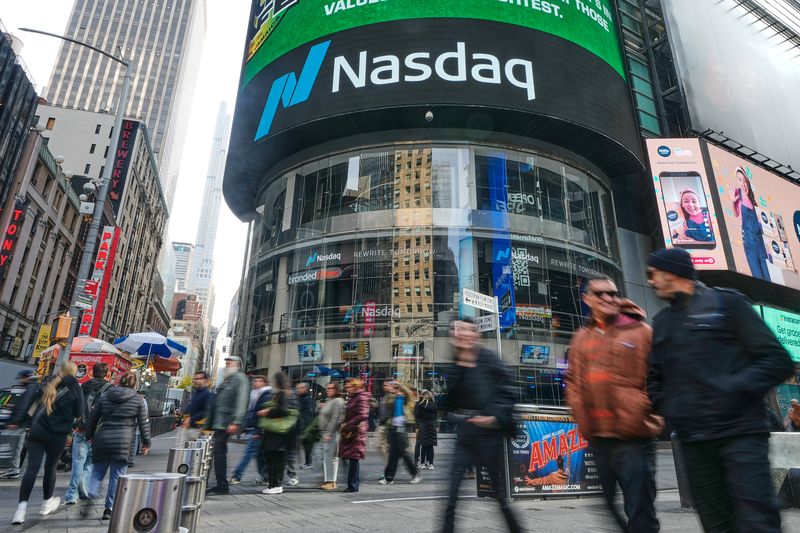
[Financial News] The South Korean stock market rebounded by more than 5% intraday as a sharp drop in international oil prices eased inflation concerns. Investor sentiment, which had been dampened by debate over excessive investment in artificial intelligence (AI) and the burden of high interest rates, has revived. Analysts say the market’s direction from here will depend on whether inflation stabilizes.
According to the Korea Exchange (KRX), the KOSPI traded at 5,239.13 on the 10th, up 220.28 points (4.39%) from the previous trading day. After falling to 5,018.85 the day before, the index surged as high as 5,300.92 intraday, recovering the 5,300 level.
The KOSDAQ Index also rose 28.64 points (4.48%) to 667.61. As buying concentrated in large-cap semiconductor stocks, buy-sidecars—which temporarily suspend program buy orders—were triggered one after another on the KOSPI and KOSDAQ markets.
The key factor driving the rebound was international oil prices. On the 9th (local time), Brent crude plunged 5.85% to $92.57 a barrel, while West Texas Intermediate (WTI) fell 4.38% to $86.85. Expectations of progress in negotiations between the United States and Iran eased concerns about disruptions to oil supplies, and the prospect that this could reduce inflationary pressure lifted investor sentiment.
A securities industry official said, “The drop in oil prices is significant because it could ease the interest-rate burden that has weighed on global markets recently,” and forecast that “if stable oil prices reduce inflationary pressure and lead to a lighter interest-rate burden, investment conditions for AI-related companies could also improve.”
A strong rebound, led by semiconductor stocks, was also seen in the U.S. stock market. On the 9th, Nvidia fell 4.3% amid allegations surrounding CEO Jensen Huang, but Advanced Micro Devices, Inc. (AMD) and Broadcom Inc. surged 13.3% and 8.8%, respectively. The PHLX Semiconductor Sector (SOX) rose 6.9%, and the NASDAQ Composite gained 2.7%. Despite company-specific bad news for Nvidia, expectations for growth across the AI industry held firm, and bargain hunters moved into semiconductor stocks that had suffered steep declines.
Large-cap semiconductor stocks also led gains in the South Korean market. Samsung Electronics Co., Ltd. and SK hynix rose 4.74% and 6.69%, respectively, on the day. Buying spread to major sectors, with Samsung Electro-Mechanics and LG Energy Solution also posting gains in the 4% range. Risk aversion in global financial markets also eased, with the U.S. Volatility Index (VIX) falling to around 19.9.
Kang Jin-hyuk, a senior researcher at Shinhan Investment & Securities, said, “Bargain buying in semiconductor stocks, driven by calmer oil prices and a recovery in risk appetite, led the gains in the South Korean market.” He cautioned, however, that “it is too early to conclude that the market has entered a full-fledged uptrend based on falling oil prices alone.” He added, “Concerns remain about the financing burden from increased AI capital investment and the prospect of further tightening in the United States, while the situation in the Middle East could become unsettled again depending on the outcome of negotiations.”
Lee Eun-taek, a researcher at KB Securities, explained, “Inflation concerns were the fundamental cause of the recent sharp market decline.” He added, “Multiple factors—including AI regulation, the burden of financing investment, and supply-demand imbalances—contribute to market declines, but the most important factor is interest rates, which determine financing conditions, and, in turn, inflation, which determines the direction of interest rates.”
[email protected] Choi Doo-seon Reporter