“Worked for 7 Years, Then Terminated”... Conflict Between Housing Association and Designer Over Redevelopment Practices
- Input
- 2026-11-11 14:37:17
- Updated
- 2026-11-16 11:53:00
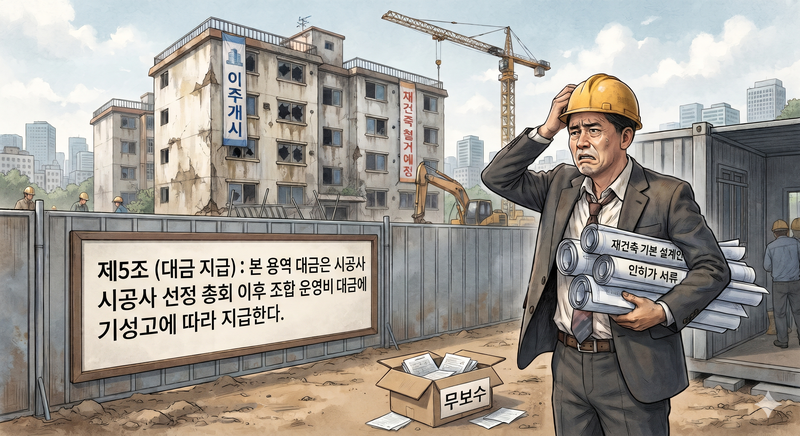
According to the redevelopment industry on the 11th, the association of Apartment A in Seocho District, Seoul, recently passed a motion at a general meeting to select a construction company as the remodeling contractor, rescinding the “Ratification of Designer Selection and Delegation of Authority to Sign a Contract.” In canceling a resolution passed at the association’s inaugural general meeting about four years ago, it dismissed the designer (B Architects Office), whose selection had been ratified at the time.
B, a firm that has handled design-related work for Apartment A since 2018, when the remodeling project was in its early stages, says it cannot accept the decision. A representative of B said, “From the promotion committee stage onward, we’ve done all the legwork, from preparing alternative designs, reviewing permits and coordinating the project approach to working with the contractor. We maintained a good relationship for more than seven years, providing active support and exchanging thanks, so it is unreasonable to notify us of our dismissal with a single official letter.”
In an official letter the association sent to B about two weeks before the general meeting, it cited two reasons for terminating the designer’s engagement: subsequent procedures, including signing a contract, had not moved forward, and a contractor for the expansion-type remodeling project had not been selected in four years.
B says it had merely deferred signing a contract until after a contractor with sufficient financial resources was selected, in line with the association’s wishes, and had done its best by supporting alternative designs several times during the contractor selection process. In fact, over the past four years, two major construction companies expressed interest in participating in Apartment A’s remodeling project, but the effort went through twists and turns, with their attempts to win contracts coming to nothing amid internal and external headwinds.
B is a partner firm of the contractor selected at the recent general meeting and also took part in the design the contractor proposed for Apartment A. B says there is no reasonable basis for the notice of termination and has begun legal action. It also recently mailed residents letters containing an appeal.
The association, however, rejected the very characterization of its relationship with the design firm as a “dismissal” or “contract termination.” The head of Apartment A’s association dismissed the claim, saying, “B cannot be called the incumbent designer because it is not a firm that signed a formal contract.” The association said this was like a consumer ending a business relationship because they were dissatisfied with a service. The head added, “If they had proposed a reasonable design and construction method, the project would not have been stalled for seven years,” and explained, “This decision was made to save the members time and money.” The association also said the motion to rescind the selection was passed with overwhelming support from members.
The underlying causes of the dispute are believed to be the chronic financial difficulties and contract practices in the redevelopment industry. In the early stages of such projects, associations lack sufficient funds, so partner firms such as designers pay costs upfront to perform services and are reimbursed later, once a contractor is selected and loan proceeds come in. B, too, has gone unpaid for the past seven years. One expert said, “The pay-first, settle-later practice needs to be corrected, and measures to protect partner firms should be put in place.”
[email protected] Jeon Min-kyung Reporter