“Safeguard the golden hour” ... KU Professor Kim Chi-kyung’s team makes a breakthrough in AI-based emergency stroke diagnosis
- Input
- 2026-11-10 12:14:21
- Updated
- 2026-11-10 12:14:21
[Financial News] Stroke is a medical emergency in which every second counts. Blocked blood vessels must be reopened in time to reduce lasting effects and save lives, but missed early diagnoses were not uncommon in emergency rooms because of differences in medical staff expertise and limitations in imaging equipment.
Research using artificial intelligence (AI) to dramatically improve the accuracy and speed of stroke diagnosis has recently been published in a series of leading academic journals, drawing attention from the medical community as it addresses these challenges in clinical practice.
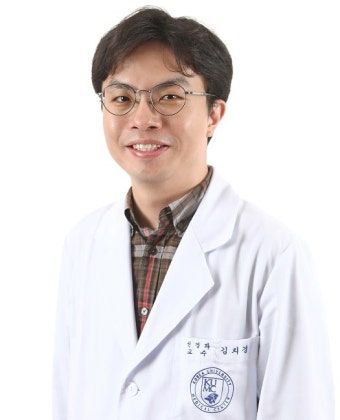
At the forefront is Professor Kim Chi-kyung, a neurologist at Korea University Guro Hospital who is widely regarded as an authority on “mini-strokes.”
The first study used AI to overcome the limitations of non-contrast brain CT (NCCT), the first-line test for diagnosing cerebral infarction. NCCT is the most commonly performed scan in emergency rooms, but it can miss subtle vessel occlusions or early lesions, resulting in a misdiagnosis rate of up to 21%.
Working with a multinational research team from Korea and abroad, including Seoul National University Hospital and the U.S. hospitals MGH and BWH, Professor Kim’s team developed an AI algorithm, JLK CTL, that extracts 17 features from NCCT images, including measurements for different brain regions and differences in bone and image attenuation.
Analysis of data from 963 patients in total—723 in Korea and 240 in the United States—showed that the AI’s standalone diagnostic performance reached an impressive AUC of 0.963 in the Korean cohort and 0.899 in the U.S. cohort. Notably, when neurologists and radiologists interpreted scans with AI assistance, overall diagnostic accuracy (AUC) rose significantly from 0.718 to 0.852, demonstrating strong generalizability even across settings with different racial groups and equipment.
The study was published in the Journal of NeuroInterventional Surgery (JNIS), the official journal of the Society of NeuroInterventional Surgery.
The second study was conducted to help guide decisions about endovascular treatment (EVT), which is essential for patients with acute ischemic stroke.
Professor Kim’s team used deep-learning technology to develop a fully automated algorithm that identifies, in brain CT angiography (CTA) images, large-vessel occlusions requiring clot removal. Developed using a large dataset of 2,045 patients, the algorithm was objectively validated, achieving high AUCs of 0.970 and 0.971 on two independent external test sets, respectively.
The system takes an average of about 178 seconds (under three minutes) from input of the source images to producing results. It has opened the way for early-career doctors to quickly diagnose strokes and determine timely treatment, even in overnight emergency rooms or frontline primary hospitals with few specialist image-reading physicians. The study was published in the international journal Frontiers in Neurology.
Professor Kim Chi-kyung of Korea University Guro Hospital, who led these studies, has built a broad research record spanning basic science and clinical medicine. In addition to researching intractable stroke, she is also involved in developing candidate metal nanoparticle-based therapies for inflammatory bowel disease.
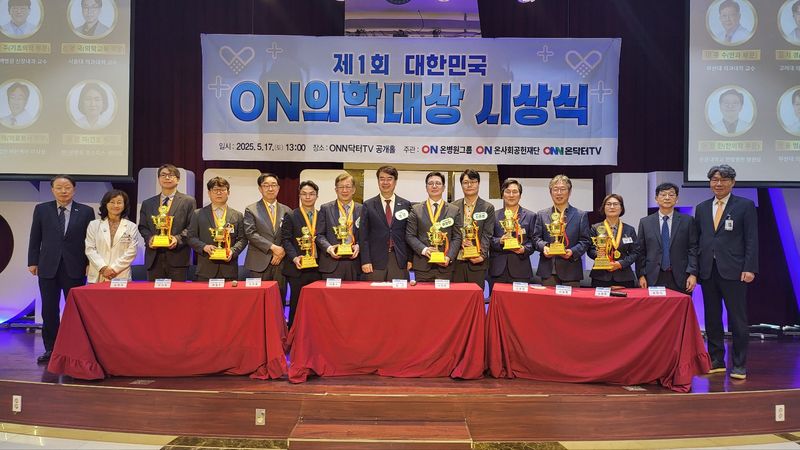
In recognition of these contributions, Kim also received the grand prize in the internal medicine category at the 1st On Medical Awards last May, co-hosted by On Hospital Group in Busan, the On Group Social Contribution Foundation, and ONNTV.
The medical community in Korea expects Professor Kim’s team’s research to make a major contribution to safeguarding the golden hour for stroke patients in emergency medical settings across the country that lack specialist staff, and to improving patients’ survival rates and chances of returning to daily life.
[email protected] Byun Ok-hwan Reporter