Seocho District Delivers Second Petition to MOLIT Seeking Abolition of Reconstruction Excess Profit Recovery System; Calls for Response by 13th
- Input
- 2026-11-10 12:37:00
- Updated
- 2026-11-10 12:37:00
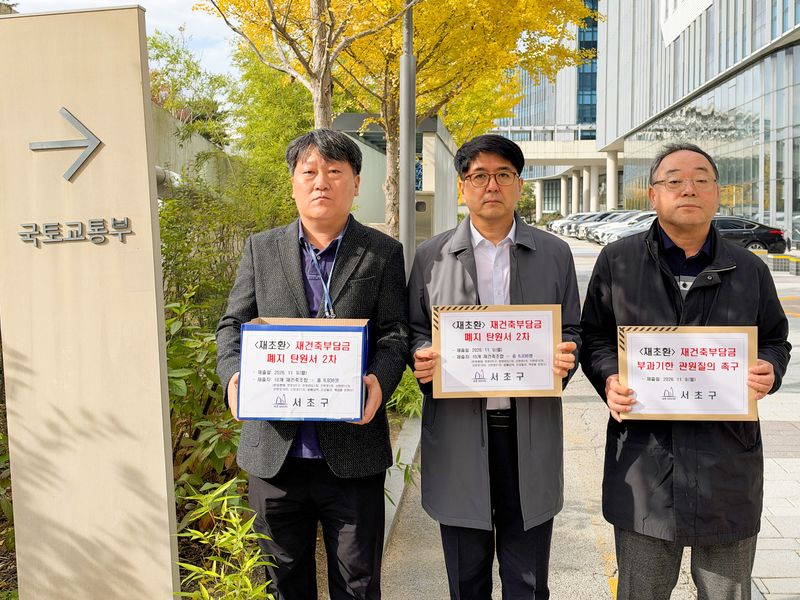
On the 9th, Seocho District visited MOLIT’s Housing Renewal Policy Division and submitted a second petition reflecting residents’ wishes. Following its delivery of a first petition and a letter of recommendations on the 4th, the district once again highlighted the case for abolishing the system by bringing together views from reconstruction sites. The second visit was joined by nine associations in Seocho District—Banpo Hyundai, Banpo Jugong Apartment Complex 3, Banpo Mido 1st, Sinbanpo 2nd, 12th, 18th and 21st, Bangbae Samik and Sinseong Villa—as well as the Eunhasu association in Yeoksam-dong, Gangnam District, for a total of 10 reconstruction associations.
In the petition, the district said the system infringes on private property rights by taxing potential gains that have not been realized; imposes excessive double or triple taxation on top of contributions in kind, property taxes and capital gains taxes; and causes project delays and constrains the supply of housing in urban areas by undermining profitability. The district’s position is that the system, a “killer regulation” that holds back improvements to residential environments, should be abolished immediately in line with the government’s policy of expanding the supply of urban housing.
Seocho District also urged MOLIT to promptly issue an authoritative interpretation of the deadline for levying reconstruction charges. The key issue is whether, under the Act on the Recovery of Excess Profits from Reconstruction, revised in March 2024, and its supplementary provisions, a special rule on the levy deadline can be applied to projects completed before the law was amended. The district said delays in a clear interpretation of the law could disrupt the schedule for calculating and levying charges at sites such as Banpo Hyundai Apartments and worsen administrative confusion, and strongly requested in an official letter that MOLIT respond by the 13th.
The district also expressed regret at the practical constraint that, while the current law remains in force, it has no choice but to levy and collect charges as an agency entrusted with that authority. It added that it would thoroughly review and supplement supporting materials for reductions and development costs to ensure association members suffer no financial disadvantage as the levy process proceeds.
Seocho District Mayor Jeon Seong-su stressed, “The Reconstruction Excess Profit Recovery System stifles reconstruction projects and impedes the supply of urban housing, so it needs to be abolished or fundamentally improved. I regret that, despite being a system that ought to be abolished, we have no choice but to carry out the procedures under current law. MOLIT should respond promptly to the inquiry about the levy deadline.” He added, “We will continue to urge MOLIT and the National Assembly to abolish the system, while handling our work carefully and thoroughly to ensure residents are not disadvantaged.”
[email protected] Jeon Min-gyeong Reporter