‘Jensen Huang affair’ also tops search rankings in China; state media calls it a ‘political witch hunt’
- Input
- 2026-11-10 11:54:10
- Updated
- 2026-11-10 11:54:10
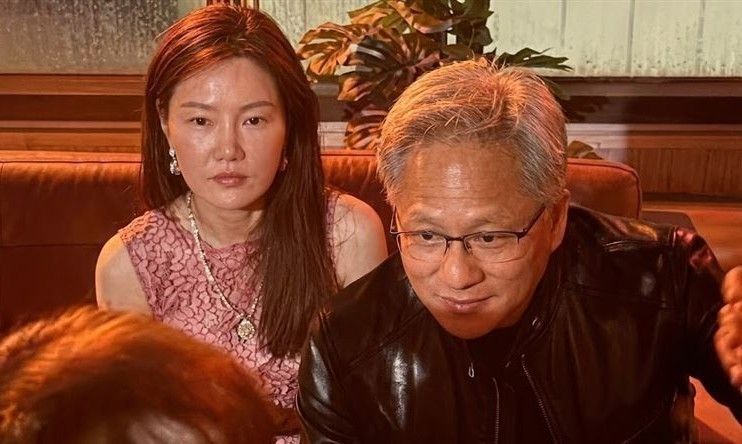
[Financial News] Chinese state media criticized U.S. media reports and political pressure surrounding allegations that NVIDIA CEO Jensen Huang was involved with a ‘Chinese spy,’ calling them a ‘political witch hunt.’ The scandal has also become a hot topic on Chinese social media, where it has topped search rankings.
On the 10th, the state-run English-language Global Times said in a commentary that the reports relied heavily on anonymous sources and unverified material, and claimed that no solid evidence supporting the central allegations had been made public.
Meanwhile, the issue also drew attention on the Chinese social media platform Weibo. ‘Jensen Huang admits affair’ briefly topped the trending search terms on the 9th.
According to Singapore’s Lianhe Zaobao, the phrase ‘U.S. media frame Jensen Huang’s affair partner as a Chinese spy’ also appeared among the trending search terms. Other searches focused on his private life and corporate management, including ‘Jensen Huang’s 41-year image as a devoted husband crumbles’ and ‘How Jensen Huang’s affair affects NVIDIA.’
NVIDIA board launches independent investigation on the 8th
The NVIDIA board said on the 8th that it would launch an independent investigation into reports that CEO Huang had been targeted by a foreign intelligence agency. However, it expressed confidence in Huang and the company’s management, saying there was no basis to believe that U.S. national security or company secrets had been compromised.
The controversy also weighed on the stock price. NVIDIA shares closed down about 4.3% from the previous trading day on the New York Stock Exchange on the 9th. The company’s market capitalization fell by about $190 billion (approximately 256 trillion won) in a single day.
The New York Times (NYT) and other U.S. outlets had earlier reported that U.S. intelligence agencies believed Alice Huang, a Chinese businesswoman close to CEO Huang, was linked to Chinese intelligence agencies. CEO Huang later admitted to the affair and apologized to his family.
The Global Times said U.S. media were portraying the allegations as a national security threat and politicians were joining in, resulting in a public trial before the investigation had even produced findings.
The outlet argued that as U.S.-China rivalry becomes politicized, even ordinary business relationships could come under suspicion solely because of a person’s Chinese background. It also noted that CEO Huang is a U.S. citizen and NVIDIA is a key company in the U.S. artificial intelligence (AI) industry.
It added, ‘Doubt alone cannot build next-generation graphics processing units (GPUs),’ and stressed that casting companies’ business relationships as security risks would not help strengthen AI competitiveness.
China’s Foreign Ministry also denied the allegations. Spokesperson Guo Jiakun said at a regular briefing the previous day, ‘The claim that someone is a “Chinese spy” is entirely baseless speculation and slander.’
Hunan Daily: ‘Used as a tool in partisan conflict and geopolitical confrontation in the United States’
In a commentary published that same night by its online outlet New Hunan, Hunan Daily also argued that CEO Huang’s private life was being used as a tool in partisan conflict and geopolitical confrontation in the United States.
The outlet noted that NVIDIA had been pushing for an easing of restrictions on semiconductor exports to China, and claimed that the allegations had ‘provided China hawks with a new pretext.’
It said a board investigation would be a legitimate process if it focused on establishing the facts and determining compliance with laws and regulations, but criticized treating the affair as evidence of ‘Chinese infiltration’ and using questions about an individual’s morality as a tool in partisan conflict.
It added, ‘If “spy” becomes a label that can be casually pinned on someone, what is damaged is not just a company’s reputation but the most basic commercial trust between countries.’
The Chinese outlet Observer Network also criticized some U.S. media for linking the woman to Chinese intelligence activities through baseless speculation.
[email protected] Lee Seok-woo, International Affairs Specialist Reporter