Committee on Public-Sector Workers completes formation of sectoral councils; public-sector non-regular workers’ wage survey due this month
- Input
- 2026-11-10 11:43:39
- Updated
- 2026-11-10 11:43:39
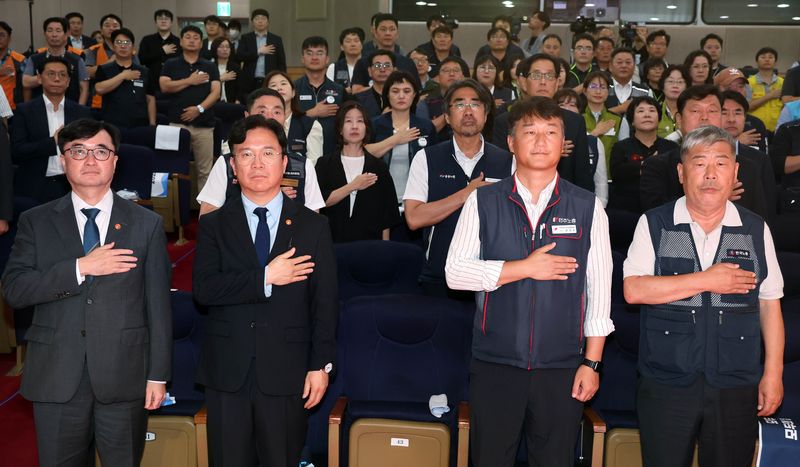
The government said on the 10th that it had completed forming six sectoral councils within the Committee on Public-Sector Workers at the end of last month in collaboration with relevant ministries, and that they would begin full-scale operations this month. The announcement came about 40 days after the committee was launched on September 18.
The Committee on Public-Sector Workers, which deliberates and decides on policies for public-sector non-civil-service workers, comprises a main committee, a working committee (for expert review of matters for deliberation and coordination), a development council (to study institutional improvements for common agenda items and gather opinions), and sectoral councils (to identify and discuss needs and agenda items from the field).
The sectoral councils are divided into six areas of the public sector: central administrative agencies; local governments; educational institutions; public institutions (with central and local subcommittees); privately outsourced services (with care and household waste subcommittees); and subsidiaries.
The ministry responsible for each area will participate in its sectoral council as the secretariat ministry. The Ministry of Employment and Labor, the Ministry of Personnel Management, and the Ministry of Planning and Budget will participate in the central administrative agencies council. The Ministry of Economy and Finance will be involved in the central public institutions and subsidiaries areas, while the Ministry of the Interior and Safety (MOIS) will be involved in the local government and local public institution subcommittees. The Ministry of Education will oversee educational institutions. The Ministry of Employment and Labor will oversee privately outsourced services, with the Ministry of Health and Welfare and the Ministry of Climate, Energy and Environment (MCEE) joining the care and household waste subcommittees, respectively.
The Ministry of Employment and Labor explained, “Sectoral councils are where discussions take place based on voices from the field and reflect the specific characteristics of each area,” adding, “A broad range of issues, including eliminating discrimination against public-sector non-civil-service workers and improving their working conditions, will be discussed to ensure both that policies reflect realities in each area and that they remain consistent.”
According to government estimates, there are 338,000 public-sector non-civil-service and fixed-term workers. The total is estimated to reach 533,000 when workers employed through privately outsourced services are included.
The development council within the Committee on Public-Sector Workers plans to release a “Survey of Wage Conditions for Public-Sector Non-Civil-Service and Non-Regular Workers, etc.” at the end of this month, including these figures. Starting next year, it plans to conduct and publish regular surveys on “the workforce size, occupations, wage systems, and other conditions of public-sector non-civil-service workers and others,” including workers employed through privately outsourced services. The aim is to support discussions of issues in each area with objective information.
Kwon Chang-jun, chair of the Committee on Public-Sector Workers’ Working Committee and a vice minister at the Ministry of Employment and Labor, said, “With all the sectoral councils now launched, the government will do its utmost as a ‘model employer’ to achieve meaningful results, including narrowing disparities in the public sector, through in-depth discussions among labor, the government, and experts based on objective assessments.”
[email protected] Kim Jun-hyeok Reporter