A “Rally” Despite Participants Standing 7–8 Meters Apart... Guilty Verdict Upheld for Violating COVID-19 Rally Ban
- Input
- 2026-11-10 12:00:00
- Updated
- 2026-11-10 12:00:00
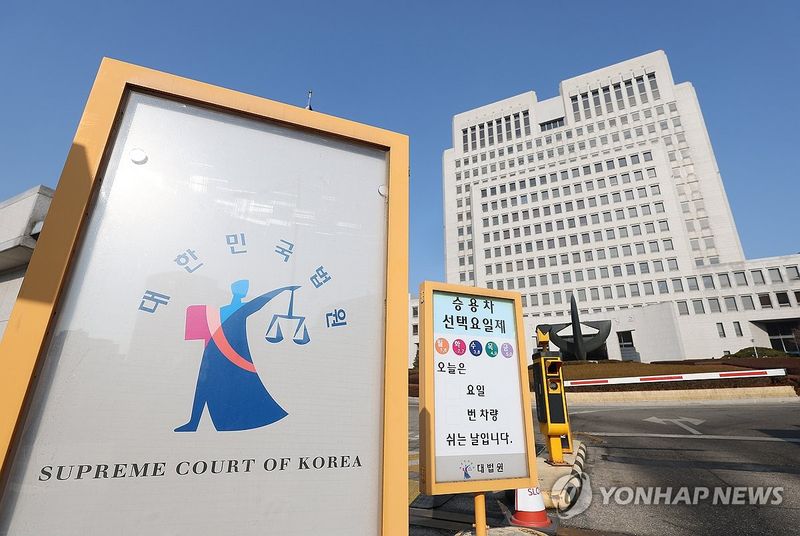
According to legal sources on the 10th, the Supreme Court’s Second Division, with Justice Kwon Young-jun as the presiding justice, upheld on the 8th of last month the lower court’s sentence of a 1 million won fine for Park Seok-un, standing co-chair of Korean Progressive Solidarity, who was indicted on charges of violating the Infectious Disease Control and Prevention Act. Park was sent to trial on charges of leading the rally by handing out placards to around 30 participants and introducing speakers on a sidewalk in front of Gwanghwamun in Seoul’s Jongno District for about an hour from around 7 p.m. on September 7, 2021.
Seoul had issued a public notice on September 3 that year banning rallies across the city from July 12 through October 4. The event was organized by a preparatory committee comprising around 60 organizations to criticize the government’s real estate policy. Banners and sound equipment were set up, and a moderator introduced speakers as participants stood in lines 7–8 meters apart.
There were two issues: whether Seoul’s public notice was unlawful because it failed to meet the requirements of minimizing infringement and balancing legal interests under the constitutional principle of proportionality, and whether the event, with participants standing apart, was a one-person protest rather than an assembly covered by the notice.
The first trial imposed a fine of 1 million won. It found that the public notice was not unlawful and that the event was an outdoor assembly subject to notification under the Assembly and Demonstration Act, since around 30 people, including members of the Preparatory Committee for Joint Action by Non-Homeowners, had gathered in one place to criticize government policy.
The second trial also dismissed the appeal. Given that confirmed cases were surging at the time, the infectious disease crisis alert was at the “serious” level, and Level 4 social distancing was in effect in the Seoul metropolitan area, the court said it was difficult to find that the public notice violated the principles of proportionality or equality. On the claim that it was a one-person protest, the court said that because it was a collective event organized by multiple groups and attended by many people, its substance was not changed by its outward appearance alone. The court also found a concrete and actual risk of disease transmission, as basic preventive measures such as compiling a list of participants and sanitizing hands had not been properly carried out.
The Supreme Court dismissed the appeal, saying there was “no error in exceeding the bounds of the principle of free evaluation of evidence by violating the rules of logic and experience without conducting all necessary deliberations, or in misapprehending the legal principles concerning the elements of an offense under the Infectious Disease Control and Prevention Act, grounds precluding unlawfulness, and related matters.”
[email protected] Kim Dong-gyu Reporter