Chinese State Media Call Claims Linking Jensen Huang’s Affair Partner to Chinese Spies a “Political Witch Hunt”
- Input
- 2026-11-10 10:56:02
- Updated
- 2026-11-10 10:56:02
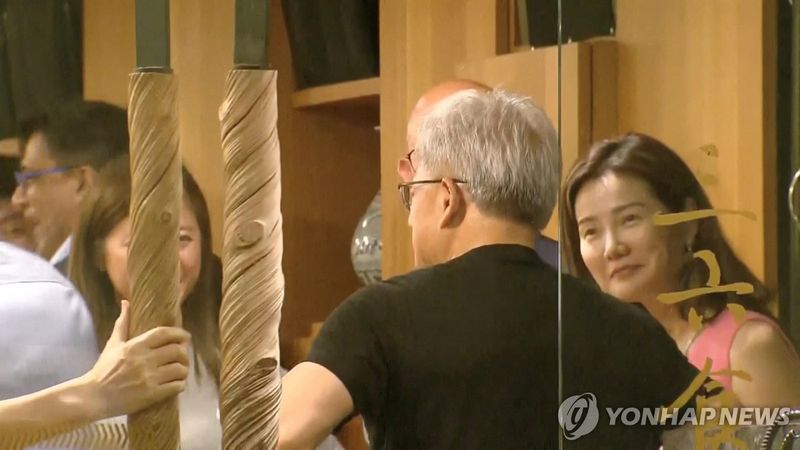
[Financial News] Chinese state media have strongly pushed back against allegations that the affair partner of NVIDIA Corporation CEO Jensen Huang was connected to Chinese intelligence agencies, raising the possibility that the case is a “political witch hunt” driven by U.S. political interests.
In a commentary published on the 10th titled “Is the Investigation into Jensen Huang Counterintelligence or a Political Witch Hunt?”, the Chinese state-run Global Times criticized U.S. media for turning Huang’s affair into a national security issue.
The Global Times questioned allegations that Alice Huang (Chinese name: Huang Le), identified as Huang’s affair partner, had worked for Chinese intelligence agencies, saying, “The reports rely on anonymous sources and materials that the media outlets themselves have been unable to verify.”
It also argued that U.S. media were portraying claims by insiders as national security threats and that, with politicians joining in, a trial by public opinion was taking place before the investigation had even concluded.
The outlet pointed to political divisions in the United States as the backdrop to the case.
Global Times argued: “Excessive politicization won’t win the next AI race.”
The argument is that with the U.S. Democratic Party taking control of both the House and Senate in the midterm elections, congressional investigations and subpoenas concerning NVIDIA’s semiconductor business in China could become considerably easier.
The Global Times argued, “Suspicion alone cannot produce next-generation graphics processing units (GPUs,” and added, “Excessive politicization that casts business activities as security threats won’t win the next AI race.”
Hunan Daily, the Communist Party’s official newspaper in China’s Hunan Province, also argued in a commentary titled “Jensen Huang’s Affair, Political Infighting and Globalization” that the case was being used in U.S. political disputes.
Hunan Daily argued, “With efforts to divert attention from election losses converging with political interests seeking to obstruct an improvement in U.S.-China relations, the appearance of a woman of Chinese descent in the private life of a U.S. tech giant became the easiest thing to seize on.”
It also criticized the use of the case as a tool of political pressure against U.S. tech companies doing business with China, noting that NVIDIA has long called for easing restrictions on semiconductor exports to China.
The newspaper argued, “If people can freely slap the label ‘spy’ on someone, what will suffer is not only a particular company’s reputation but also the most basic commercial trust between countries.”
Case Could Lead to Tighter U.S. Semiconductor Restrictions on China
The controversy is also spreading online in China.
On the Chinese social media platform Weibo, related search terms—including “U.S. media are portraying Jensen Huang’s affair partner as a Chinese spy,” “Jensen Huang’s image as a devoted husband of 41 years is shattered,” and “How Jensen Huang’s affair affects NVIDIA”—repeatedly appeared among the trending topics.
Some netizens criticized U.S. media for showing prejudice by linking Chinese-descended businesspeople to spies.
Others questioned whether the two would have behaved that way if they had really been engaged in intelligence work, given that they had been seen acting intimately in public.
Experts are watching for the possibility that the case could lead to tighter U.S. semiconductor restrictions on China.
Associate Professor Li Mingjiang of the S. Rajaratnam School of International Studies at Nanyang Technological University in Singapore told Lianhe Zaobao that “the case could give China hawks in the United States an excuse to call for tighter export controls.”
The previous day, at its regular briefing, China’s Foreign Ministry responded to allegations of Chinese espionage involving Huang, calling them “baseless speculation and an attempt to malign and smear China.”
[email protected] Lee Seok-woo, International Affairs Specialist Reporter